I Tried Pilates Favourite Flutter Kicks Every Day For 7 Days - And I've Never Felt A Core Burn Like It
This simple, ab-firing move will leave you feeling anything *but* fluttery.


If you’ve spent any time in a Pilates class, on a reformer carriage, or following a YouTube abs workout at home, you’ll know the usual suspects well: crunches, leg lowers, planks held just long enough to make you question your life choices. They’re effective, sure, but after years of cycling through the same moves, my core routine had begun to feel a little stale.
And yet, core strength is one of the most foundational elements of fitness, supporting posture, balance, spinal stability and efficient, injury-resistant movement. Studies show that targeted core training can improve posture and spinal alignment, while other evidence suggests it plays a role in improving trunk stability and overall quality of life - particularly in postpartum women. Strengthening the muscles around your midsection has also been linked to reduced lower back pain and improved movement efficiency in everyday life.
In short: a strong core plays a central role in stability, movement efficiency and injury prevention. Still, knowing this didn’t stop me from feeling bored with my usual core workout routine. I wanted something that genuinely challenged my abs again. Something deceptively simple, slightly evil, and impossible to zone out through. Enter: flutter kicks.
Often dismissed as a throwaway “burnout” move at the end of a workout, flutter kicks promised constant tension, deep core engagement and zero room for complacency. "'Flutter kicks' is a name for a contemporary Pilates exercise, but the leg movement is very similar to the movement seen in swimming, which is from the classical mat repertoire," explains Pilates instructor Francesca Shillcock. "Variations of this modern move can be performed on the mat, and you'll also find this move in many Reformer classes, too, making it adaptable and effective."
So I decided to add them into my workout routine every day for a week - slotting them into Pilates workouts, tacking them onto yoga flows, or using them as a standalone ab finisher in the gym (with two rest days, because balance).
Keen to learn more about how to train your core? Check out our guides to the best exercises to target your lower abs, the best ab toning exercises, best standing ab exercises for beginners, the best home core workouts in under 30 minutes, and the best deep core exercises. Want to level up and invest in some kit? Best Pilates boards, at the ready.
Flutter kicks are one of the most effective core moves - an expert's guide to getting the most out of the move
What is a flutter kick?
It’s also worth clarifying what we actually mean when we talk about “core” work. As personal trainer Mandy Wong Outram previously told Marie Claire UK: “The terms core and abs are often used interchangeably, but there is a distinct difference. The core comprises all the muscles in the body's trunk, including your abdominal muscles (transverse abdominis, internal obliques, external obliques and rectus abdominis) as well as your multifidus, erector spinae, diaphragm, and pelvic floor muscles. On the other hand, the abs specifically refer to four muscles located between the ribs and pelvis on the front of the body.”
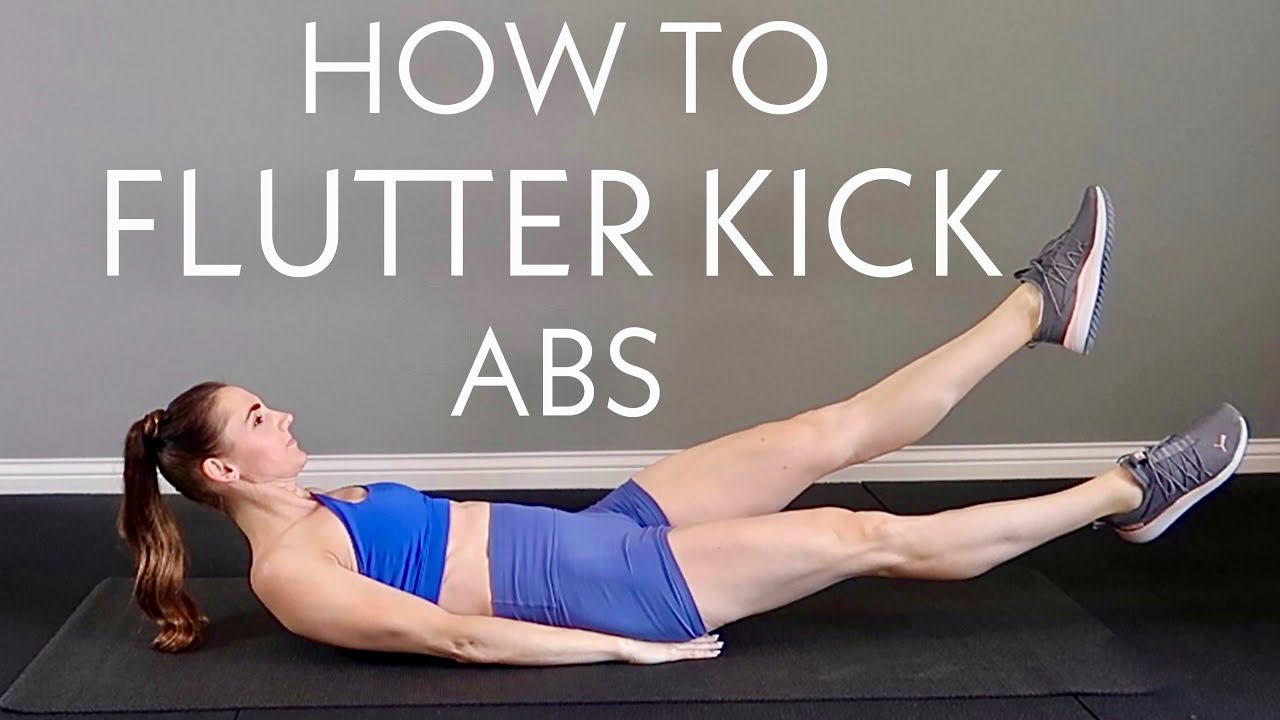
A flutter kick is a core exercise typically performed lying on your back, with your legs extended and lifted slightly off the floor while you alternate small, controlled up-and-down kicks. Think: swimming kick, but horizontal, and powered by your abs rather than momentum.
While they’re often associated with Pilates and military-style conditioning, flutter kicks also show up in yoga, barre and functional strength training thanks to their ability to create sustained abdominal engagement without added equipment.
Crucially, the movement targets the deep core muscles, including the transverse abdominis, while also engaging the lower abdominals, hip flexors and even the quads when performed correctly.
What are the benefits of flutter kicks?
Flutter kicks may look simple, but their benefits run deep - literally.
Because your legs remain elevated throughout the movement, your core is forced to stay engaged continuously, rather than switching on and off between reps. This sustained tension helps build endurance in the abdominal muscles, which is key for posture, balance and spinal support.
They also encourage better mind–muscle connection. You can’t rush flutter kicks without losing form, which makes them particularly effective in slower, controlled workouts like Pilates. As Shillcock explains, "the largest muscle groups are working really hard, and they’re all being used simultaneously as opposed to just one group at a time," making it a move that builds strength across multiple areas while also supporting hip mobility. Over time, this can translate to improved control in other exercises, from yoga balances to compound lifts in the gym.
Experts often point out that exercises like flutter kicks are especially useful for people who want to strengthen their core without excessive spinal flexion (hello, endless crunches), making them a smart option for those managing back sensitivity when performed correctly. “From a Pilates perspective, it requires a precise engagement of the deepest core muscle (TVA) and the pelvic floor muscles,” adds Shillcock, which helps keep the body stabilised and in the best position to benefit from the movement.
What makes flutter kicks so effective?
The secret lies in time under tension.
Unlike crunches, which involve repeated flexion and relaxation, flutter kicks keep your core “on” the entire time. Your lower back must stay anchored to the mat, your pelvis stable, and your abs braced - all while your legs move independently.
This anti-extension challenge is what makes them feel so intense so quickly. Even short sets can produce serious muscle fatigue, particularly in the lower abs - an area many people struggle to target effectively.
From a training perspective, flutter kicks also pair beautifully with Pilates-style breathing and slow tempo work, both of which have been shown to improve core activation.
How to perform a flutter kick effectively
Form is everything with flutter kicks, and it’s usually where people go wrong.
- Lie flat on your back with your legs extended.
- Place your hands by your sides or under your glutes for lower back support.
- Draw your navel towards your spine and gently press your lower back into the mat.
- Lift both legs a few inches off the floor.
- Alternate lifting one leg slightly higher than the other in a controlled, scissor-like motion. Keep your movements small, slow and controlled.
- If your lower back arches or your hip flexors take over, lower your legs slightly or bend your knees.
“Performing this type of movement in a slow, controlled way adds an extra challenge by keeping the muscles working under tension for longer,” explains Shillcock, “which makes it particularly effective for improving muscle strength.”
She also highlights common form issues. “It’s common to see the pelvis become unstable during hip flexion and extension exercises,” she says, adding that neck strain can also occur if the upper body is lifted without enough support. “If the strength isn’t quite there yet, keeping the spine neutral with the head, neck and shoulders on the floor can help prevent strain, while still allowing you to focus on core stability, hip movement and pelvic floor engagement.”
I added flutter kicks into my exercise routine for a week - and experienced next level core burn
Days One to Three
The first few days of this fitness trial were a clear reminder of how deceptively demanding flutter kicks can be.
I began incorporating them into my at-home Pilates sessions, and it quickly became apparent that this was a different kind of core challenge. Even short 30–40 second intervals required sustained concentration, with my deep core muscles fatiguing far faster than I’d anticipated. Rather than the sharp, surface-level burn I associate with crunch-based workouts, the sensation felt deeper and more structural - the kind that forces you to slow down, reset your breathing and prioritise control over repetition.
What stood out most was the level of focus required. Flutter kicks left little room for distraction; maintaining spinal contact with the mat and controlled leg movement demanded my full attention. As a result, even shorter workouts felt purposeful and well-directed.
By day three, the DOMS were hard to ignore. My abs felt thoroughly worked, to the point where a rest day felt not only sensible, but necessary - a reminder that effective core training isn’t about daily intensity, but about allowing the body time to adapt.

Georgia performing a flutter kick
Days four to seven
Returning after a rest day, the movement began to feel more familiar - not easier, but more controlled.
I started adding flutter kicks as a dedicated 10-minute finisher at the end of yoga flows, and noticed improvements in both breath control and endurance. I was able to keep my legs lower for longer while maintaining proper alignment, and the exercise felt more intentional rather than reactive.
Beyond the mat, I also became more aware of my core engagement during everyday movement. Balance poses felt steadier, transitions more controlled, and there was a subtle but noticeable sense of increased stability through my midsection.
I took a second rest day on day six, which helped manage overall fatigue and ensured the exercise remained effective rather than excessive. When I returned, the familiar burn was still there - but it felt earned, controlled, and productive rather than overwhelming.

I added my flutter kick routine onto the end of yoga workouts - and seriously felt the burn
My honest thoughts on flutter kicks?
They’re deceptively brutal - and brilliantly effective.
Flutter kicks won’t replace your entire core routine, but as a targeted addition, they deliver serious returns for minimal time investment. They’re especially valuable if you’re bored with crunches, wary of spinal flexion, or want a move that genuinely challenges deep core stability.
"I'd recommend the move because it's a move that will work your entire core, quads, and also arms, in one go," says Shillcock. "It'll also mean you're consciously thinking about precision and engaging the deep core muscles and pelvic floor, which is super important in any workout. But I would always recommend mastering the form first."
Personally, I’ll be keeping them in rotation - not every day, but often enough to remind my abs who’s in charge.
Shop MC-approved fitness favourites below:

A regular in our top five, lululemon’s Align leggings have earned their cult status thanks to their butter-soft feel and wide range of colour options - a staple that’s hard to fault.

When I was adding flutter kicks into my routine, having a mat that actually supported sustained core work made a noticeable difference. lululemon’s The Mat offers enough cushioning to protect the spine during longer floor-based sequences, without dulling the connection to the ground - something that’s key for controlled, lower-ab exercises. Made with natural rubber, it provides a reliable grip for Pilates, yoga and slower strength sessions, while the extra length gives you space to move without feeling restricted. A considered investment if you spend a lot of time on the mat.

To add a more serious burn, layer ankle weights into flutter kicks. The added resistance increases the demand on the lower abs and hip flexors, making controlled movement and proper bracing even more important. Used sparingly, ankle weights can be a useful tool for progressing core-focused exercises at home, particularly in Pilates-style workouts where slow tempo and precision matter more than speed - and these from Pvolve are a Marie Claire favourite.
Are flutter kicks good for the lower abs?
Flutter kicks are an effective way to strengthen the lower abdominal muscles and improve deep core engagement. Because the legs remain lifted throughout the movement, the lower abs have to work continuously to stabilise the pelvis and support the spine.
It’s worth noting that exercises can’t target fat loss in one specific area. However, building strength in the lower abdominal muscles can support better posture, spinal stability and more efficient movement in everyday life and workouts. Over time, this kind of core strength can make activities, from balance-based exercise to lifting and running, feel more controlled and supported.
