I Tried Pilates Pelvic Curls Every Day For A Week - And They Changed How My Body Felt After Sitting All Day
I've eased years of stiffness, tightness, and tension.


As someone who spends hours on end sitting at my desk, I've recently been struggling with niggling lower back pain and stiffness in my hips and glutes. Knowing Pilates can help to support mobility and posture, when pelvic curls were recommended to me, I was keen to give them a try.
A classic, low-impact move designed to mobilise the spine and gently re-engage the core, Pilates pelvic curls look simple enough at first glance. And anything that's accessible, and easy to slot into a busy day, is the kind of exercise I know I'm more likely to stick to.
Extended sitting doesn't just feel uncomfortable, either. Research shows it's linked to reductions in spinal mobility, particularly when movement is limited throughout the day. I'll admit (even despite my Apple watch's regular reminders), I don't move nearly enough while I'm working.
To understand whether pelvic curls could actually make a difference, I spoke to Anouska Shenn, founder of The Office Yoga Company, who was quick to recommend the exercise for desk-bound bodies. "Pelvic curls are a fantastic move for people who spend long hours at a desk," she said. "Sitting places our glutes in a passive stretch, which causes them to become underactive and weakens them over time."
With this in mind, I decided to practice Pilates pelvic curls every day for a week to see if it could help undo some of the stiffness caused by desk life. Before scrolling on to see how I got on, it's worth checking out our guides to the best Pilates exercises, the benefits of Pilates, and Pilates for beginners, as well as other Pilates experiments MC UK health writers have put to the test, including shoulder bridges, single-leg glute bridges, roll-ups, and somatic Pilates.
Experts swear by Pilates pelvic curls for easing lower-back pain and improving mobility - so I tried them for a week
What are Pilates pelvic curls?
On the surface, Pilates pelvic curls don't appear particularly challenging - but as I quickly learned, there is a specific technique behind them.
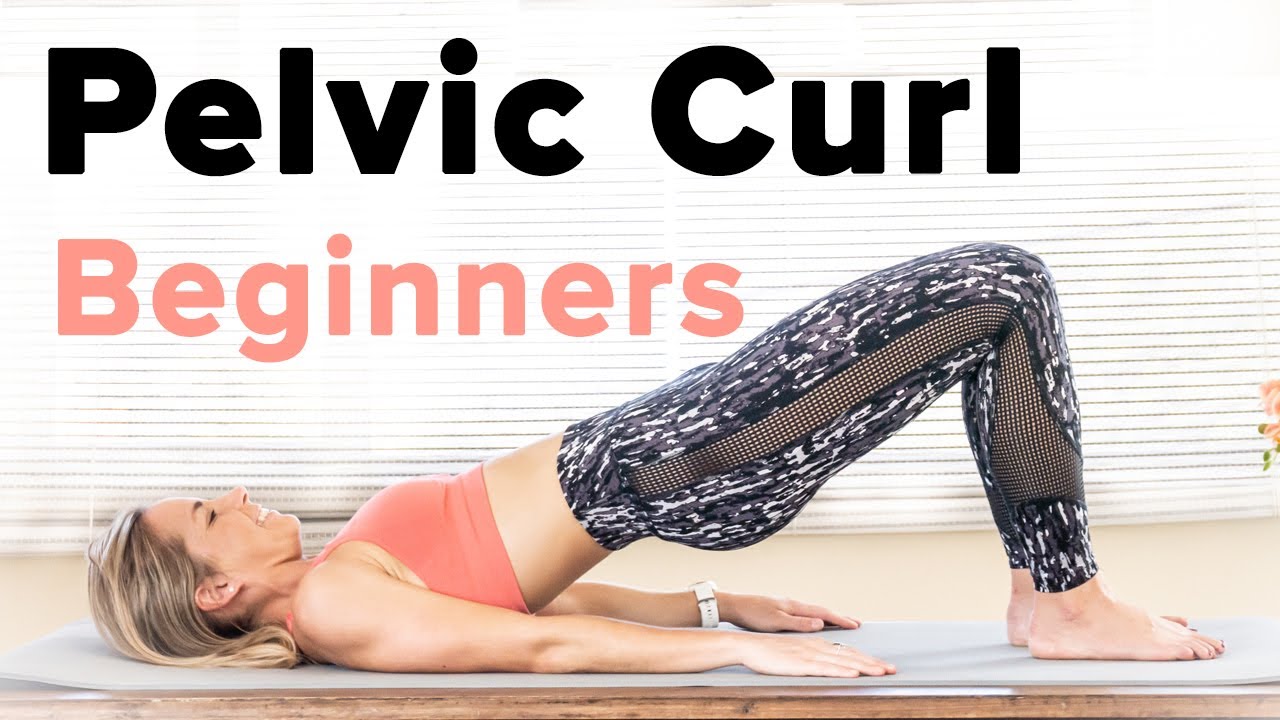
A pelvic curl is a classic Pilates exercise designed to mobilise the spine, while quietly strengthening the core, glutes and muscles that support the lower back. The movement builds on a classic pelvic tilt, taking it one step further by slowly rolling the spine off the mat, one vertebrae at a time (instead of lifting the hips in one go), before lowering back down with control.
"It's an exercise from the classical Pilates repertoire," explains Shenn. "Pelvic curls are similar to glute bridges - they build strength and control in the muscles of the hips, core, and back."
This distinction is key. While pelvic curls can look similar to shoulder bridges or glute bridges, they're not quite the same. Pilates teacher and owner of Studio 44 Pilates, Louise Humphrey, points out that pelvic curl exercises "mobilise the spine while also strengthening the core, glutes, and hamstrings," but the key difference lies in slow, controlled spinal movement, rather than holding a lifted position like a traditional glute bridge.
What are the benefits of Pilates pelvic curls?
Beyond easing desk-related stiffness, I was keen to understand what other benefits Pilates pelvic curls could offer. So before starting the challenge, I spoke to Pilates experts about what the movement can really offer.
1. They improve mobility
"Pelvic curls are such a great way to improve your mobility," says Noemi Nagy-Bhavsar, Pilates instructor and founder of Beyond Move Studio. "It focuses pretty much on your overall body, and how you distribute your weight and use your body wisely."
If, like me, you spend long hours sitting down, it's a particularly beneficial exercise, believes Humphrey. "The pelvic curl is ideal for getting the spine moving after long periods of sitting," she advocates. "It encourages segmental movement, mobilising each vertebra of the spine, which is especially beneficial after sitting at a desk."
2. They help to wake up sleepy core and glute muscles
When we sit for long periods, key muscles like the glutes and deep core tend to switch off. Pelvic curls gently re-engage these areas without overlooking them.
"As you lift the spine off the floor, you engage the core and glutes, key areas that tend to switch off while sitting and, over time, can weaken," explains Humphrey.
Think of your glutes as powerhouse muscles that help propel you when you're walking and running, Humphrey suggests. "Along with the core, they help keep you upright. But sitting for long periods can lead to these muscles becoming underactive and less supportive of the pelvis.
"A weakened core can also lead to poor pelvic stability, which often contributes to lower back tension or discomfort," she adds.
3. They can ease lower back pain and tension
Pelvic pilates curls also help relieve lower back pain by targeting the muscles that become tight and underactive after long periods of sitting.
"Pelvic curls are often recommended by physiotherapists to people with lower back pain, and for good reason," says Nagy-Bhavsar. "The movement strengthens muscles that tend to get weak and stretches muscles that tend to get tight when we sit."
Research backs this up, too - a systematic review found that Pilates exercises can significantly reduce low back pain when compared with non-specific exercise routines. It's a gentle but effective way to wake up underactive muscles and support your spine - exactly what pelvic curls aim to do.
How to perform Pilates pelvic curls with good form
Before my week-long experiment, I asked the experts to talk me through the steps and techniques in order to reap the benefits:
- Set up: Lie on your back with your feet and knees hip-width apart. Your heels should be in line with your sitting bone, with arms relaxed by your side and shoulders relaxed.
- Find your spine: Your spine should be neutral. Nagy-Bhavsar recommends imagining balancing a bowl of water on your pelvis.
- Prepare: Inhale to prepare and connect with your core.
- Lift: Exhale as you lift the spine one vertebra at a time off the mat, peeling it up slowly until you are resting on your shoulder blades. Keep the ribs soft and the glutes active.
- Hold: Inhale at the top, keeping your spine long and shoulders away from your ears
- Lower: Exhale and slowly roll the spine back down, one vertebrae at a time, finishing with your pelvis.
- Repeat: Perform 6-10 times, repeating slowly and mindfully. Humphreys says your spine should feel more mobile as you continue.
My review of trying Pilates pelvic curls everyday for a week
Days one to three
Going into the experiment, I (perhaps somewhat optimistically) assumed Pilates pelvic curls would feel intuitive. The first couple of days proved otherwise. I quickly realised I needed to focus on slowing everything down and paying attention to how my spine actually moved.
The biggest challenge was resisting the urge to lift my hips in one go. Instead, I focused on peeling my spine off the mat, one vertebrae at a time, using my breathing to guide the movement. It wasn't until I paused at the top of the curl that I really felt it - the pressure in my glutes and hamstrings was more intense than I expected. This was a clear sign that the muscles had been neglected during long hours of sitting.
As I rolled back down, I kept Nagy-Bhavsar's advice in my head: "Imagine you're saying hello to each and every one of your vertebrae." It changed how I approached each repetition, and made the movement feel more deliberate than I'd expected.
While physically, I didn't feel any dramatic changes straight away, I did notice some subtle shifts. My lower back felt less stuck after sitting at my desk, and I became more conscious of how much tension I was holding in my hips and pelvis during the day.
Days four to seven
By the second half of the week, the movement started to feel much more natural. I no longer had to think about the sequencing - so I could shift my focus to control, breathing, and tuning into how my body felt afterwards.
My glutes and hamstrings were definitely making themselves known by this point, which served as a reassuring sign that the muscles I'd been neglecting were starting to wake up.
I also started feeling the effects in my core muscles, particularly as I slowly peeled my spine off the mat and rolled my core back down. While I didn't feel that deep burn you'd associate with a tough core workout, it felt more of a subtle engagement that made everything feel connected.
I can't say the stiffness in my lower back completely disappeared while I was sitting at my desk, but it did feel noticeably more comfortable - especially after long stretches without moving. So I'll happily take that as a win.
It's also worth noting that, according to Nagy-Bhavsar, pelvic curls are very much a long game. "You'll see the best resultsif you practice it for a while," she explained. "Once you know how to do it and focus on mindfully moving, you will most definitely build a new positive neural pathway and muscle control. This can positively contribute to pelvic control and stability."
Will I continue to practice Pilates pelvic curls every day? Probably not. But I can confidently say I'll be keeping them in rotation - particularly on long work days. They're a simple, grounding way to re-engage my core, wake up my glutes and undo the stiffness that inevitably creeps in after hours sitting at my desk.
Shop MC UK's Pilates-approved essentials

When it comes to affordable, reliable gym mats, you can't go wrong with a Gaiam mat. They aren't as suited for high-impact workouts, but for pelvic curls, they're ideal.

One of Team MC UK's go-to supplement brands, ARTAH produce science-backed supplements designed to support your unique physiology. We love that they're B Corp certified, too.

When it comes to low-impact workouts (and everyday leisurewear) you can't beat a pair of Adanola's Ultimate leggings. They're a firm favourite among the MC UK Health Editors.

Our Senior Health Editor, Ally Head, has raved about this slightly cropped Alo top when it comes to slower, more focused Pilates sessions.
Who are Pilates pelvic curls best for?
The good news is that Pilates pelvic curls will benefit most people.
"They’re particularly helpful for people who spend long hours sitting, says Louise Humphrey, Pilates teacher, "those returning to movement after a break, and anyone looking to improve their posture, core strength, or spinal mobility in a gentle but effective way."
Anyone with physical issues will benefit, adds Pilates instructor Noemi Nagy-Bhavsar. "Poor pelvic control, lower back deformities, or weak back muscles contribute to postural issues," she explains. "Pelvic curls can help with postnatal recovery and those recovering from surgeries, as well as runners and high-level athletes. You name it, we can find a great modification of the pelvic tilts to make it challenging or level which can be delivered safely."
