Move Over, Sit Ups: 7 Best Core Workouts For Ab Strength In Your 20's, 30's, 40's, 50's, and Beyond
So long, crunches - core workouts got a makeover.


Remember when working out your abs meant tacking a few crunches onto the end of your workout? Yep, us too - and it's not news that this didn't really work for any of us. Thankfully, over the past few years, core workouts have evolved, as our knowledge around the body and how it works has changed, and now, we're all more tuned in than ever to the importance of a strong, stable mid-section and how to achieve it.
And if you're still labouring under the misapprehension that 'core' means defined abs or a six-pack, we'd (politely, of course), ask you to leave the 90s mindset where it belongs, and get with the programme: our core is about so much more than that.
Here's a quick biology refresher, from personal trainer Edwina Jenner. "The core is a group of muscles that stabilise the spine and support your pelvis," she explains. "This includes the transverse abdominis, a deep abdominal layer, multifidus, deep spinal stabilisers, diaphragm, pelvic floor muscles, and the internal and external obliques and the rectus abdominis."
It makes sense, then, that core strength is vital throughout our lives. Whether you're in your 20s, 50s, or somewhere in between, if you have a weak core, you'll know about it.
"These muscles control intra-abdominal pressure, support your posture, and coordinate movement," continues Jenner. "Core muscles also link the upper and lower body. Almost every movement starts from or passes through the core, so when people say ‘abs’, true core strength is about deep stabilising muscles."
Indeed, there's significant research into the importance of core strength for overall physical wellbeing: studies (such as this one, published in the journal Frontiers in Public Health) show that a strong core improves balance and stabiltiy in older adults, helping to reduce ths risk of falls and injury in everyday life, while further research (such as this 2008 review, published in the journal Sports Medicine) highlights that it will enhance both athletic ability and functional fitness, too.
With this in mind, we've mined a team of experts for their favourite core workouts at any age - you can thank us (hopefully) much, much later. In the meantime, if you want to brush up on all things ab-related, do check out our guides to the best core workouts in under 10 minutes, the best lower ab exercises to do from home and read up on the benefits of a strong core, here.
7 expert-approved core workouts to boost ab strength, whatever your age
What is a core workout at the gym?
First up, though, let's cover the basics. A core workout in the gym might conjure up images of brutal, never-ending sit-ups with an army-style instructor barking orders, but trust us: it doesn't have to be this way.
"Most people think core work means crunches; it doesn’t," advises Les Mills UK Trainer Ricky Long. "At the gym right now, core training looks like anti-rotation, anti-extension, bracing under load and moving well under fatigue. You can achieve this in a number of ways: barbell lifts, weighted carries, bodyweight gymnastics-based movements, yoga and Pilates or with structured classes like LES MILLS CORE.
"The common thread is control and stability through the spine, hips and shoulder, with a focus on movement quality under pressure."
And if all this sounds a little intimidating, don't worry: everything can be modified. "Core workouts at the gym can look very different depending on the equipment you’re using," explains personal trainer at Gymshark, Lannay Dale-Tooze. "Machines, free weights or even bodyweight-only sessions can all help you build a strong, stable core, with plenty of room to modify movements if you need to."
One thing to note, though, is to ensure you're clear on what your core is, as discussed above. "When planning your gym workouts, it's important to understand the difference between abs and core," agrees Dale-Tooze. "The two are often used interchangeably, but they’re not the same. Your abs refer to the muscles at the front and side of your stomach, while the core includes your entire torso - comprising your abdominals, back, pelvis, and even hips."
What are the benefits of core workouts at the gym?
We've mentioned some of the (many, many) benefits of a solid core routine above, but honestly, we could wax lyrical on this for days. TLDR: core strength is a non-negotiable, at any and every age.
"Training your full core strengthens the deep stabilising muscles beneath the surface, not just the visible ones, which can improve posture, reduce injury, and pain," shares Dale-Toozy.
“Training your core in the gym environment also allows you to build strength progressively. Access to equipment and a variety of weights means you can scale exercises as you get stronger. Whether your goal is to strengthen your core to help with your lifts, improve your balance or just feel more stable day-to-day, core training benefits us at every stage.
"From building muscle and fitness in our younger years, to maintaining strength, balance and spinal support as we age."
Who are core workouts at the gym best for?
We hope you've gleaned, by now, that a strong and stable mid-section is for everyone, for life, but ICYMI: "Everyone needs to train their core, but not in the same way," advises Long. "This is where we can get it wrong. Core training isn’t age-restricted, it’s context-dependent - meaning our workouts need to evolve as we age."
Put simply, while core training in our 20s might look like heavy barbell lifts, in our 40s, we'll want to focus on pelvic strength through low-impact moves such as deadbugs.
7 best core workouts at any age, according to experts
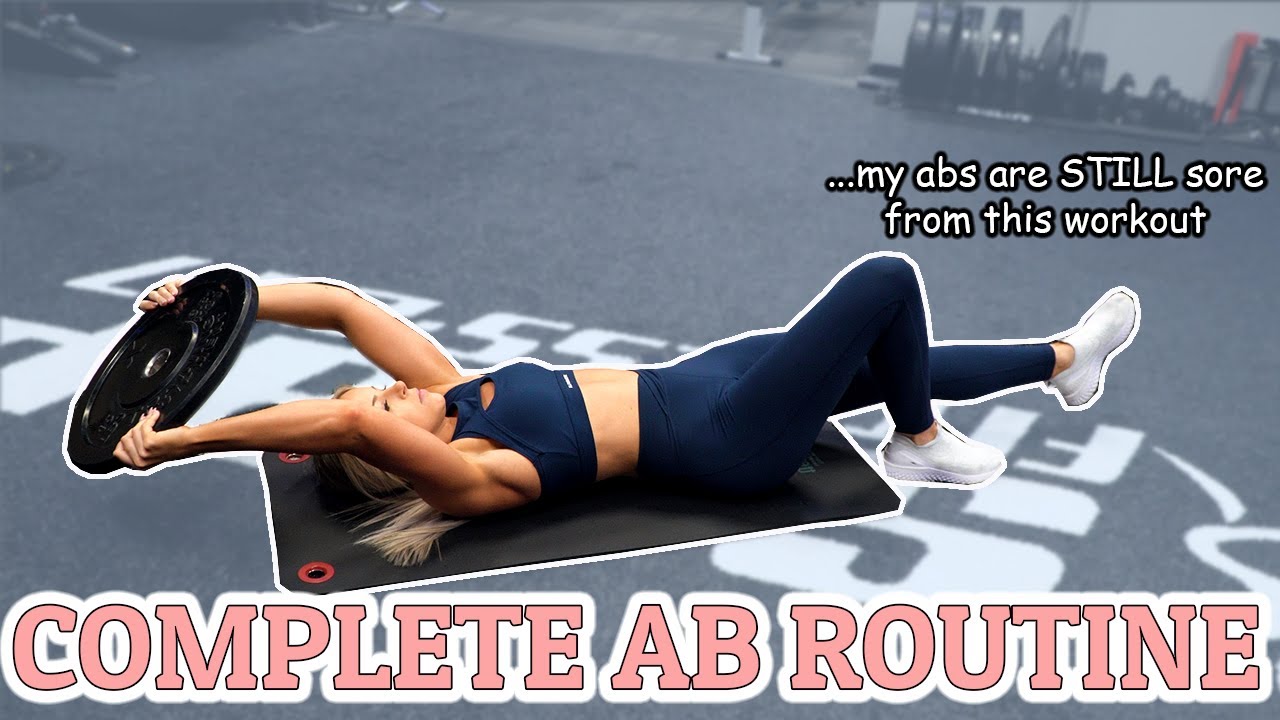
1. Complete weighted ab and core routine with Hunter Chilton
What: A fast, effective core routine using a weighted plate for added resistance.
Why: "Lifting heavy compounds in your 20s is a great way to train your core," says Long. "You don’t need to hammer isolated core work; if you sprint, jump, rotate, throw and lift, your core is already working."
How long for: Just eight minutes, but feel free to repeat as desired.
2. 10-minute resistance band core workout
What? A 10-minute resistance band Pilates-style core session.
Why? "It’s often surprising how adding just one piece of equipment, like a Pilates ball or a loop band, can completely transform the mechanics of an exercise," explains Brittni Johnson, Pilates instructor at BetterMe. "Utilising different props can provide new and different feedback in your body. Not only can adding a prop provide that extra challenge and 'burn', but it can also point out some of our individual imbalances, giving us new information on our own unique asymmetries and muscular imbalances in our bodies."
"With that awareness, you can put more focus on areas you may need to improve upon, while adding rotation and shifting where the tension hits, actually working the core the way it needs to work in real life. That’s how you build a core that’s genuinely strong and protected, not just rigid from holding a position."
How long for? 10 minutes.
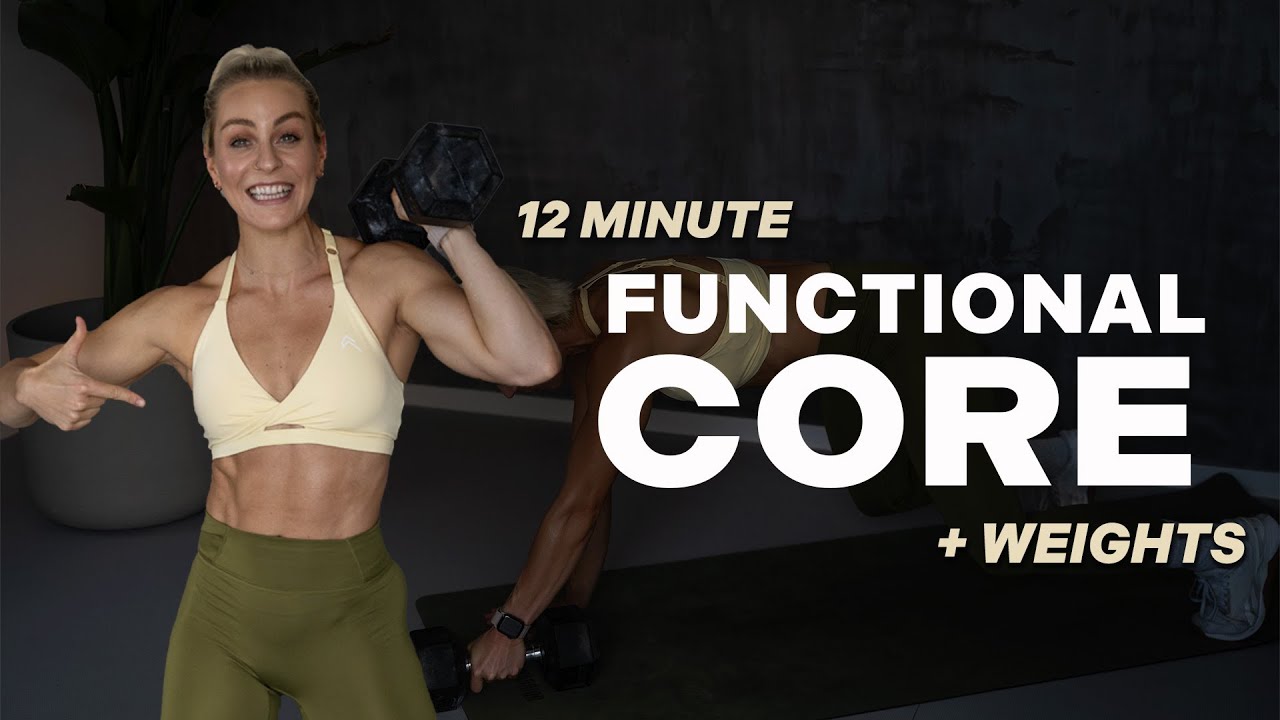
3. 12-minute functional core workout
What? A short, no-repeat, functional core workout to target posture, balance and strength.
Why? "In your 40s, functional training becomes non-negotiable," notes Long. "You should be looking to train control, not to exhaustion."
How long for? 12 minutes.
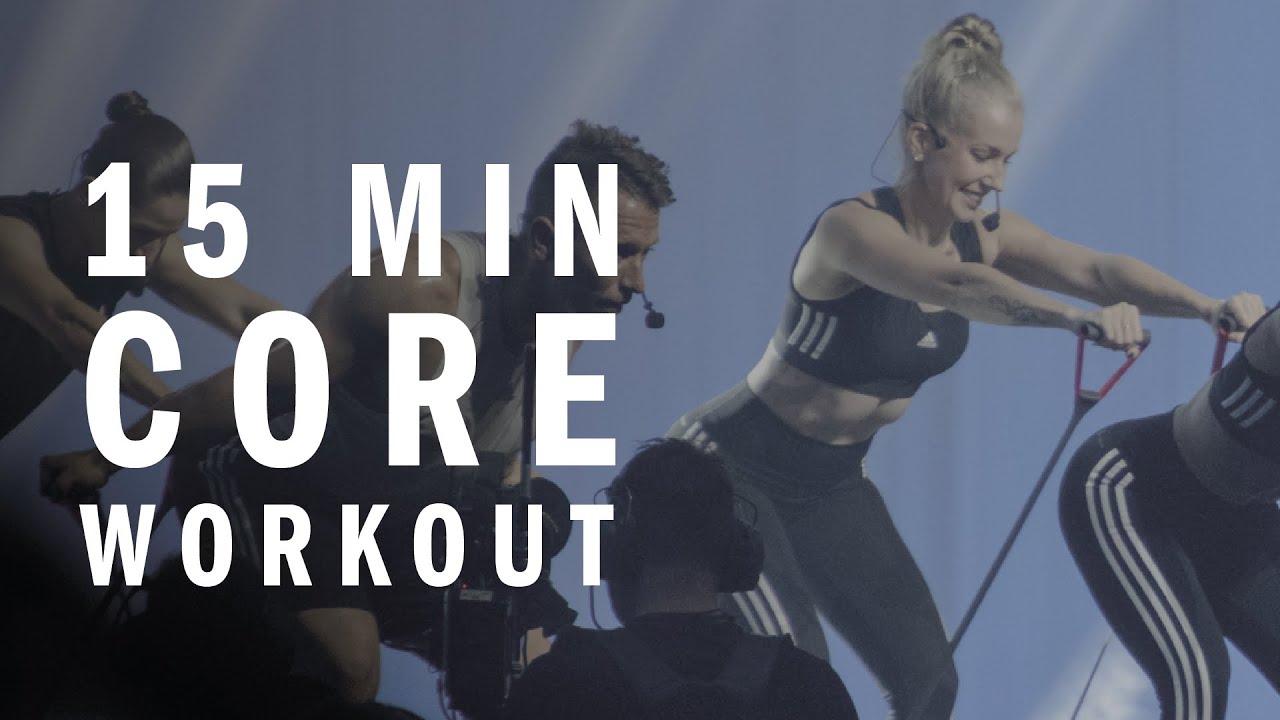
4. Les Mills core workout
What? A 15-minute athletic-based core workout designed to build core strength, stability, speed, and agility.
Why? "Les Mills core training is effective at any age," says Long. "It works because athletes get challenged, beginners feel safe and older adults stay confident
"It trains bracing, rotation and end-range control in a group setting, which keeps people coming back."
How long for? 15 minutes.
5. 15-minute standing abs workout
What? A short but spicy 15-minute standing core workout with Caroline Girvan.
Why? Standing core moves are extremely effective, as they encourage us to train our abs and deep core in a truly functional way (as we do IRL). Even better, they can be done anytime, anywhere - even with no workout mat!
How long for? 15 minutes (but it might feel longer!)

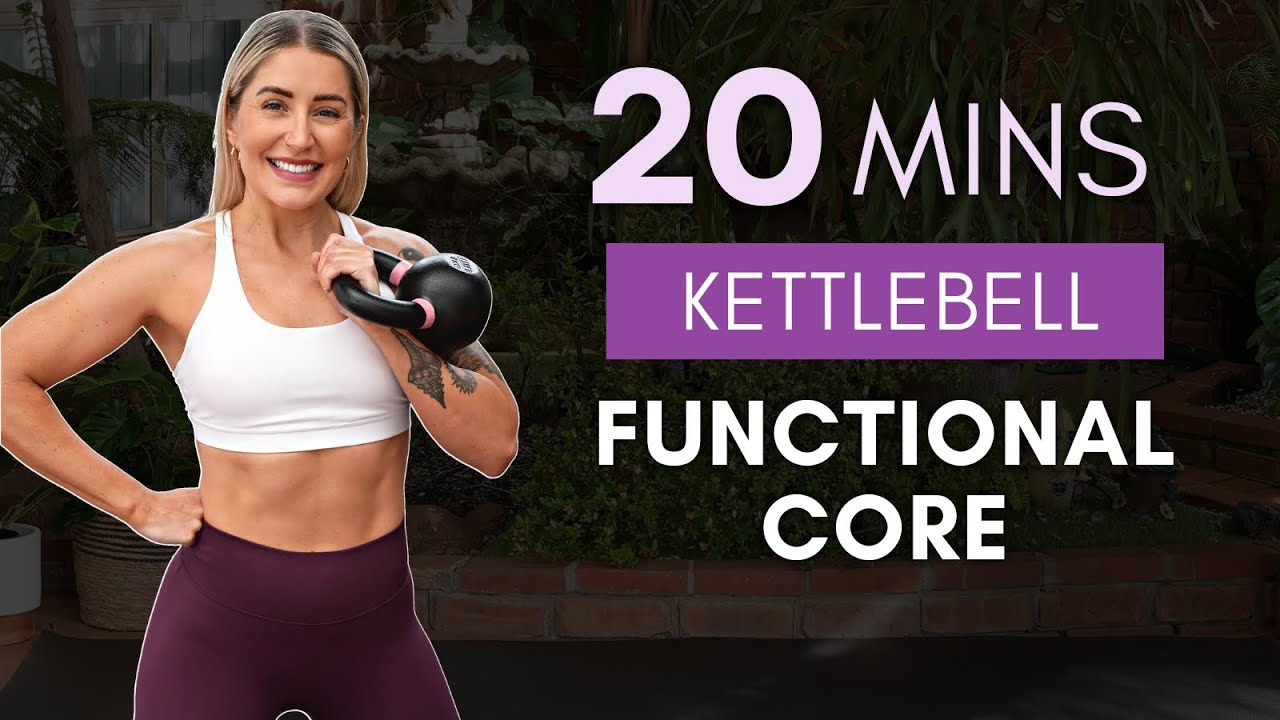
6. Kettlebell core workout
What? A 20-minute core workout using a kettlebell.
Why? “I always tailor workouts based on fitness level, injuries and individual goals, and those factors naturally change over time," says Dale-Toozy. "Many core exercises can be performed at any age by adjusting the weight, reps, or tempo. A kettlebell workout is a great option if you have limited equipment, and most exercises can also be performed without any weight at all."
How long for? 20 minutes.
7. Pilates core workout with Move with Nicole
What? A Pilates core workout, targeting the entire core area for control, stability, strength and balance gains.
Why? While Pilates is a fantastic form of exercise at any age, it comes into its own as we age. Low-impact, buildable and accessible, this class will leave you with the infamous Pilates shake in no time.
How long for? 25 minutes.

Shop MC UK's go-to core workout kit now:

Crush those core moves in style with this butter-soft, mocha brown sports bra from fan favourite, Adanola. Quality fabrics, beautiful, fit-for-purpose fabrics and great fit - you can't ask for much more than that.

A soft pair of leggings is on our core workout non-negotiables list, and this super soft, breathable pair from sustainable superstar brand, BAM, ticks all our boxes. We especially love the range of colours and the 7/8 leg length.

Whether you're working your core in the gym, at home or elsewhere, a decent yoga mat is essential. There are so many to choose from, but for value, durability and grip, we rate this Proiron one.
Do we need to train our core differently as we age?
In a word: yes. Here's how, according to Dale-Toozy.
“In your 20s, recovery time is typically faster, and your potential for building muscle is high. Use these years to focus on building a strong core foundation, gradually increasing weights as you get stronger."
“As you move into your 30s, muscle mass begins to decline gradually, and recovery may take a little longer, but many people feel like they’re in their peak of fitness around this age. Focus on maintaining the strength you’ve built, while adapting your training around any injuries or niggles."
“In your 40s, you should prioritise functional exercises and quality, controlled movements. Reduce the weight (and reps if needed) and focus on engaging the deep core muscles effectively to provide support around your midline."
“From your 50s onwards, balance, stability, and mobility become key, especially for day-to-day activities. Modify exercises where needed and reduce reps so you’re focusing on sustainable movement patterns you can stay consistent with long term. "
