This Simple Pilates Move Targets Your Glutes, Core and Hips—I Tried It, and Felt Stronger Within a Week
Looking for that slow burn? We've found her.


Pilates exercises are well and truly having a moment. Loved by the likes of Kendall Jenner and Hailey Bieber and raved about by instructors and PTs alike, they promise to boost strength, stability and functional fitness from studio or home.
So, when Senior Health Editor Ally Head tasked me with trying the Pilates bridge march every day for a week, I couldn't wait to get started. The Pilates glute bridge, for what it’s worth, is one of my favourite exercises of all. Working the hips, glutes and core all at once, it’s a true muscle-building multitasker and one that’s been in my rotation for as long as I can remember. It’s particularly good for those with lower back pain (don’t we all?), but also has a place in the routine of anyone looking to improve their running mechanics, stay injury-free or simply have better posture and movement in daily life.
The reality, though, is that, like all bodyweight exercises, it can get a little repetitive. Without weights to add, finding ways to see progress requires a bit more creativity, which is exactly where the Pilates bridge march comes in. An intermediate variation on the classic glute bridge, I gave it a go every day for a week to see what the added movement could do for my strength and stability.
Still on the fence? Let me encourage you a little more. Weight training, especially for women, is empowering, efficient, and, as research proves, crucial for protecting our bone health and muscle mass as we age. At the same time, though, it’s so important not to discount bodyweight exercises, and in particular, Pilates. Because while loading up a barbell looks impressive, and no doubt does great things for your maximal strength, nothing will teach you focus, postural control and deep core activation like your own bodyweight.
If you’re looking for something to spice up your Pilates practice, keep scrolling. There’s plenty more where this comes from, too. Just check out our guides to the best Pilates moves of all time, how to master the infamously tricky Pilates teaser and the best instructor-approved Pilates core exercises. Plus, if Reformer is more your thing, you should read how I got on when I tried the similar (but not the same) Lagree method.
Pilates Bridge Marches Promise to Challenge Strength and Stability, So I Put Them to the Test – As for the Results? Impressed Is an Understatement
What are Pilates bridge marches?
Pilates bridge marches are a variation of the classic Pilates bridge; a lower-body exercise which focuses on glute activation, core control and hamstring strength.
The classic version of the move is performed lying on your back with your knees bent and feet flat on the floor. From there, you lift your hips using the strength of your glutes, hamstrings and core, instead of your lower back.
The bridge march adds an extra layer of instability to the exercise. Rather than staying in a static hold at the top of the movement, you switch your legs slowly into a table top position. It takes the bridge from a bilateral movement, where both limbs are doing the same thing at once, to a unilateral movement, which will challenge your coordination, stability, control and single-leg strength.
What are the benefits of Pilates bridge marches?
Broadly speaking, the benefits of Pilates bridge marches remain the same as the classic Pilates bridge, just with the intensity dialled up. The focus is still on the lower body and core strength, but more challenge is placed on the oblique muscles on the side of the core. The hamstrings and glutes also have to work harder to support your body weight whilst the other leg is raised.
The benefits of the move, which include “strength, posture and stability,” says Lizzie Nicholls, Pilates instructor at HOME, apply directly to our daily lives. “When your glutes are activated, everyday movements like standing, walking or climbing stairs feel easier.”
1. Glute, core and hip strength
Compound movements like Pilates bridge marches are both effective and efficient because they work multiple muscle groups at the same time - in this case, the glutes, hamstrings and core.
But why is the marching so important? Well, research shows that single-leg movements can be particularly effective at activating the gluteus maximus and medius, both of which have a habit of allowing other muscles to do the work when they aren't specifically targeted.
The single-leg element also provides an added challenge for your core, says Josie Crafts, master trainer at The Method. "As you're lifting one foot off the ground at a time, your abdominals are forced to resist rotation and your hips to stay level, which is great for building deep abdominal control," she explains.
2. Balance and stability
Balance and stability often get overlooked as metrics because they don’t have the same aesthetic pull as strength or speed. The reality, though, is that very often they are the foundations we need to improve our performance. Without stability, being able to lift the heavier weights or coordinate your limbs when you run becomes much more challenging and increases your risk of injury, too.
”By asking your body to hold steady whilst you move one leg, Pilates bridge marches provide a great opportunity to work on your balance,” says Nicholls. That marching movement is also very similar to the mechanics you need whilst running, making it a particularly good exercise for anyone currently training on the track, road or trails.
3. Protected posture and lower back
Given that most of us spend up to eight hours a day hunched over a screen, the importance of moves that support our posture cannot be overstated.
That’s where Pilates bridge marches come in very handy. Requiring no equipment and very little space, they are a powerful way to build strength in your lower back from the comfort of home. “Sitting weakens the glutes and tightens hip flexors,” says Crafts. “Bridges help to reactivate the glutes and open the front of the hips, which can contribute to better upright posture.”
How to practice a Pilates bridge march with good form:
If we're going to reap all the benefits that the bridge march has to offer, it's essential that we practice it correctly. Crafts outlines the following step-by-step guidance:
- Lie on your back with your knees bent, feet placed hip distance apart and arms alongside the body.
- Inhale to brace your midline, and exhale to push through your heels and find your bridge position.
- Keep a straight line from knees to shoulders, with your knees at hip distance, ribs soft and glutes engaged.
- Float one leg off the ground with control, keeping the knee bent and hips level.
- Alternate legs without allowing the hips to drop from side to side, pressing into the arms for support throughout.
- If more support is needed, hands can be interlaced underneath the back or a block placed underneath the sacrum.
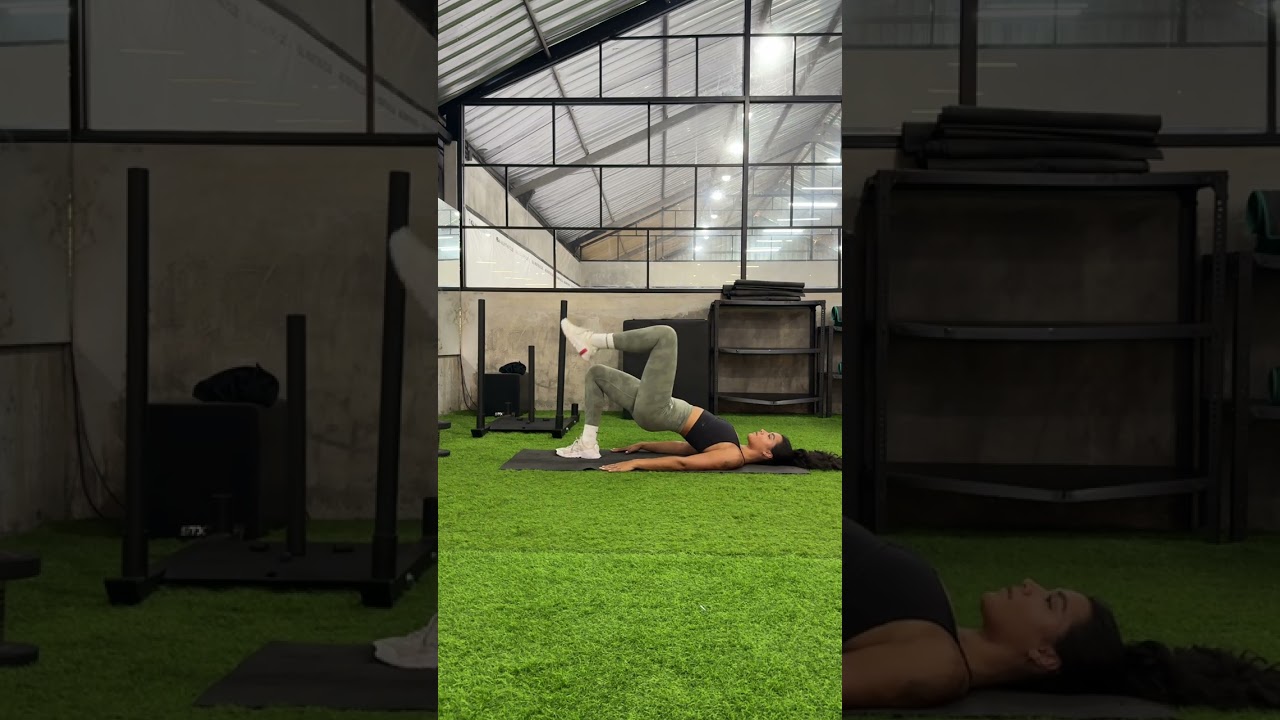
I tried Pilates bridge marches every day for a week - and wow, my glutes, core and lower back have all noticed the shift
Days one to three
Whilst I’d consider myself an experienced Pilates practitioner (I’ve been attending both mat and Reformer classes for over five years), this week has reminded me that you really do never stop learning.
Though I've done glute bridge marches many times in the past, paying closer attention to my form really revealed the gaps in my strength and stability that sloppy technique often hides.
For the first couple of days, my hips and hamstrings feel tight, not helped by the fact that I’ve recently been slacking on stretching. My lower back, too, begins to arch once I'm a few reps in. This is a sign that I’m not activating my glutes and core, so I slow things down, focusing on engaging both muscle groups before I lift my hips off the mat. I also make sure to come down out of the move to reset as soon as I notice my lower back taking over.
For the first three days, that means sticking to a maximum of ten reps at a time. That number will be different for everyone, depending on your experience and existing strength. My best advice: try not to compare to where you think you ‘should’ be - pushing too hard and compromising your form will only slow your progression and could lead to injury.

Ash used Pilates bridge marches as a way to activate her glutes before a run
Days four to seven
By day four, my technique is much improved, and I can feel a real difference in the way my core naturally switches on when I ask it to. My glutes are a little slower to get the idea, and I still have to concentrate on them to make sure all the work doesn’t come from my hamstrings and lower back.
A tip for anyone else struggling with lazy glutes. Keep your heels close to your bum; it helps to prevent the hamstrings from taking over and makes a world of difference for me.

Whenever Ash could feel her lower back taking over, she regressed to the standard glute bridge to correct her form
I really love the way the marches challenge my stability, too. Not only can I feel my deep abdominals working, but my obliques are really getting involved. By the end of the seven days, my whole torso feels more engaged, not just when I’m doing the exercise but in my daily life, too. Whether I’m sitting at my desk, walking to the shops or climbing the stairs, I feel taller and stronger.
It’s such an easy move to fit into daily life and doesn’t need to be part of a massive workout. I slot it in in the morning, in my warm-ups, while watching TV or before bed. As far as exercise snacks go, it’s about as good as it gets.
Shop MC-UK approved Pilates essentials now:

These leggings went viral for a reason. Sustainable and size-inclusive, they're made from 25 recycled water bottles and come in sizes ranging from XXS to 6XL. They're ultra comfortable too, with a deep high-rise waistband and four-way stretch that makes them perfect for keeping on all day.

If you're planning to do your Pilates bridge marches as an activation before your run, then the chances are you'll need kit that can take you from mat to road. It's here that I love a pair of flappy shorts, especially ones like these, which have built-in briefs so that you don't have to worry about flashing mid move (is there anything more off-putting?).

Will I ever stop banging on about this yoga mat? Probably not. It's just so good. Well cushioned, quick drying and available in the cutest selection of designs, it's a real all-rounder that I use almost every day, whether for yoga, Pilates or home strength sessions.
How can I modify the Pilates bridge march?
The beauty of the Pilates bridge series is that there are endless variations to suit your strength, experience and current needs.
“For beginners or those returning from injury or pregnancy, mini bridges, where you lift the hips only slightly, or supported bridges with a block under the pelvis can help build strength and confidence,” recommends Josie Crafts, master trainer at The Method
Other intermediate options, Crafts says, "include isometric holds or adding a resistance band for extra glute activation.”
For those wanting an advanced challenge, she suggests “single-leg bridges, elevated feet bridges, or weighted bridges to increase strength and stability demands.”
