I Tried Pilates Heel Taps Every Day—and The Simple 5-Minute Move Strengthened My Abs and Hips
A simple exercise that packs a punch


When it comes to Pilates, the smallest moves often pack the biggest punch. I've tried enough of the movements to know that even the simplest-looking exercises can light up muscles you didn't even realise needed attention.
Take Pilates heel taps. They're a deceptively simple exercise that trains your core muscles, challenges your coordination, and strengthens the hips and lower abs. When I kept hearing Pilates instructors raving about them, it grabbed my attention.
As someone who spends long stretches of the day sitting at my laptop, I'm always on the lookout for moves that ease desk-related stiffness and counteract the slow creep of desk-posture. And because so many Pilates instructors describe heel taps as a gentle but effective way to activate the deep core - the muscles that support better posture, I decided to dig a bit deeper.
The more I read, the more heel taps made sense. Research published in PMCID found that Pilates-based core-stabilisation training improves deep-core muscle function, and a further study suggests Pilates-based workouts can strengthen core stability and posture control.
And because heel taps don't require any equipment and little space, they seemed like the sort of accessible move I could easily add into my day. So when MC UK's Senior Health Editor, Ally Head, challenged me to try Pilates heel taps every day for a week to see if I noticed any benefits, I didn't hesitate. If a simple movement could help reset my posture and switch my core back on, I was more than willing to put it to the test.
Before you read on to see how I got on, it's worth checking out our guides to the best Pilates exercises for beginners, best Pilates core moves, the most effective Pilates exercises of all time, as well as my experience of trying Pilates pelvic curls every day, plus other health writers' experiments trying toes taps, leg kicks, and leg circles.
Experts swear by Pilates heel taps for building core strength and easing hip tension – so I tried them for seven days
What are Pilates Heel Taps
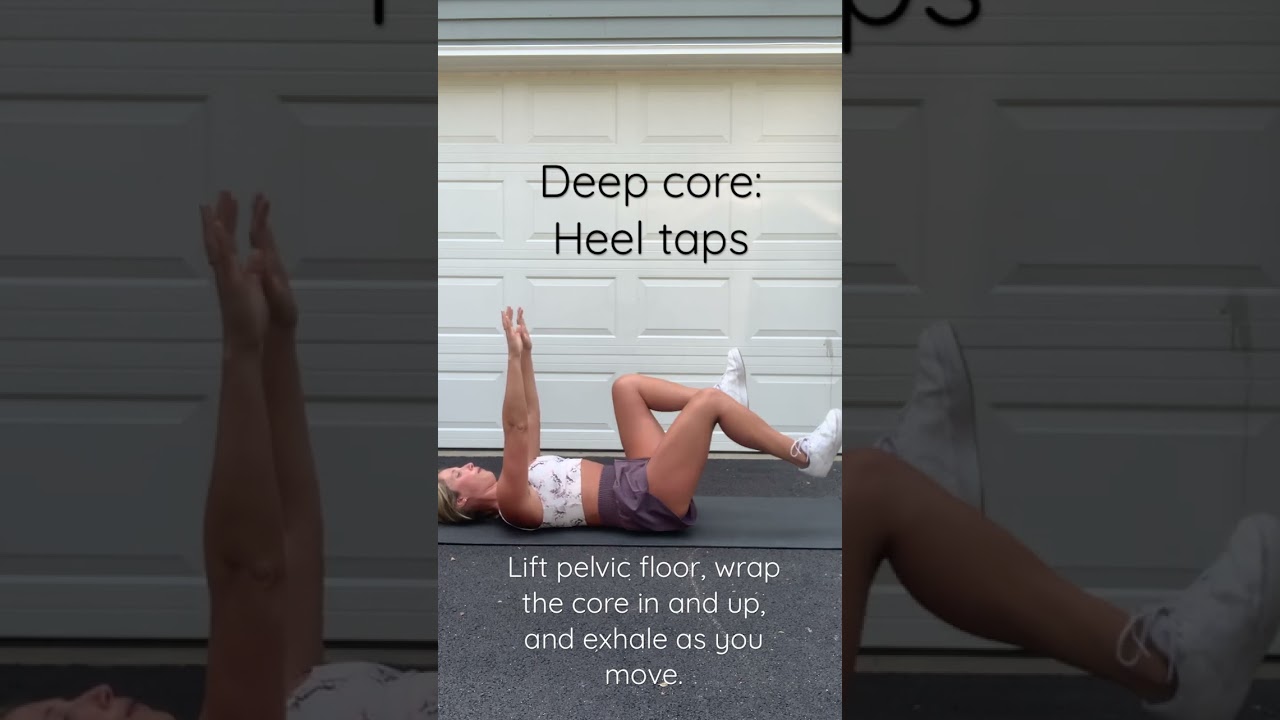
At first glance, Pilates heel taps don't look particularly challenging. The move is performed lying on your back with your legs in a tabletop position, lowering one heel at a time to tap the floor, while keeping your core engaged and your spine stable. They may look effortless, but Pilates rarely gives anything away that easily.
As Emma Mahama, founder of Everybody Reformer, told me, "Heel taps are one of those exercises that look simple but do a surprising amount for your body." It didn't take long to realise how right she was.
The movement itself is small, but it demands a surprising amount of control - slow, alternating taps of each heel to the mat without letting your lower back arch or your hips rock side to side. Done properly, heel taps quickly become a test of coordination and focus.
"Heel taps are a Pilates warm-up exercise that strengthens the deep core muscles and trains pelvic and spinal stability," explains Anouska Shenn, founder of The Office Yoga Company. While understated, it's this precision and engagement that make them such an effective exercise.
@nikkipolos Stop chasing crunches. Start training your core the smart way. Heel taps build control without wrecking your back. Leg lowers level it up when you’re ready. Strong core ≠ punishment. It’s about stability, breath, and consistency. Save this for your next core day 💜
♬ Silence - ONEIL & Giorgio Gee & Sara Phillips
What are the benefits of Pilates heel taps?
With this in mind, I was curious to see what kind of results I might notice from doing heel taps every day. And according to the experts, this small movement packs some surprisingly effective rewards.
1. Builds core strength
One of the biggest benefits of Pilates heel taps is how effective they are for building deep core strength. "Not just the visible abs, but the stabilising muscles that support your spine, which is why they’re a staple in Pilates," Mahama told me.
It's these stabilising muscles that Shenn refers to when she says, "Heel taps strengthen our TVA (transversus abdominis) muscles in particular. These deep core muscles act like a corset for your back, so strengthening them is one of the most effective ways to prevent aches and pains in this area."
2. Improves pelvic stability and posture
Another huge reason Pilates instructors swear by heel taps is their effect on stabilisation.
"By maintaining a neutral spine while your legs are moving, you’re teaching your body to hold good posture and building stamina in the muscles that help us do that," outlines Shenn.
So, while the move may look straightforward, the focus on keeping the hips and torso steady is the challenging part.
3. Supports the lower back
"Because the movement is controlled and the focus is on keeping the pelvis stable, they’re very back-friendly when done well," says Mahama. "This makes them a more supported alternative to exercises like sit-ups."
4. Eases hip tension
Heel taps are a great hip-strengthening exercise - particularly welcome news for anyone who spends prolonged periods sitting.
"Our hip flexor muscles are getting a workout since they control the lifting and lowering of the legs," explains Shenn. "In the lowering phase, the hip flexors lengthen, so performing these can help reduce some of the tension that builds up from prolonged sitting."
How to perform Pilates heel taps with good form
Proper form is essential if you want to reap the benefits of any Pilates exercise, and heel taps are no exception.
Before I got started with my week-long experiment, I asked the experts to walk me through how to perform the move correctly.
- Lie on your back on a mat, bending your knees so your legs are in a tabletop position (hips and knees at 90°)
- Place your arms by your sides.
- Gently press your lower back into the floor. Your hip bones and pubic bone should be level, and your ribs should soften into the mat. This is key for stability.
- Inhale to prepare. Exhale as you lower one heel towards the mat, hinging from the hip.
- As you inhale, slowly lift the leg back to the starting position.
- On your next out breath, change legs.
- Alternate the legs in a slow, controlled, steady rhythm.
Maintaining a 90-degree bend in the knees is crucial when it comes to performing this exercise correctly, says Shenn. "The movement should come from the hip hinge - the thigh bone moving away from and towards the hip - rather than bending from the knee to lower your heel to the mat."
She also stresses control over speed. "A mistake I often see is people lifting and lowering too quickly – dropping the leg and snapping it back up using momentum. Instead, you want to resist gravity on the way down and focus on using your core to lift back up."
My review of trying Pilates heel taps everyday for a week
Days one to three
Armed with the experts' advice, I start the experiment feeling optimistic about what the move should be like in practice and the subtle benefits I could notice over the week.
I begin by lying flat on my back, before bringing my legs up into a tabletop position, and gently pressing my lower back into the floor. At this point, Shenn reminded me to lift my lower abdominals in and up. "Try to maintain this tension as you move through the exercise," she said. A small cue that made all the difference.
Next came the challenging part. It takes more control than I was expecting not to drop my leg and automatically snap it back up. I have to focus on taking my time to move each leg slowly down until my heel reaches the mat, before lifting it back up in a controlled rhythm. The burn in my thighs is immediate - I'm not exaggerating when I say they really ache.
When I wake up on day two, I can feel the gentle ache in my abdominal muscles - a clear sign that the deep stabilisers had really been activated.
After a couple of days, I start to find a natural rhythm, and I'm able to complete more reps per session. While the burn remains, I also notice a subtle difference in how my hips and lower back feel supported during the exercise.

Rebecca found that it took more control than she was expecting not to drop her leg and automatically snap it back up - she had to focus on taking her time to move each leg slowly down until her heel reaches the mat, before lifting it back up in a controlled rhythm.
Days four to seven
By the second half of the week, heel taps start to feel more natural - I'm getting into a steady rhythm, and the movements are easier to control. I can feel engagement across my deep core, obliques and hip flexors, and the slow, precise motion helps me maintain stability in my pelvis and lower back.
The burn in my thighs eases slightly, and I can start to feel my body moving with control and precision, which feels like a small win in itself.
I get into the habit of pulling out my mat after a few hours of sitting at my desk, which leaves my hips feeling looser, more responsive and less tense than usual. Even after just a few days, it's clear that heel taps are targeting areas I know I need to strengthen.
By the final day, I feel a subtle but encouraging difference in my posture and core engagement. While a week isn't long enough to see a transformative change, the experiment has convinced me of the benefits: stronger core muscles, improved hip tension, better posture and coordination - all areas I've historically struggled with.
Will I continue doing Pilates heel taps every day? Probably not. But after seeing the results in such a short space of time, they've earned a permanent spot in my workout routine. Once you get into the swing of them, they're a brilliant warm-up exercise - low-impact, manageable and effective. I'd recommend them to anyone looking for a core-focused movement that delivers results with consistent practice.

Rebecca saw results in a really short space of time - which means the move has earned a permanent spot in her workout routine moving forwards.
Shop MC-UK approved Pilates essentials

I've recently started wearing these Pilates grip socks from BAM, and they've quickly become a staple. They're comfy, practical and sustainable to boot.

These have become my low-impact go-to leggings. The high-rise and stretch make it easy to switch from desk to mat, without needing to change.

A reliable mat is a game-changer for Pilates, and this Sweaty Betty option ticks all the boxes. Cushioned enough for comfort, grippy enough for stability and rolls up neatly for storage.
How often should you perform Pilates heel taps?
Anouska Shenn, founder of The Office Yoga Company, recommends initially aiming for two to three sets of 10-15 reps per side, between two to three times per week.
"Once that becomes easy, there are multiple ways you can make the movement more demanding," she says. "You could curl the upper body into a chest lift, holding that for the duration of the exercise. Or, reach the arms out in front of you (dead bug style) to challenge your stability further."
You can also switch the legs past each other in mid air (inhale, tap; exhale, change), or lift and lower both legs together - variations that really ramp up the core engagement and control.
