I Tried Kettlebell Swings - and The Experts Were Right On It Being The Only Move You Need For A Full-Body Burn
Experts call kettlebell swings the ultimate full-body move - so I put them to the test.


Kettlebells are one of those pieces of gym equipment that feel simultaneously ubiquitous and intimidating. You’ll spot them lined up neatly in almost every gym, usually colour-coded and ranging from deceptively light to alarmingly heavy. At home, too, they’re one of the more affordable bits of kit you can invest in - a single kettlebell can cost far less than a month’s gym membership and takes up barely any space. And yet, despite their accessibility, I've never acquainted myself with using them properly.
Personally, I’ve long been sceptical of kettlebells. The heavier they get, the more convinced I am they’re going to slip straight out of my hands mid-swing and take out a mirror (or worse, my shins). They also look deceptively simple - a handle, a weight, a swinging motion - which somehow makes them feel even riskier if you get it wrong.
But speak to fitness experts, and kettlebells, particularly kettlebell swings, are repeatedly described as one of the most efficient, full-body exercises you can do. And the science agrees, with studies (like this one, published in the Journal of Human Kinetics) showing that the best kettlebell workouts are effective for improving muscular strength, power and maximum oxygen uptake (the amount of oxygen your body is able to absorband use during exercise, also known as Vo2 max), while further research (such as this study, published in the Cureus Journal of Medical Science) reveals that the use of kettlebells in training improves athletic ability across a range of different sports. One movement, minimal kit, and benefits that span strength, power and cardio? Consider me intrigued.
So, after taking expert advice from expert and physio for Enertor, Danny Brunton, and personal trainer Micaela Riley, I decided to put kettlebell swings to the test, adding them into my workout routine every day for a week. Keep reading for an honest look at how this strength trainer's favourite move actually feels in real life.
While you're here, you might want to read more on all things weight training. Do check out our guides to the most effective home kettlebell workouts, the best 10 minute kettlebell workouts, and the best 20-minute kettlebell workouts, if you've got a little more time, not to mention the best kettlebell swing workouts, if you're a little more familiar with the piece of equipment.
New to strength training? Meet the kettlebell, a piece of equipment experts say is all you need for a full body burn
What is a kettlebell swing?
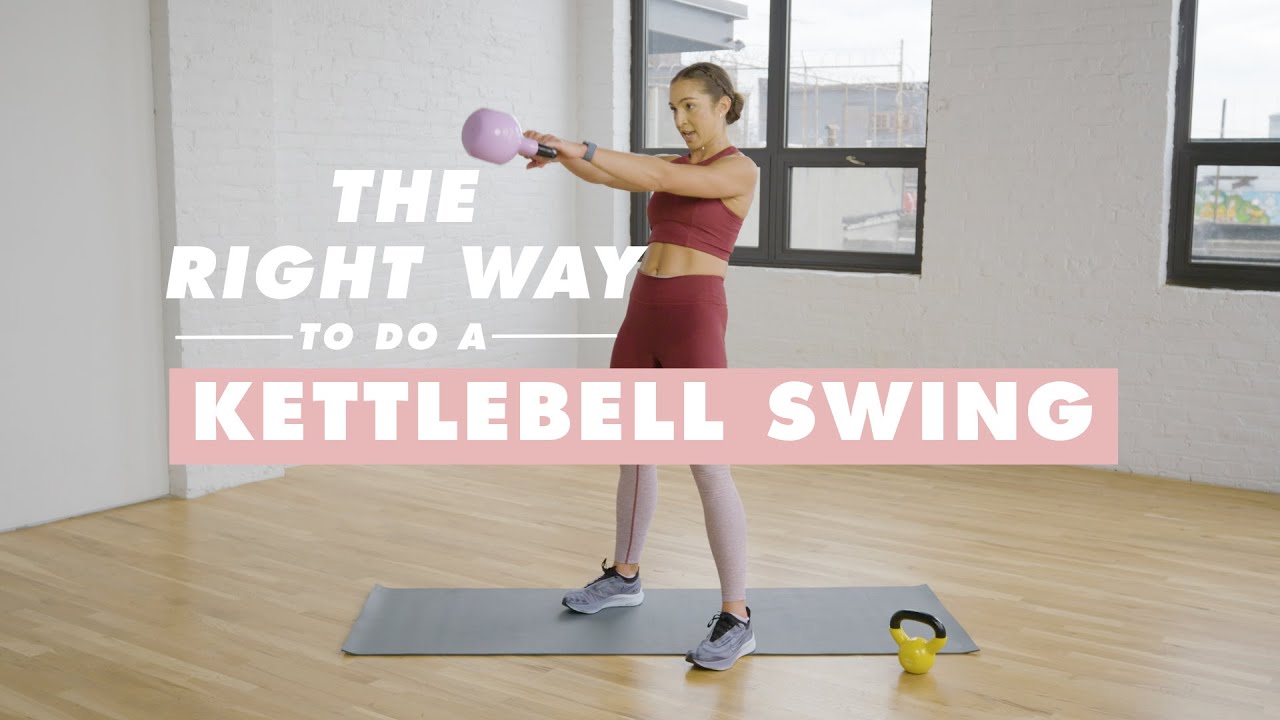
At its core, a kettlebell swing is a hip-hinge movement. You hold the kettlebell with both hands, hinge at the hips, then explosively drive forward to swing the weight up to around chest height, letting gravity do the work on the way back down.
Importantly, the arms aren’t doing the heavy lifting here. As Brunton explains, the movement is powered by the lower body, with the upper body acting more as a guide. It’s this coordination, rather than brute strength, that makes the swing such a distinctive exercise.
What are the benefits of doing kettlebell swings?
Kettlebell swings are often labelled a “full-body” exercise, and for good reason. According to Brunton, they “mainly target the glutes and hamstrings to generate power,” while also demanding core engagement for stability and recruiting muscles in the upper back, including the rear deltoids and trapezius, to control the movement.
Riley agrees, adding that swings work the legs, glutes, core and upper body simultaneously. “The power comes from the hips and glutes, while the core stabilises your spine and the arms guide the kettlebell through the movement,” she says.
The result is a move that builds strength and power, while also elevating your heart rate - meaning you’re getting a sneaky cardio effect alongside muscular work. It’s also highly functional, translating well to everyday movements like lifting, carrying and moving quickly.
What does the science say on kettlebell swings?
From a physiological perspective, kettlebell swings sit in an interesting middle ground between strength training and conditioning. Research has shown they can significantly increase heart rate and energy expenditure, particularly when performed in short, intense bursts, while also improving posterior-chain strength (that’s glutes, hamstrings and lower back).
They’re not a replacement for heavy compound lifts like squats or deadlifts, though. As Brunton points out, while kettlebell swings share similarities in the muscle groups they target, they’re “more focused on improving power and endurance rather than strength alone.” Think of them as a complement to traditional strength work, rather than a substitute.
How to perform a kettlebell swing correctly
Proper form is everything with kettlebell swings. Riley says the biggest mistake she sees is insufficient core engagement. “If the core isn’t braced, the movement can place too much stress on the spine and increase injury risk,” she explains.
To perform a swing correctly:
- Start with the kettlebell slightly in front of you
- Hinge at the hips with a neutral spine
- Brace your core as if preparing to cough
- Drive through the hips to swing the kettlebell up
- Let it fall back naturally, hinging again for the next rep.
The arms should stay relaxed - if your shoulders or biceps are burning, you’re probably muscling the movement.
Are there any risks to performing kettlebell swings?
Because swings rely on a solid hip hinge, they’re not suitable for everyone straight off the bat. Riley advises anyone with a history of lower-back injury or who isn’t confident with hinge mechanics to proceed with caution.
There aren’t many true modifications, but beginners can practise the movement without weight or use a light dumbbell to learn the pattern first. Gradually increasing load - and stopping if form deteriorates - is key. As Brunton puts it, “Swings reward quality more than fatigue.”
I added kettlebell swings into my workout routine for a week - and the burn was next level
Days one to three
To keep things simple, I followed short, beginner-friendly YouTube workouts, focusing on mastering the pattern rather than chasing heavy weights or high reps.
The first few days were, in a word, humbling. Despite using a relatively light kettlebell, I was surprised by how technical the movement felt.
Even so, getting the timing right between the hip drive and the swing took real concentration, and my core had to work harder than expected to keep everything controlled. That challenge makes sense, given Riley’s warning that one of the biggest mistakes with kettlebell swings is “not bracing the core enough,” which can place unnecessary stress on the lower back.
Physically, I noticed delayed onset muscle soreness (DOMS) in my glutes and hamstrings by day two - the deep, achy kind that reminds you something is definitely happening, even if nothing looks different yet. As Brunton explains, kettlebell swings “mainly target the glutes and hamstrings to generate power,” so it’s no surprise those muscles made their presence known early on.

Georgia found the move surprisingly effective, once she got the hang of the technique and focused on her form.
Days four to seven
By the second half of the week, the movement began to feel smoother. I was less tentative, more confident in my grip, and better able to generate power without yanking the kettlebell up with my arms.
While, as Brunton notes, it’s unrealistic to expect visible strength gains in just one week, “realistically you won’t notice any strength gains as this can sometimes take around four to six weeks of consistent training”, I did notice my heart rate spiking quickly and my workouts feeling more efficient.
That tracks with his point that kettlebell swings are an exercise that “will raise your heart rate and begin to improve your physical fitness,” even over a short period. Mentally, too, there was something satisfying about ticking off short, focused sets - a sentiment Riley echoes when she says consistent movement like this can help you feel “more energised, focused, and accomplished, even after short workouts.”

Georgia paid particular attention to her form when performing kettlebell swings, engaging her shoulder blades, bracing her core, and pushing through her lower legs.
My honest thoughts on kettlebell swings?
Adding kettlebell swings into my workout routine didn’t revolutionise my body in seven days - and that was never the point. What it did do was introduce a time-efficient, full-body movement that challenged my coordination, raised my heart rate and reminded me that effective workouts don’t need to be complicated.
Kettlebell swings aren’t a magic bullet, but they are a powerful tool when used well. With good form, realistic expectations and expert guidance, they’ve earned a place in my routine - slipping kettlebell fears and all.
Shop MC UK's go-to strength kit now:

I wasn't making it up when I said kettlebells are a seriously affordable piece of kit, especially if you consider how effective they are at working the whole body. This sleek, sage green option from YOTTOY is far more aesthetic than the bulky metallic ones you find at the gym, if matching your gym equipment to your home decor is your vibe.

These kettlebells from Amazon are ideal for beginners - just choose your poison, from 6kg upwards. A heavy-duty cast iron design makes for a stable and strong addition to your home workout equipment rotation - it's really a no-brainer for adding to your strength kit.

Resistance bands might look unassuming, but they’re one of the most versatile and effective pieces of workout kit you can add to your routine. Lightweight, affordable and easy to stash in a gym bag or suitcase, they’re ideal for adding extra resistance to strength moves, activating smaller stabilising muscles, or making bodyweight exercises feel instantly more challenging.
Do kettlebell swings really work?
In a word, yes. Kettlebell swings are widely considered one of the most effective, time-efficient exercises you can do, provided they’re performed with good form. Despite being a single movement, they work multiple muscle groups at once, including the glutes, hamstrings, core and upper back, while also elevating your heart rate for a cardio effect.
As fitness expert and physio Danny Brunton explains, kettlebell swings are often described as a full-body exercise because they “link lower-body power, core stability and upper-body control in one explosive movement.” You generate force through the hips, while the rest of the body works to stabilise and control the kettlebell, making the exercise both strengthening and metabolically demanding.
Personal trainer Micaela Riley adds that kettlebell swings are also highly functional. Because they mimic everyday movements like lifting and carrying, people often notice that daily tasks start to feel easier over time. While you won’t see dramatic strength or aesthetic changes in a week, consistent practice can improve fitness, power and movement confidence - which is exactly why kettlebell swings remain a staple in so many training programmes.
