I'm Prioritising Slow Movement This January - 5 Somatic Pilates Exercises That've Been Revolutionary For My Nervous System
I feel refreshed, revived, and seriously zen.


January has a funny way of making us feel like we should be doing more - more workouts, more steps, more everything - even when our energy levels are quietly begging for the opposite.
Instead of pushing through gruelling workouts and ignoring my body's signals to take a breath (like I *might* have done for the past four years straight), this January, I'm choosing slower, more restorative forms of movement.
Enter: the best somatic Pilates moves for beginners. Somatic exercise - and more specifically, somatic Pilates in particular - focuses less on pushing the body and more on listening to it. It’s about slowing down, tuning into internal sensations, and moving with intention rather than intensity.
Research backs up why this can feel so grounding: a recent paper published in the Journal of Bodywork and Movement Therapies found that movement practices which enhance body awareness and proprioception can improve posture, balance, and overall bodily control - all key goals of somatic work. Then there's this study, published in Psychiatry Investigation, which found that contemplative and somatic-style movement practices can improve emotional regulation by increasing interoceptive awareness.
All this suggests that somatic Pilates is perfect if you’re feeling low on energy or easing back into exercise after a break. Curious to explore this softer approach (and keen to give it a try myself), I asked experts in somatic movement to share the best somatic Pilates moves for beginners - gentle, nourishing exercises designed to help you reconnect with your body, release tension, and move with more ease this January.
If you're looking for more context around the practice, you'll want to catch our full explainer on somatic exercise. We've also explored somatic Pilates in more detail, as well as the best Somatic workouts, too.
I've been trying somatic Pilates exercises - and wow, I'm a fan
What is somatic Pilates?
If you've heard of somatic exercise before, you'll know it's all about slower, more mindful movement that prioritises what's happening on the inside rather than how things look on the outside.
Noemi Nagy-Bhavsar is a Pilates instructor with a background in neurorehabilitation and the founder of Beyond Move Studio. Speaking to MC UK, she explained that somatic exercise "is a connection between the mind and body, releasing trauma and tension stored in the body. It works on the principle that the body holds tension from emotions that we find hard to process."
Somatic Pilates, then, takes this concept and applies it to our favourite Classical Pilates moves. Pilates is a form of movement that's already pretty big on the mind-body connection, but in somatic Pilates, it's an even bigger focus.
Vanessa Michielon - Movement Specialist, Nervous System Educator, and the founder of the Transformative Movement Method - shares a little more detail.
"It's a slower, more mindful approach to the classical Pilates method that blends the precision of traditional Pilates with the inner listening of somatic movement," she explains.
"Unlike mainstream Pilates, which often cues from the outside (“lift your leg”, “tighten your core”), the somatic version uses movements to explore sensation and to improve body awareness - for instance, the subtle tremor that comes when an area of the body reaches the point of fatigue."
@betterme_app Have you heard about somatic exercises? 🤔 These are a type of movement therapy that involves slow, deliberate movements to increase awareness and control of one's own body. These exercises can help alleviate tension, pain, and other physical discomforts caused by habitual patterns of movement and stress 😮💨🥱 Stick with @betterme.health.coaching for more!
♬ KISS A STRANGER - eydrey
Why try the best somatic Pilates moves for beginners?
If January has you feeling frazzled rather than fired up, somatic Pilates offers a refreshing approach to movement. Instead of pushing harder or chasing “perfect” form, it encourages you to slow down, tune in, and move in a way that feels safe and supportive for your body.
As Michielon explains, somatic movement “promotes a sense of safety and personal expression, helping us trust the wisdom of our body again - especially when we’re spending too much time in our head.” The emphasis is on choice: there’s no single ‘right’ way to move, just lots of possibilities depending on how you feel that day.
Another defining feature is the pace. Nagy-Bhavsar notes that somatic Pilates focuses on "slowing down, allowing the muscles to relax and the body and mind to meet on the same level." That creates a calmer, more grounded space - one where rest, recovery, and body awareness can take priority.
At a time of year when energy can be low, somatic Pilates offers a way to keep moving without depleting yourself further - supporting recovery, regulation, and a much-needed sense of ease.
5 best somatic Pilates moves for beginners
1. Pelvic clock
What: Lie on your back with your knees bent and feet flat on the floor, hip-width apart. Imagine your pelvis is the face of a clock: 12 o’clock is toward your belly button, 6 o’clock is toward your tailbone, 3 o’clock is your right hip, and 9 o’clock is your left hip.
Gently tip your pelvis toward 12 o’clock, flattening your lower back slightly. Slowly tilt toward 6 o’clock, creating a small arch in your lower back. Shift the weight of your pelvis toward 3 o’clock, then 9 o’clock, letting the opposite side soften. Continue tracing slow circles around the whole “clock”.
Why: "This is one of the most effective somatic exercises for retraining the deep core, pelvic floor and lumbar stabilisers without bracing or using excess effort," Michielon advocates.
How many: Twelve.
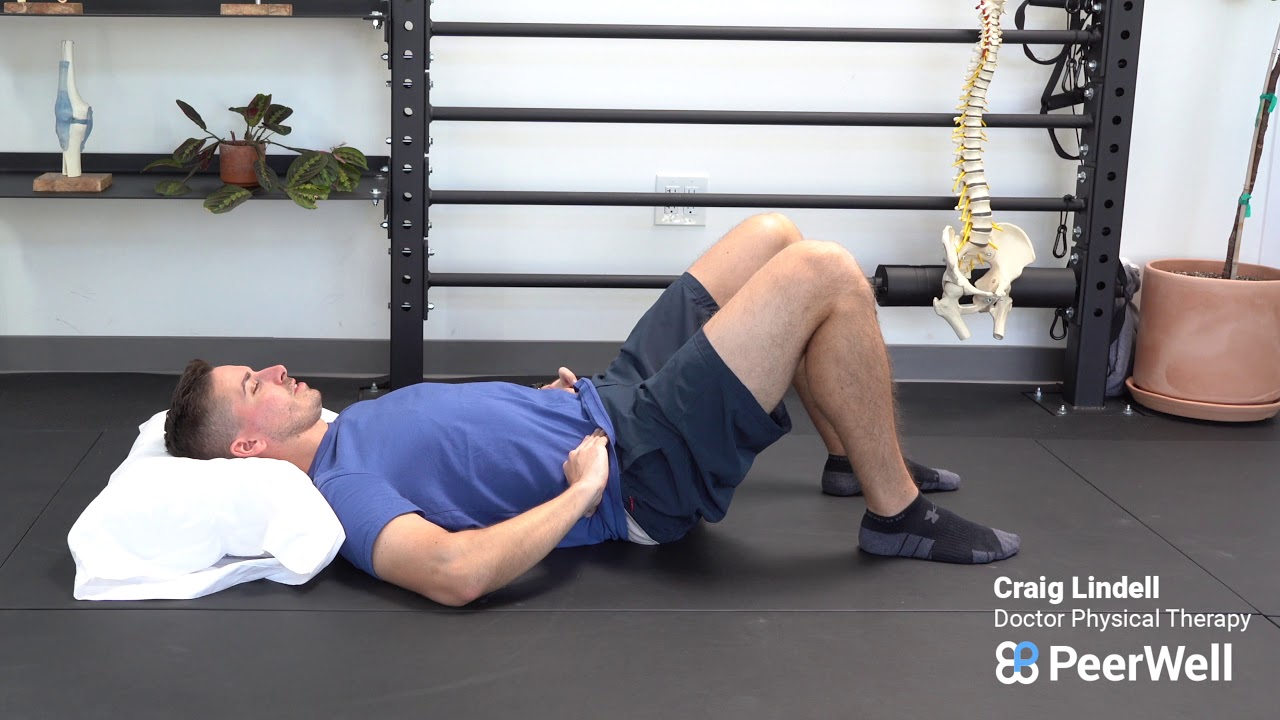
2. Heel slides
What? Lie on your back with your knees bent and feet hip-width apart, placing one hand on your lower belly and breathing slowly, allowing the abdomen to rise and fall naturally. Keeping your pelvis steady, gently slide one heel along the floor to lengthen the leg, noticing any changes in your breath or back position. Pause briefly, then exhale as you draw the heel back in. Repeat on the other side.
Why? Michielon recommends this move for anyone looking to improve core stability. "It reminds the body how to organise movement from the centre, reducing overuse of the lower back and hip flexors."
How many? Fifteen per leg.
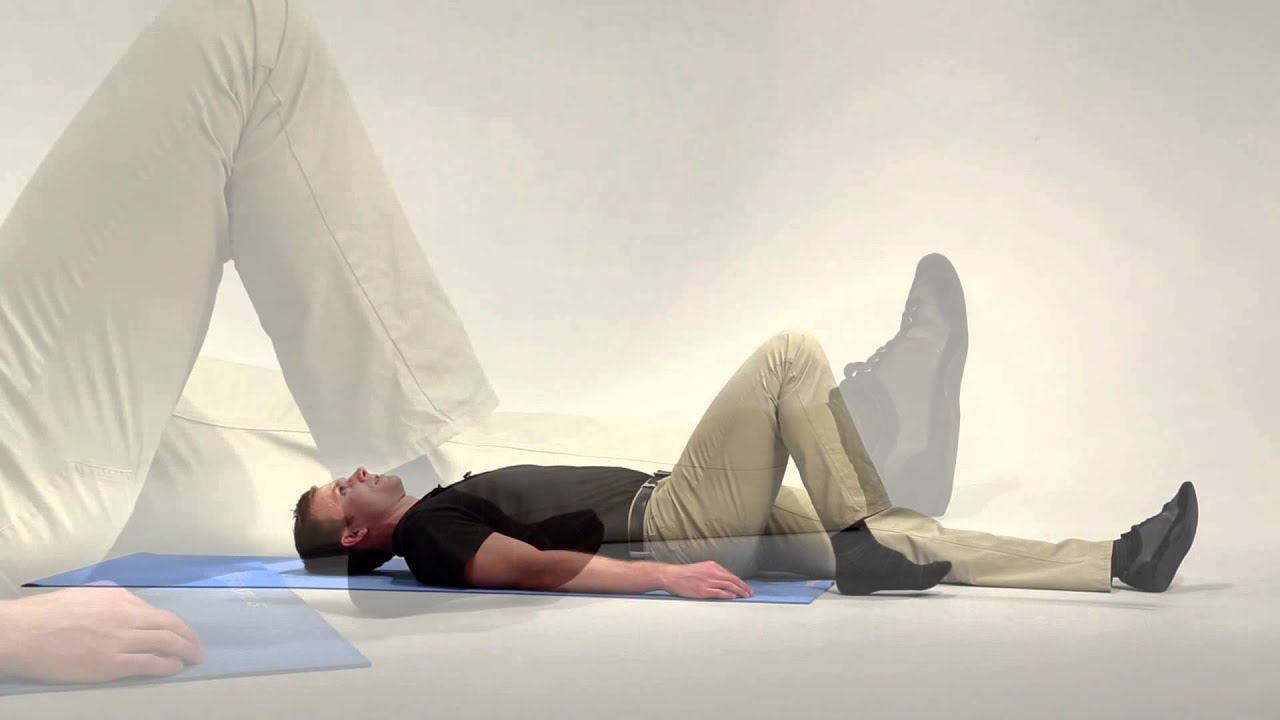
3. Shoulder Bridge
What? Lie on your back with your knees bent and feet hip-width apart, taking a slow breath in as your spine settles into the floor. On the exhale, gently tilt the pelvis and roll the spine up one vertebra at a time, lifting only as high as you can while staying relaxed through the jaw and ribs. Pause briefly, then exhale to roll back down slowly.
Why? A gentle version of the classic glute bridge, this one promotes healthy spinal articulation and reverses the effects of prolonged sitting.
How many? Sixteen.
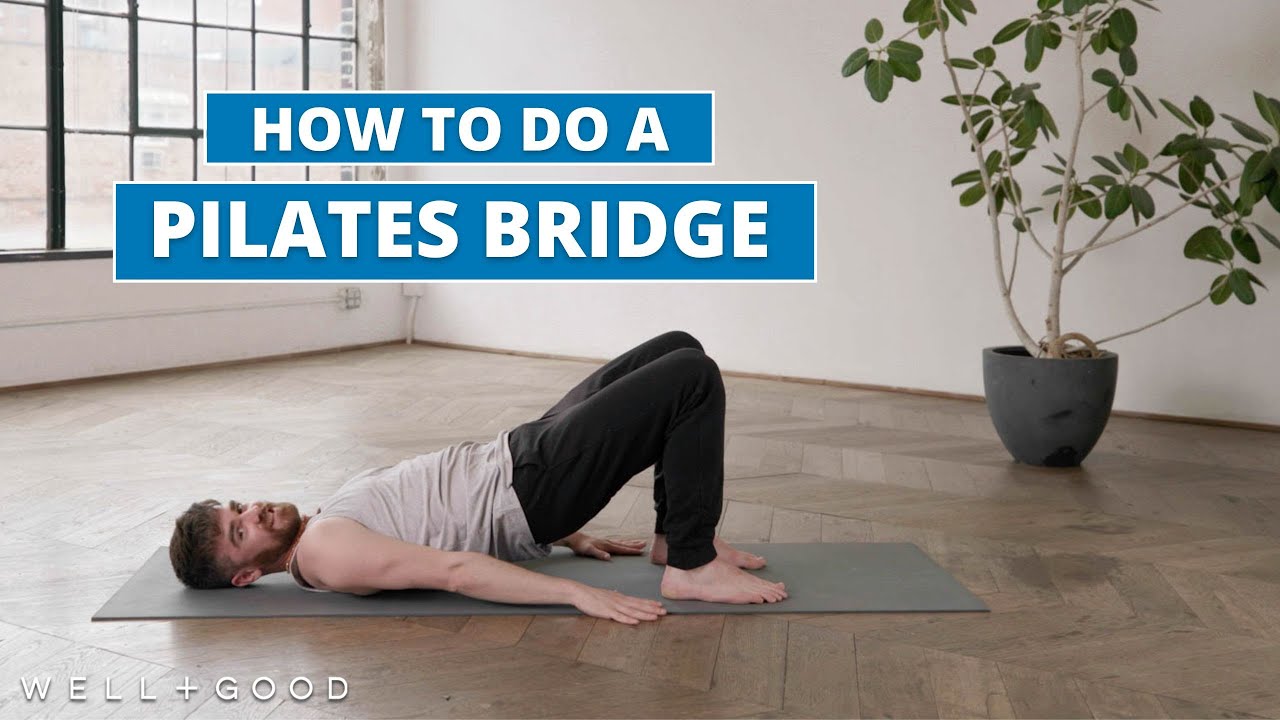
4. Knee sways
What? Lie on your back with your knees bent and feet slightly wider than hip-width, allowing your spine to soften into the floor as you breathe. Gently let both knees fall from side to side in a slow, wave-like motion, moving only as far as feels comfortable and allowing the pelvis to follow naturally.
Why? "Knee sways release tension in the hip flexors, lumbar spine and psoas - muscles all deeply linked to the stress response," Michielon advocates.
How many? Twelve on each side.
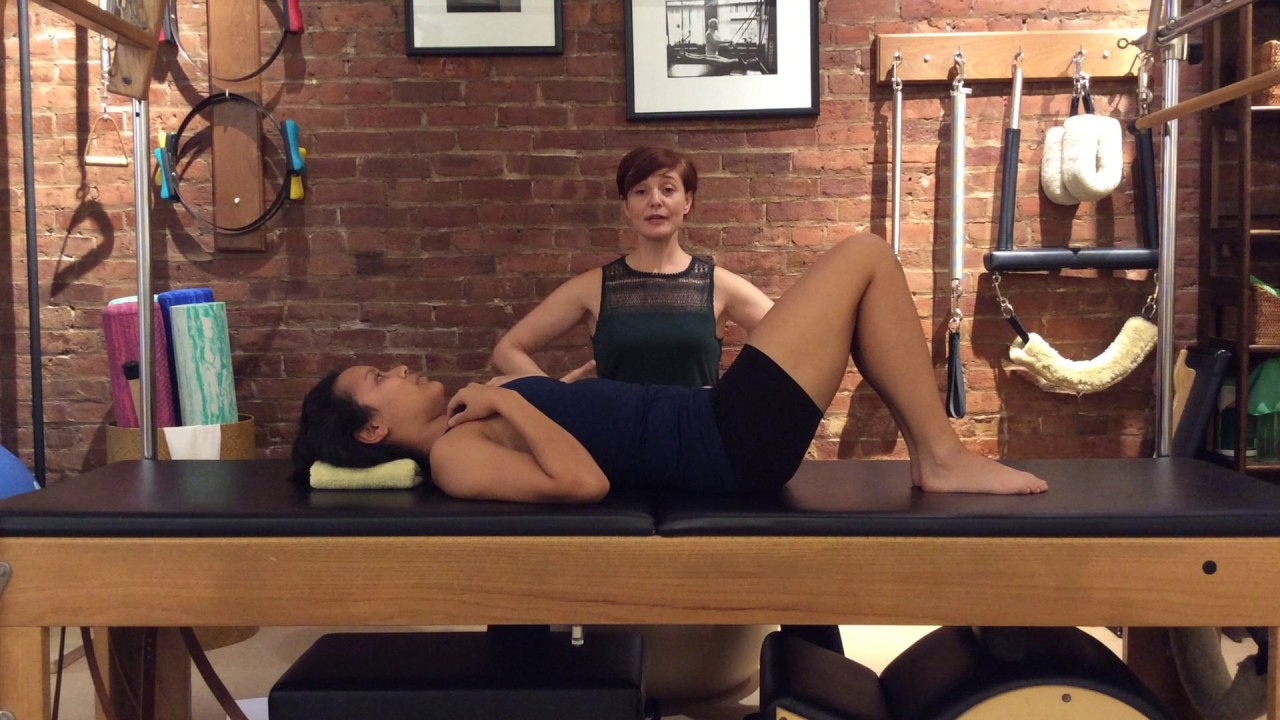
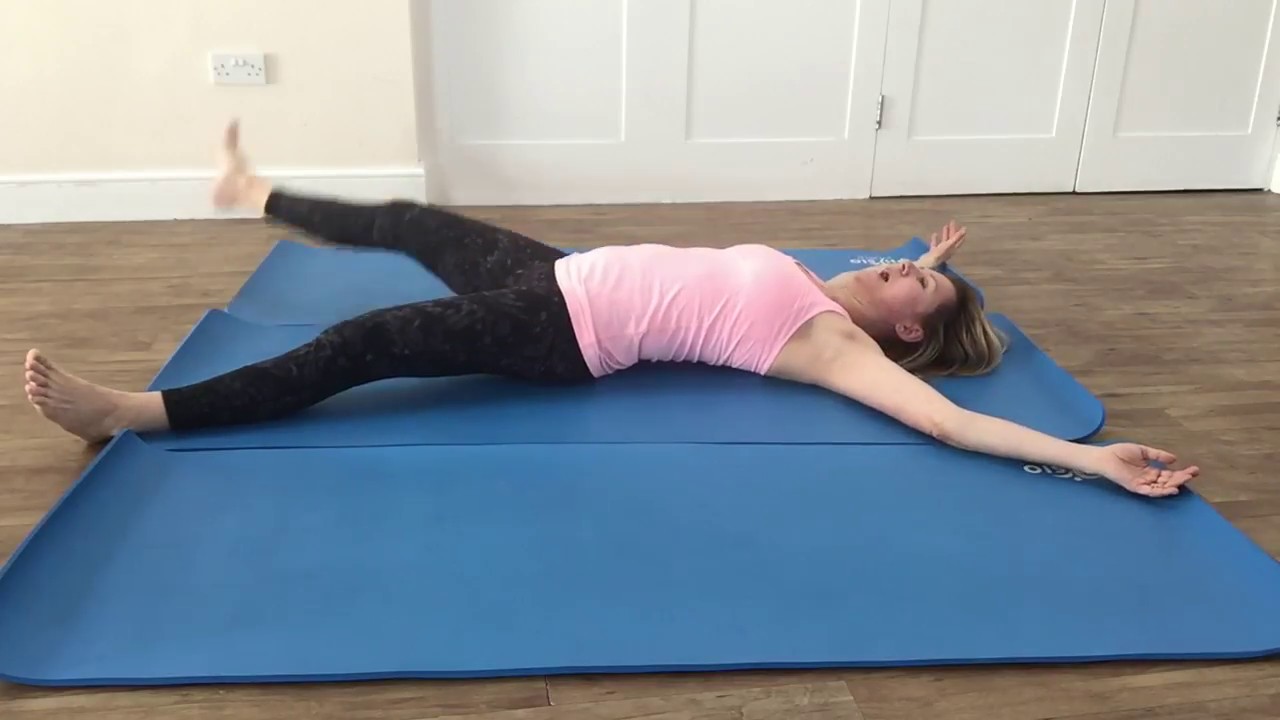
5. Starfish roll
What? Lie on your back in a relaxed starfish shape and slowly initiate a roll by reaching one set of fingertips across the body, allowing the rest of you to follow with as little effort as possible. Pause, then return to centre by initiating from the opposite foot, keeping the movement soft and wave-like so the body gently rolls and releases tension.
Why? This one's really great for when you're feeling anxious or burnt out. "The predictable, rhythmic motion soothes the nervous system," Michielon explains. "It’s ideal for people who feel mentally overloaded or disconnected from their bodies."
How long? Eight - ten.
Shop somatic Pilates essentials here:

If you're trying any of the best Somatic Pilates moves for beginners, feeling comfortable and at ease is essential. Ditch the super-tight leggings and opt for a relaxed pair of trousers instead, like these ones from eco-friendly brand Organic Basics.

This is perfect for when you need an extra layer at the start of a workout. It's loose enough for you to be able to flow freely through your Pilates workout.

BAM is easily one of my favourite activewear brands. I have these Pilates socks in black, and you won't catch me at a class without them.
Who is somatic Pilates good for?
"Pretty much anyone can benefit from somatic Pilates, but it's especially helpful for those dealing with PTSD, anxiety, depression, and chronic pain," Nagy-Bhavsar says.
It can also be beneficial for people working high-pressure jobs, as well as Mums and caregivers. "It's ideal for anyone feeling depleted, rushed or disconnected from their bodies and needs," Michielon summarises.
