5-Minute Wall Angels are Thought to be Unrivalled For Arm Strength and Posture - So I Tried Them For a Week
Spoiler: they're not as easy as they look.


Like many of us, I spend hours at a time staring at a screen during the working day, not to mention far too much time doom-scrolling in the evening. And I'm sure I'm not alone when I say my neck, shoulders and posture really pay the price for it. They're achy by the end of the day, and recently I've even been waking up with a stiff, sore neck.
It's perhaps no surprise, then, that research suggests that prolonged screen time can significantly increase the strain placed on the neck and shoulders, contributing to what's now known as "text neck". If you've not come across the term before, it's exactly what it sounds like: a condition linked to looking down at devices for too long.
Pilates instructor and founder of Pilates Prescription, Rebecca Dadoun, says long hours sitting at a desk can quietly undo our posture. "Sitting for long periods often pulls the shoulders forward and limits movement through the upper back," she explains.
Enter: wall angels. Known as one of the best exercises for back pain, they're a low-impact, equipment-free exercise, often recommended by physios and Pilates instructors.
Keen to see if they lived up to the hype, I decided to put them to the test. I committed to practising five minutes of wall angels every day for seven days. Keep scrolling to see how I got on, and check out our guides to desk exercises, 5 best posture exercises, stretching workouts and mobility exercises, while you're here.
Experts recommend wall angels for desk-related tension - so I tried them every day for a week
What are wall angels?
Wall angels are a simple, low-load movement that helps reconnect you to good posture and shoulder alignment.
"Performed standing with your back supported against a wall, they encourage awareness of the spine, rib cage, shoulders, and head position," explains Jade Edwards, Pilates teacher and founder of Coconut Wellness Studios. "They’re less about doing and more about sensing and correcting how the body is organising itself."
Before giving them a go, I was quietly confident I'd be able to complete the wall angels challenge without any issues. That was until I spoke to personal trainer, Aaron McCulloch, co-founder and director of YOUR Personal Training: "Wall angels look simple - almost too simple - which is why they're often overlooked," he says. "That said, when they're done properly and consistently, they can be genuinely useful for anyone who spends long hours at a desk."
Wall angels aren't about working up a sweat or trying to “fix” your body overnight, adds Aaron. "They’re about restoring movement and control in the areas that tend to switch off when we sit for long periods, particularly the upper back, shoulders and neck."
What are the benefits of wall angels?
The most obvious benefit of wall angels is that they target exactly what long hours at a desk tend to undo.
"Wall angels help improve shoulder mobility and upper-back strength, particularly for people who spend a lot of time sitting or working at a desk," shares Edwards.
They also encourage better movement through the shoulder blades, reduce tension in the neck and shoulders, and gently activate the muscles that support the spine. "Over time, they can help you stand taller, move more freely, and feel more balanced through the upper body," she adds.
The real value of wall angels isn’t about 'strength' in the traditional sense, argues McCulloch. "It’s about improving movement quality and posture awareness, both of which are strongly linked to how we feel and move day-to-day." There's supporting evidence to back this up, too - this particular study suggests adopting a more upright posture is associated with a general, positive mood.
What I'm keen to know is, can wall angels improve posture? They're not a fix-all solution, according to McCulloch. "Posture isn’t something that gets 'fixed' by one exercise - it’s shaped by habits, movement patterns and environment over a prolonged period."
Research also suggests that posture isn't a fixed position; it's something that shifts continuously throughout the day, which helps explain why spending hours at a desk can leave us feeling stiff and achy.
"Wall angels work best when paired with regular movement breaks, strength training and a sensible desk setup," advises McCulloch. "They’re best thought of as a reset and not a cure, but used regularly, they can actually make a noticeable difference."
How to correctly perform wall angels
To perform wall angels correctly, Edwards recommends following these five steps:
- Stand with your back against a wall, feet a short distance away, and allow your spine to lengthen naturally. The back of your head, ribs, and pelvis should feel gently supported by the wall without forcing anything.
- Bring your arms into a goalpost shape, with elbows bent and the backs of your arms lightly touching the wall.
- As you inhale, reach the arms upward, keeping the ribs soft and the neck relaxed.
- As you exhale, lower the arms back down with control, feeling the shoulder blades glide smoothly.
- Move slowly and stay within a range that feels comfortable. The quality of movement matters more than how high your arms go.
- Repeat 8-10 slow, controlled reps
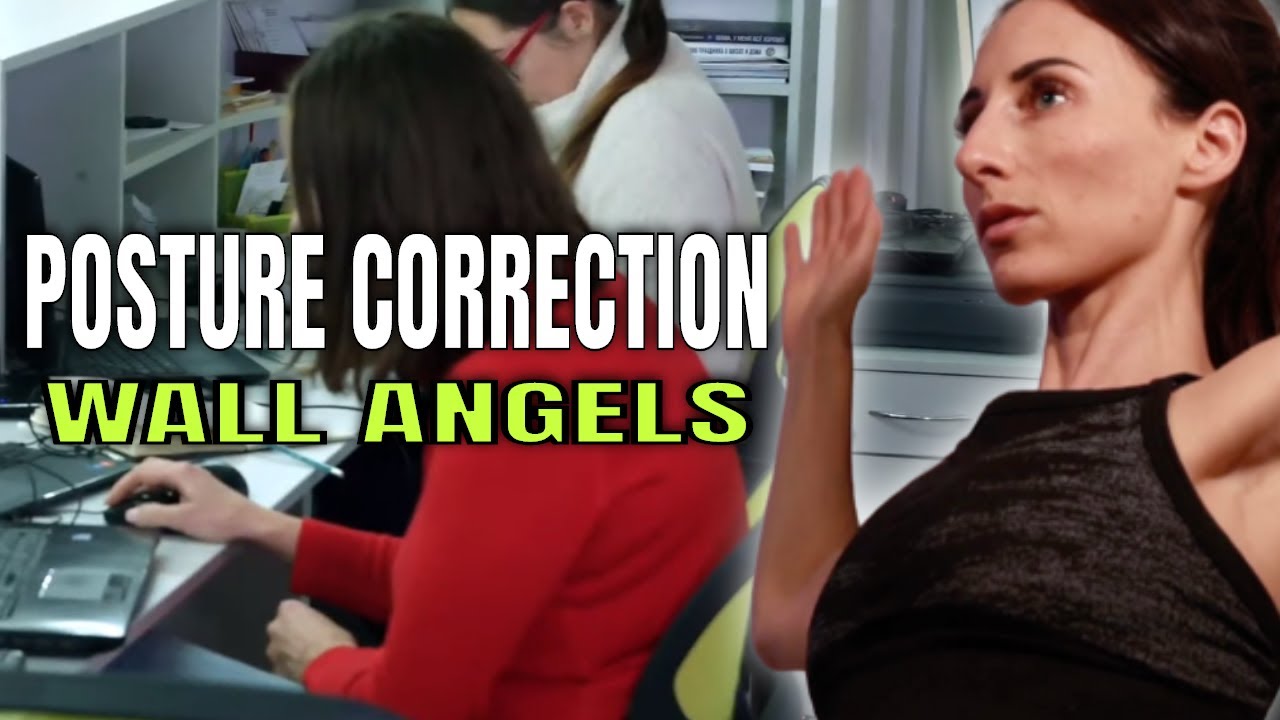
Trying wall angel exercises
Days one - three
I soon discovered this challenge was going to be tougher than I'd first anticipated. Wall angels might look easy - after all, they're a slow, controlled, equipment-free exercise - but the first session quickly humbled me.
Standing with my back against the wall, feet slightly apart, I focused on keeping my head on the wall and my chin relaxed (and not jutting forward), while bringing my arms up into a goalpost position. I instantly felt a stretch through my body, and after a long morning of sitting in the same position, it felt surprisingly invigorating.
Moving my arms up and down proved to be the most testing part. I really had to resist the urge to rush through the movement. Slowing it down, I felt a distinct burn in my upper arms and shoulders.
"If it feels harder than expected, that’s usually a sign it’s being done correctly," McCulloch reassured me - a comment I clung to as my arms started to tire well before I'd completed each set.
By day three, my shoulders and upper back felt tender; not painful, but enough to remind me I'd activated muscles that rarely get much attention during my usual desk-bound routine. I also realised that 8-10 slow, controlled reps were my limit, and I'd be lying if I said I didn't have to pause partway through in the first few sessions. Something which came as a surprise, given how deceptively straightforward the movement looks.
Days four - seven
By the second half of the week, I started to feel more confident with the movement. My shoulders and upper back were still very much aware of the work, but it stopped feeling like a chore to lift my arms up and down. I even found myself sneaking in a couple of sessions in one day when I knew I had particularly long working hours. Surprisingly, it felt just as beneficial.
The biggest change, though, was noticing how small adjustments made a difference. Slowing the movement down, keeping my shoulder blades engaged, and letting my back rest gently against the wall all made it feel smoother and more controlled. It also made me much more conscious of how my body had been sitting - tense and tired - for hours at a time.
By the weekend, when the experiment was drawing to a close, I'd got into the mindset of choosing the exercise - it didn't matter that I wasn't sitting at my desk for long periods. My upper back, shoulders and neck definitely started to feel looser. I didn't magically fix my posture, but I was moving more consciously, which was a winning result.
The biggest draw for me is how convenient wall angels are - no equipment or kit needed. You can pretty much do them anywhere, and they'll easily fit into a busy routine.
I'm officially a fan.
Shop MC UK-approved workout essentials

Upper body exercises call for comfortable, supportive layers - starting with a lightweight bra. I'm a fan of Adanola's tank bras for low-impact workouts and everyday wear, and they come in a range of colours, too.

The beauty of wall angel exercises is that they require no equipment, but you can use a yoga mat if you want to modify the movement and perform it lying on your back. This Alo yoga mat is an investment, but it's a favourite with the MC UK health team.

A lightweight, zip-up jacket is a wardrobe staple you'll repeatedly reach for. The lululemon Define Cropped Jacket is one of the brand's bestsellers, and it's ideal for upper-body workouts as it doesn't restrict shoulder movement.
Can you perform wall angels while sitting?
"Yes, seated wall angels can be just as effective, especially for people who find standing uncomfortable or inaccessible," says Pilates instructor Rebecca Dadoun.
You can also perform wall angels lying on a mat, she adds. "The key benefit comes from the feedback, whether that’s the wall or the floor, which helps the body organise itself more efficiently. The position matters less than the quality of the movement and your ability to stay relaxed and connected."
