FYI, This Is The One Workout Move Every Woman Should Master For Both Muscle and Metabolism
According to top trainers.


Looking for a lower body exercise that'll torch not only legs but challenge your core, glutes, balance, stability and more? Call off the search: experts are hailing the split squat as the strength training move every woman should have on their fitness rotation in 2026.
Why? Well, not only has the move been named as one of the best lower body bodyweight exercise (by The University of Cambridge), but research (namely, this 2019 study from the Journal of Strength and Conditioning Research) shows that it's effective in helping identify strength imbalances in the body, while further research (such as this 2022 study, published in the Journal of Sports Science Medicine) shows split squats enhance athletic performance.
Curious about what makes them so effective? We'll cover more on what exactly the move is and how it's done below, but for now, hear this: trainers reckon they're one of the best exercises out there for women looking to build muscle, metabolism and more.
And if strength training has piqued your interest, you might enjoy browsing our guides to the different types of strength training, the best strength training exercises, slow weighted workouts and the best at-home strength training workouts of all time, here.
Split squats are hailed as the best lower body exercise for boosting muscle and metabolism - here's why
What are split squats?
Before we scare you off with images of having to be able to do the actual splits, rest assured - a split squat isn't about gymnastic flexibility. Rather, they're a kind of squat/lunge hybrid, if you will.
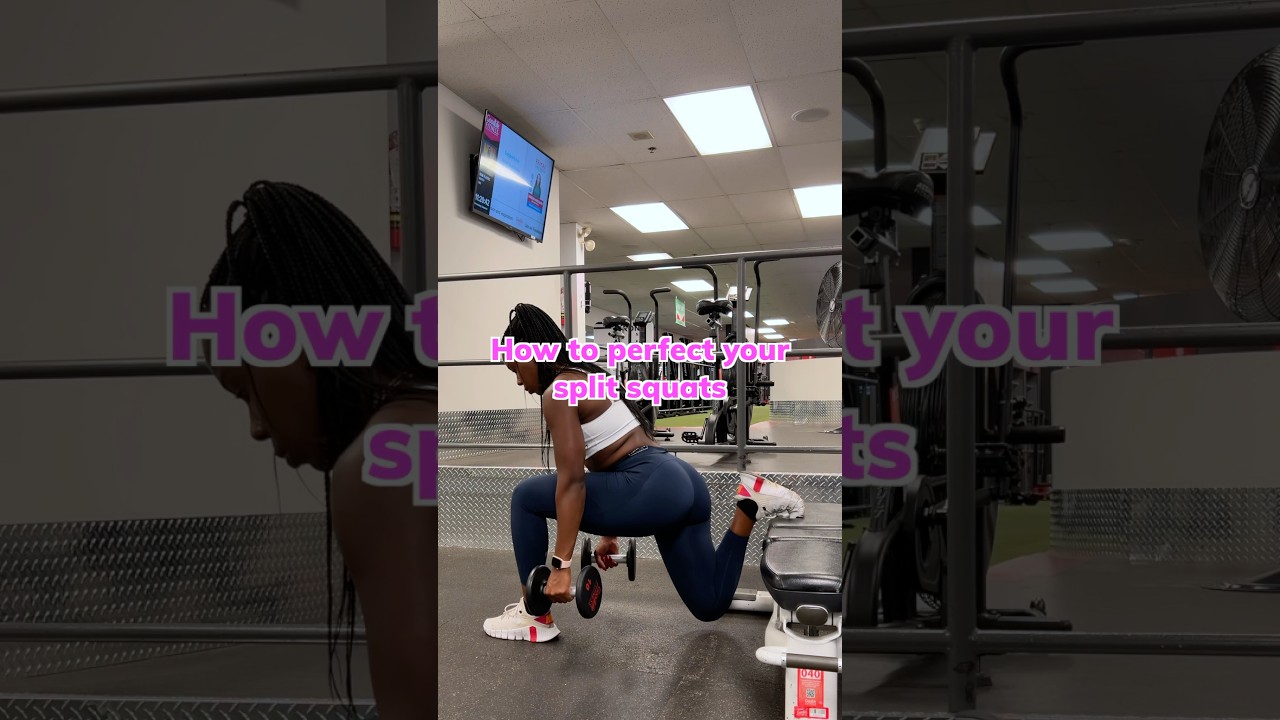
"Split squats are a lower-body strength exercise that involves standing in a staggered stance, with one foot forward and one leg back, and lowering your body by bending at the hips and knees to perform a squat-like movement," explains Steve Chambers, certified personal trainer and gym manager at Ultimate Performance.
"This creates a split stance (hence the name), where the front leg is the ‘working’ leg, and the rear leg provides support. You keep your back heel off the floor with the laces of your shoe facing downwards."
While they sound remarkably similar to a static lunge, there's one key difference, Chambers shares. "Split squats are performed without stepping forward each repetition, but rather you stay rooted in position and move up and down, as opposed to a classic lunge, where you will move in and out of the position."
You've probably heard of the Bulgarian split squat (PSA: any move named after a country is likely to be brutal!), where the back leg is raised - but here, you keep both feet on the floor the entire time.
What are the benefits of split squats?
Buckle up, there are some serious benefits to mastering the deceptively simple split squat move. Let's take a closer look.
1. They torch your big muscles
For any move to be effective in strengthening the legs, it's a non-negotiable that you need to recruit and engage the MVPs of quads, glutes, hamstrings and calves in one fell swoop.
"Split squats target big muscle groups like the quadriceps, glutes, and hamstrings, helping to build strength and muscle size in each leg independently," notes Chambers. "Anyone who has performed split squats (especially if you keep tension in your legs during the lowering portion of the exercise) knows just how tough they are, and lots of us have a love/hate relationship with the move, but they are incredibly effective for building muscle.
"Because they're so tough, they produce lactic acid build-up and leg fatigue, which, while uncomfortable, helps to build muscular endurance and tolerance to intense effort."
2. They address muscle imbalances and instability
While split squats are technically a bilateral movement, meaning both legs are working at the same time, they're unique in that they also have a unilateral focus, as you produce force in the front leg to move up and down. This essentially makes it what trainers term a supported single-leg exercise, and it allows us to identify and address asymmetries in the muscles.
"Split squats are great for building strength in the glutes, quads, and hamstrings, while also improving balance and stability," shares Andy Carr, master trainer and head of fitness for Snap Fitness UK. "Since each leg works on its own, split squats help even out strength differences between sides and can feel more controlled than traditional squats."
More symmetrical strength results in greater stability across all of our movements, which is beneficial for reducing the risk of injury both while training and in everyday life.
3. They improve mobility
We get it, mobility doesn't sound like the most appealing of benefits, but trust us: nothing impedes performance more than limited mobility, whether we're talking training in the gym, playing team sports with our mates or simply running up and down stairs at work.
"A key advantage of split squats is mobility work, because they require good hip and ankle range of motion," shares Chambers. "I often use split squats to prepare clients for more advanced lifts, like full squats, because they help develop the mobility and control needed. They also improve structural balance between legs, which is essential for reducing injury risk and enhancing movement quality."
4. They're accessible and progressive
Accessibility and ease of progression are huge tick boxes for us when we're recommending moves, and split squats get a massive tick on both fronts.
"Split squats can be performed with just bodyweight, dumbbells, or a barbell, and require no machines, making them perfect for training at home, or in a hotel gym," notes Chambers. "For busy women, their simplicity and minimal equipment needs make them ideal for people with limited gym time or space.
"As you gain strength, you can add external resistance (dumbbells, barbell, or weighted vest), allowing you to progressively overload the movement, which is another core trigger for muscle growth."
How to do split squats with good form
As always, if you're going to spend time doing a move, it pays to make sure you're performing it correctly. Chambers advises the following steps:
- Setup
- Stand with feet roughly hip-width apart.
- Step forward with one leg and plant that foot flat on the floor.
- Raise the heel of the back leg, so only the toes touch the floor with the shoelaces facing down.
- Movement
- Lower your body by bending at the knees and hips.
- Your front knee should track forward until the thigh and calf almost touch (about 90°), and your back knee bends the same amount.
- Pause briefly at the bottom with the front foot flat and the back knee just above the floor.
- Push firmly through both feet (especially through the front heel) to stand back up.
- Trainer Tips
- Don’t stand too narrowly. Adopt a hip-width base for stability.
- Fine-tune stride length so the front heel stays flat at the bottom; too short or too long can compromise mechanics.
- Practice bodyweight first before adding free weights to make sure your balance and mechanics are solid.
- Keep a consistent tempo (lower with control, pause briefly, then push up) to build quality movement and tension.
Who are split squats best for?
Split squats truly are the Goldilocks of strength training moves, equally suitable for beginners and experienced lifters alike, but not only this, but they can also benefit pretty much everyone, too.
"Split squats are very versatile and beneficial for any lifting, regardless of experience," agrees Chambers. "For beginners, they’re a great introduction to single-leg strength work because they’re simple and can be performed bodyweight first. Additionally, intermediate lifters with a bit more experience, or those looking to improve muscle balance, control, and leg development, will also gain from incorporating split squats in their exercise regimen.
"For people who struggle with traditional back squats, split squats can be a safer, more manageable way to work leg muscles without excessive spinal load. And, lastly, the move is also perfect for athletes, as they develop unilateral strength, balance, and lower-body coordination - split squats have excellent crossover to many sports movements."
Are they really effective in building muscle and metabolism?
In a word: absolutely. For muscle growth, we essentially need time under tension, range of motion and progressive overload, all of which the split squat can provide in spades, while the metabolic gains come from the sheer effort required to perform the move.
"Split squats are one of the most effective exercises a woman can perform for all sorts of reasons, not least for building muscle and for their metabolic benefits," enthuses Chambers.
"From a hypertrophy (muscle-building point of view), split squats work the major lower-body muscles through a substantial range of motion, which is a key driver of hypertrophy. Additionally, as mentioned above, you can easily progress the move to increase the challenge.
"In terms of metabolism gains, split squats recruit large muscle groups and take significant effort to perform with good control, which creates metabolic demand, as your muscles require energy to maintain the move. This increases overall energy expenditure within a workout, which, when included early on in a workout, enhances the metabolic demand of the overall session and promotes a metabolic boost throughout the day, even after you're stopped moving."
Shop MC UK's go-to strength training kit now:

Keen to get strong from home? You'll need a set of adjustable dumbbells to ensure you're maintaining progressive overload and hitting your goals. Starting at 2.2kg each, you can work your way up to 11kg as you gain strength and muscle.

Team MC UK fave, Adanola, has released a new range of seamless 'fits, and we love the impact bra. Just the right amount of compressive, it'll keep you confident and comfortable no matter how intense your training gets.

Squat your way to improved lower body strength in style with these Free People Movement leggings. Designed for medium-impact workouts, they're comfortable, supportive and breathable, too.
Are there split squat variations for beginners and experts?
Split squats lend themselves well to both progressions and easier variations, too. Our experts both agreed that beginners should start off with a bodyweight split squat, focusing on form and balance with no weight first. If you're still struggling, try a stride-adjusted stance, with a shorter stride and upright torso to help you balance.
Once you're ready to add some layers to the move, Chambers recommends the following.
Front-Foot Elevated Split Squat: elevating the front foot increases the range of motion and challenge for quads and glutes.
Rear-Foot Elevated Split Squat (Bulgarian Split Squat): raising the back foot increases difficulty and hip range, adding more challenge overall.
Weighted Split Squats: Using dumbbells or barbells increases resistance and builds strength and size.
