Not Crunches Or Planks - Surprisingly, Experts Recommend This Underrated Exercise For Ultimate Lower Body Strength
Move over, bear crawls, the crab is coming for your crown.


We're only halfway through January (officially the longest month of the entire year), and it's already clear that 2026 is, much like its predecessor, all about strength training.
There is, however, a clear difference: we're moving away from high-intensity, fast workouts and towards slower, more intentional moves that might be low-impact, but still pack a punch, benefits-wise. The best news? The moves are super simple - and the experts' favourite one is the (appropriately monikered) crab walk exercise.
Essentially a lateral walking exercise, the move earns its stripes when it comes to boosting lower body strength and endurance - and top trainers love it for glute and core activation. As for why you should add it to your fitness rotation, hear this: the glutes are our largest and heaviest muscle group, and keeping them strong is key to pretty much all our movements, whether that's running a 5k, bending over to pick up a heavy object (read: petulant toddler - they are heavy) or simply going for a walk.
Our glutes are so central to our movement patterns, in fact, that any weakness in them can lead to strains and injuries. Studies (like this one, published in the Journal of Physical Therapy Science) show that strong glutes help reduce the risk of lower back pain, as well as improving posture, balance and stability - not to mention athletic performance, too, as discussed in this study, from the journal Medicine & Science in Sports & Exercise (although it's worth pointing out that this study was only conducted on men.)
New to the move? We'll cover what it is and how it's done below, but for now, suffice it to say that it may look easy, but boy, will you notice the burn. Don't say we didn't warn you! And for more on all things strength-focused, do check out our guides to the best glute exercises, the best glute-focused Pilates exercises, and find out how one Health Writer got on when she attempted glute bridges every day, here.
Experts love the simple crab walk exercise for boosting lower body strength - here's why
What is the crab walk exercise?
Before we answer this question, it's time for a quick science lesson. If it's been a while (read: you've literally never) since you considered the anatomy of a crab, allow us to enlighten you: the crustaceans have a unique sideways walk, the result of a hinge-like joint structure that limits forward and backwards motion.
In contrast, we bipeds lean towards forward movement, which (over time) can cause weakness and instability throughout the pelvic region.
"Most modern bodies are strong in straight lines and unstable everywhere else," explains Kim Johnson, physio, coach and biomechanics advisor for women-first running shoes, QLVR. "We sit for hours, we move forward, and we brace our cores under stress. And slowly, without realising it, we lose the ability to stabilise the pelvis when we move on one leg, something we do thousands of times a day."
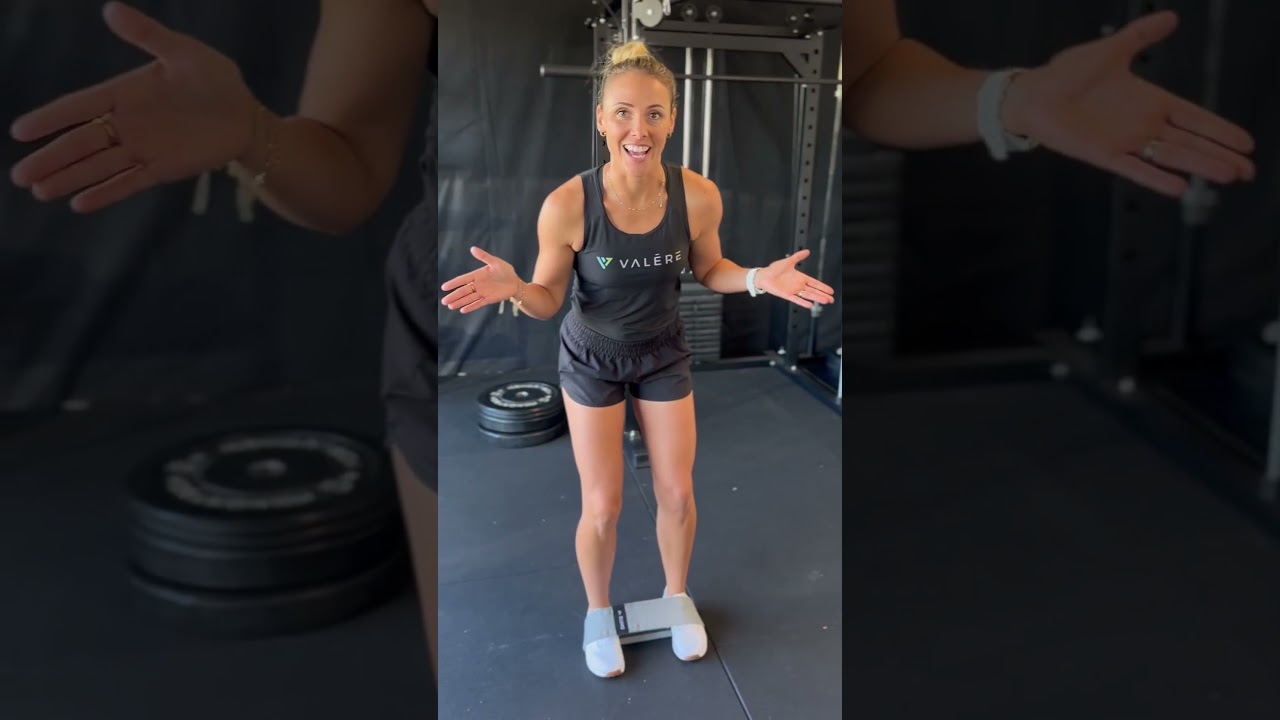
Enter: the banded crab walk exercise. Not to be confused with the crab walk on hands and feet (often used interchangeably, but this is, in fact, a completely different move), crab walks are super simple. Pop a resistance band across your knees, drop into a squat, and walk sideways.
"Crab walks are a lateral movement in a low squat position where your hips stay low, chest stays up, and core stays tight," shares Peloton instructor Jermaine Johnson. "Unlike the childhood bum-on-the-floor crab walk, this version focuses on building functional strength, stability, and mobility while moving in a controlled, athletic posture."
What are the benefits of the crab walk exercise?
Crab walks sound kind of fun, right? We've worked in health and fitness long enough to know that when a move is given a specific name (Bulgarian split squats, Dragon Flag move, you get the gist) the chances are high that it's going to be intense.
And yes, crab walks are no exception. Because after all, with great benefits comes at least a little discomfort.
1. They fire up the whole lower body
A low-impact, simple move that fires up the entire lower body - core included? It's a yes from us.
"Crab walks hit the glutes, quads, hamstrings, hips, core, and even your shoulders and back slightly if you keep a tall chest," notes Jermaine Johnson. "They are excellent for building lower body strength because they force your glutes and quads to fire constantly, your hamstrings and core to stabilise, and your hip abductors to control lateral motion."
The result? "You're building functional strength, stability, and mobility while moving in a controlled, athletic posture," he continues.
2. They build stability, mobility and help prevent injury
The trifecta of a strong and capable body, right here.
"This simple exercise targets the gluteus medius, a key stabilising muscle of the hip that helps control pelvic position and protect the knees and lower back," notes Kim Johnson. "When this muscle is underactive, it is often linked to ongoing hip, knee, and back pain. The gluteus medius sits on the side of the hip and acts as a key stabiliser. Its job is to keep the pelvis level and the thigh aligned when we walk, run, climb stairs, or stand on one leg.
"When it’s not doing its share of the work, the body often compensates through the lower back, hips, or knees. Over time, that compensation can show up as persistent aches, recurring injuries, or the feeling that something just isn’t quite right."
3. They're low-impact and accessible
Since the move can be scaled up or down very simply (by adding or taking away resistance), it's highly accessible to all levels of ability, including as part of injury rehabilitation.
"Crab walks are fantastic for so many people," says Jermaine Johnson. "From runners looking for hip stability, athletes needing lateral strength and coordination, general fitness enthusiasts, and beginners who want low-impact functional strength right through to older adults looking to improve mobility and hip health - although you should avoid them if you have knee or hip injuries until cleared."
4. They boost functional fitness and athletic performance
"The standing banded walk trains the gluteus medius in the way it actually functions in real life, resisting movement rather than creating it," shares Kim Johnson. "Instead of squeezing or clenching, the muscle learns to control the pelvis as the body shifts sideways. That’s why this exercise features so heavily in rehab settings and why it remains a staple for athletes, despite never being particularly eye-catching.
"It’s not about chasing a burn, it’s about teaching the body to stabilise efficiently."
How to do the crab walk exercise with good form
All our experts agreed that with this move, as ever, form and technique is everything. The key? Don't rush it.
"If you don’t feel much, slow it down," advises Kim Johnson. "If you feel it everywhere else (other than your glutes), lighten the band. The goal is quiet control, not drama."
Jermaine Johnson recommends the following to keep your form on point:
- Start in a low squat, feet shoulder-width apart or slightly wider, knees bent 90 degrees, chest up, core tight
- Hinge slightly at the hips, weight evenly on your feet, heels pressing into the ground
- Step laterally or forward/backwards in small, controlled movements, keeping knees tracking over toes
- Maintain the squat position, don’t let hips rise or sag
- Keep torso upright, shoulders back, chest proud, and core engaged
- Progression: add a resistance band around your ankles or just above the knees. The band increases lateral tension, forcing glutes and hip stabilisers to fire harder with each step.
Who is the crab walk exercise best for?
As touched on above, the crab walk exercise is suitable for pretty much everybody, with certain modifications and progressions.
"Crab walks are fantastic for everyone, from people building foundational strength, including those doing exercise rehabilitation, to athletes using them as part of a warm-up," says Jade Imani, personal trainer at Insure4Sport. "They’re particularly beneficial for people with knee valgus, weak glutes or those returning to training post-injury (with appropriate guidance)."
And the best bit? You can easily add them onto the start or end of your usual workout - no huge commitment necessary.
"They work best as a warm-up before training, a short movement break during the day, or as part of a rehab or prehab routine," agrees Kim Johnson, stressing "more isn’t better here!"
Shop MC UK's must-have strength training kit now:

As Health Writers, we've tried a fair few sports bras in our time, and when it comes to a fail-safe, reasonably priced bra for low impact work, we always return to Sweaty Betty's stamina bra. The only problem? Which colour to choose...

Add a little extra spice to your crab walks by adding these bangles to your arms or wrists. You'll be surprised how fast the burn creeps up on you.

Make like a crab in (supportive) style with these Adanola crop shorts. Seamless, compressive and opaque, we can't wait to try them out.
How often should we be doing the crab walk exercise?
As always, consistency is key when it comes to building strength and noticing real changes in how you move. That said, it's vital (as discussed above) to focus on form and technique over simply bashing out mindless reps of poor quality.
With this in mind, Jermaine Johnson advises making like a crab a couple of times a week to begin with, building up as you gain strength and endurance.
"Practising crab walks two to three times per week is enough for most people to notice gains in strength, mobility, or conditioning," he says. "Start with two to four sets of 15 to 30 second walks, or 10 to 20 meters per direction. Progress by increasing distance, adding bands, or slowing down to increase tension.
"Beginners should start with higher hips, smaller steps, no resistance band and focus on control and posture. As you progress, you can incorporate lower hips, longer sets and a forward/backward movement as well as side to side.
"For advanced exercisers, add a resistance band around the ankles or knees, pause at each step for one to two seconds, lift one foot slightly to challenge balance and glutes, or combine lateral and forward/backward patterns for an extra endurance boost."
