Back To Work Given You an Achy Neck or Sore Shoulders? A Yoga Instructor Confirms: 5 Best Moves For Alleviating Tension
Feel the tension melt away with these dreamy yoga moves.


While we hope that you've managed to kick off your 2026 feeling rested, revived and rejuvenated, it's a busy time of year, which means many of us will be carrying some stress, tension, or strain. If that's you, we have just the yoga moves for you. Enter: a yoga instructor's pick of the best yoga moves for alleviating tension.
It's a fact that many of us wear our stress in our upper torso. So much so, in fact, that research (like this 2021 study, published in the journal The Lancet Rheumatology) reveals that 70% of adults will suffer from neck pain at some point, with further studies (such as this one, from the journal BMC Musculoskeletal Disorders) showing a correlation between overall health, sleep quality, aerobic exercise and neck and shoulder pain.
But help is at hand; enter stage right: yoga moves for alleviating tension. And it serves a dual purpose, here, enhancing both mental and physical health to serve as a powerful tension antidote. The ancient practice has long been associated with stress relief and improvements in mobility, as shown in this recent study from the journal Global Advances in Integrative Medicine and Health.
So, if you're in need of a good stretch, try adding these expert-approved moves into your routine. While we can't promise they'll melt all your aches and cares away, they're absolutely a great (and simple) place to start.
For more on all things yoga, do check out our guides to yoga for beginners, expert explainers on the many benefits of yoga and different types of yoga, plus find out how one Health Writer got on when she tried a five-minute yoga flow every day, here. Keen to shop? Don't miss our edit of the best yoga clothes, here.
5 best yoga moves for alleviating achy necks and shoulder tension, according to the experts
What are yoga moves for the neck and shoulders?
As touched on above, yoga more generally is an expert-approved way of boosting both mental and physical health, but when it comes to sorting out an achy neck and tense shoulders, there are a few particular things to keep in mind.
“There are several yoga moves that can help alleviate the tension in our neck," explains Melissa Leach, yoga expert and strength and conditioning coach at Yoga-Go. "Often, these will consist of slow, controlled movements, with a strong focus on deep breaths. Practising them, even if just for ten minutes a day, can be extremely beneficial for alleviating muscle tension, particularly in the neck."
And the practice isn't a bandaid, either - rather a strategic, mindful way to ease stress, reduce strain, and get to the very root cause of your ailments. "Yoga is brilliant at alleviating neck tension because it addresses the root causes, not just the symptoms," agrees Josh Morley-Fletcher, yoga teacher and co-founder of Radiant Waves Retreats. "It calms the nervous system while also releasing and strengthening muscles."
What are the benefits of yoga moves for the neck and shoulders?
The question we all want answered: how will yoga benefit my achy neck and tight shoulders? Let's take a closer look.
1. It loosens tight muscles
“Yoga helps lengthen tight muscles, improves circulation, and restores natural movement in the spine," explains Leach. "Through slow, mindful stretches and deep breathing, yoga also calms the nervous system, reducing stress-related muscle guarding that often accumulates in the neck and shoulders."
2. It improves posture
"Yoga is also amazing at improving posture and helping to realign the spine and shoulders," notes Morley-Fletcher. "Poor posture, such as rounded shoulders or a forward head, places ongoing pressure on the neck. Yoga retrains the body to move and hold itself more efficiently, easing that load."
3. It calms the nervous system
"Yoga also calms the nervous system," shares Morley-Fletcher. "Slow, mindful movement combined with steady breathing helps switch off stress responses that cause us to tense the neck and jaw, allowing muscles to release more fully."
4. It strengthens muscles
“Additionally, targeted yoga moves work to strengthen the postural muscles in the upper back, helping the neck remain supported throughout daily activities," says Leach. "Over time, this combination of relaxation, mobility, and muscular balance can significantly reduce stiffness, discomfort, and recurring tension.”
5. It builds better body awareness
"Finally, yoga builds awareness, helping you notice when you’re gripping or overworking so you can let go of unnecessary tension both on and off the mat," says Morley-Fletcher. "Sometimes all you need is a deep breath and a roll through the shoulders to help reset through the shoulders and neck, alleviating the buildup of tension."
Who are yoga moves for the neck and shoulders best for?
“Neck stretches and yoga can be particularly beneficial for desk workers, students, or anyone who spends prolonged periods of time sitting down," shares Leach. "Those who tend to carry tension and stress on their shoulders may also notice significant relief, and older adults can also benefit when appropriate modifications are used, if needed.
“As well as easing existing discomfort, neck-focused yoga serves as a preventative practice as well. It’s an ideal low-impact option for anyone looking to gently strengthen supportive muscles, improve mobility, and reduce the likelihood and frequency of future aches and tension.”
5 best yoga moves to alleviate tension and ease aches and pains
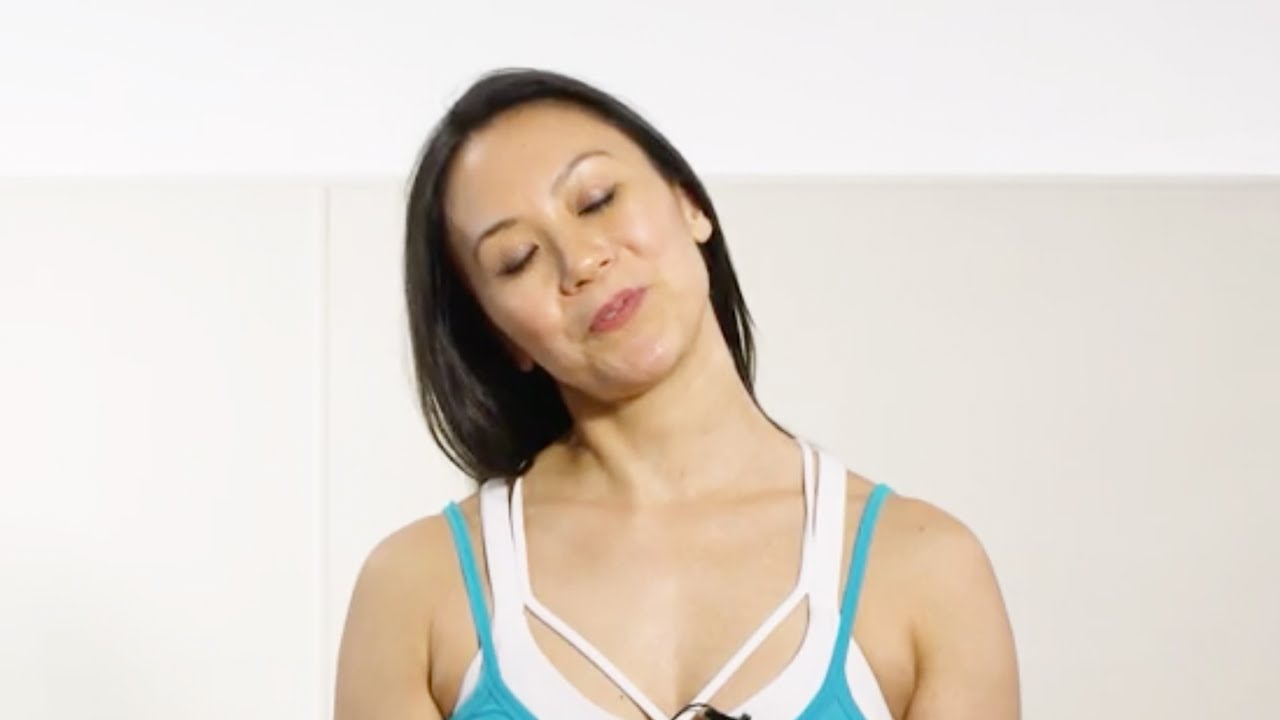
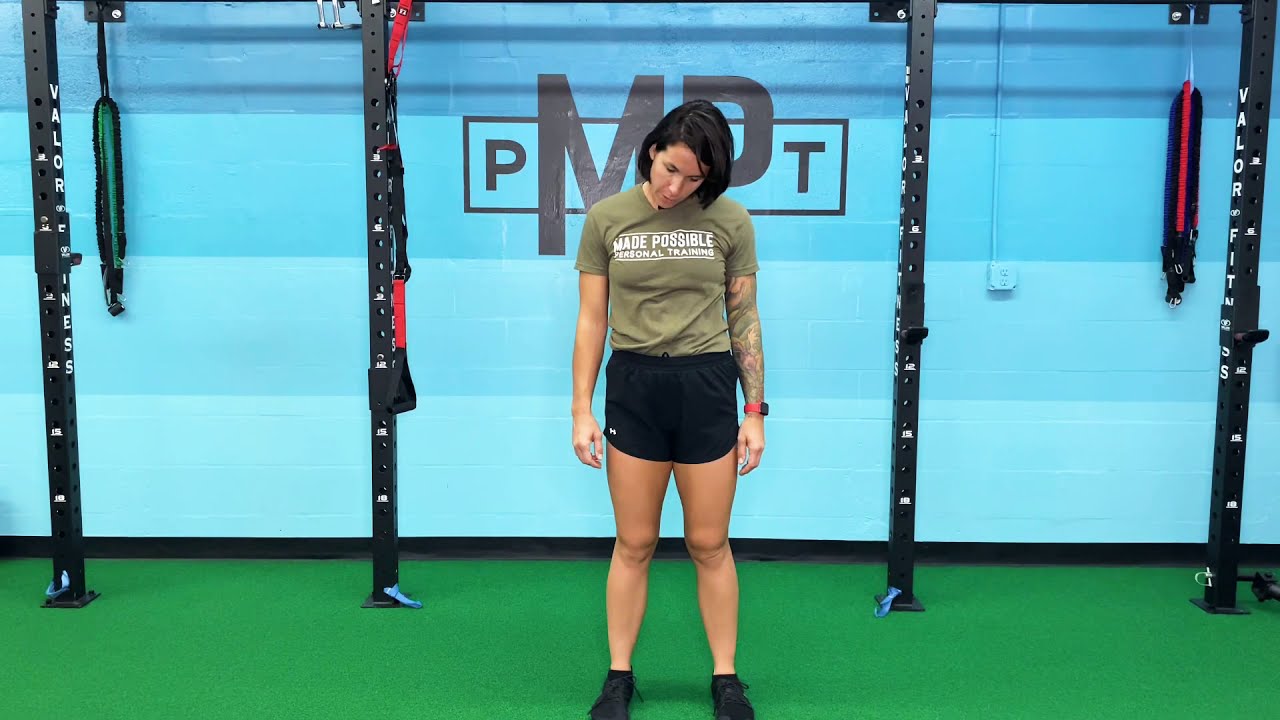
1. Seated neck stretch
What? Sit tall, relax your shoulders and gently drop your right ear toward your right shoulder. Repeat on the other side.
Why? A super simple starting point, this move works as both a warm-up and a gentle neck stretch. "Beginners can keep the stretch subtle, only reaching as far as is comfortable," advises Leach. "For a more advanced option, lightly rest your hand on the side of your head for added weight, or extend the opposite arm down and away to deepen the stretch."
How long for? Hold for five deep breaths, then switch sides.
2. Shoulder rolls and shrugs
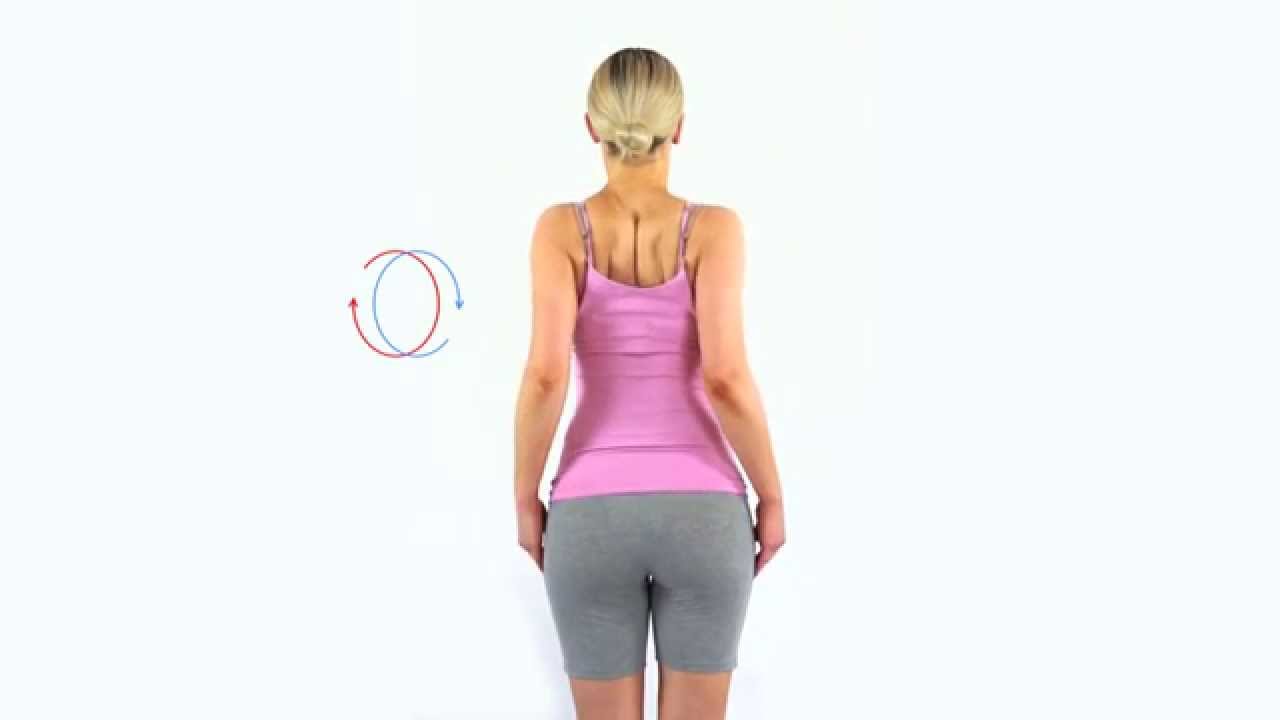
What: Find a comfortable seated position. Inhale and lift your shoulders towards your ears, exhale, roll them back and down as though you are trying to tuck your shoulder blades into your back pockets.
Why: "Shoulder rolls and shrugs are amazing for relieving trapped tension in the upper traps," says Sophie Deakin, yoga teacher and co-founder of Radiant Waves Retreats. "If you're ready for a progression, you can add in arm movements or hold some light weights in your hands."
How long for: Aim for 10 circles in each direction.
3. Thread the needle
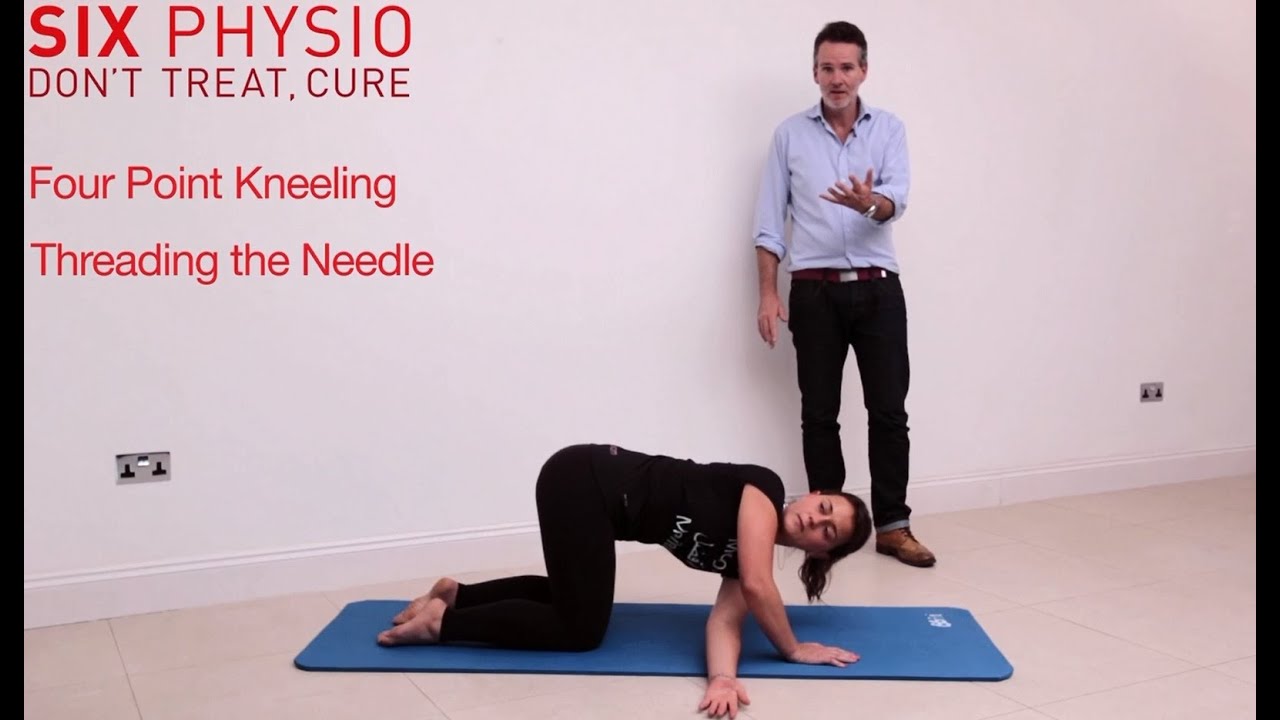
What? From all fours, reach one arm to the sky before sliding it under your chest, coming to land on your shoulder or cheek.
Why? "Thread the needle provides a deep release for the shoulders, upper back and neck," says Deakin. "If you're ready to progress, add a gentle twist by wrapping the other arm behind your back."
How long for? Hold for eight breaths per side.
4. Cat cow
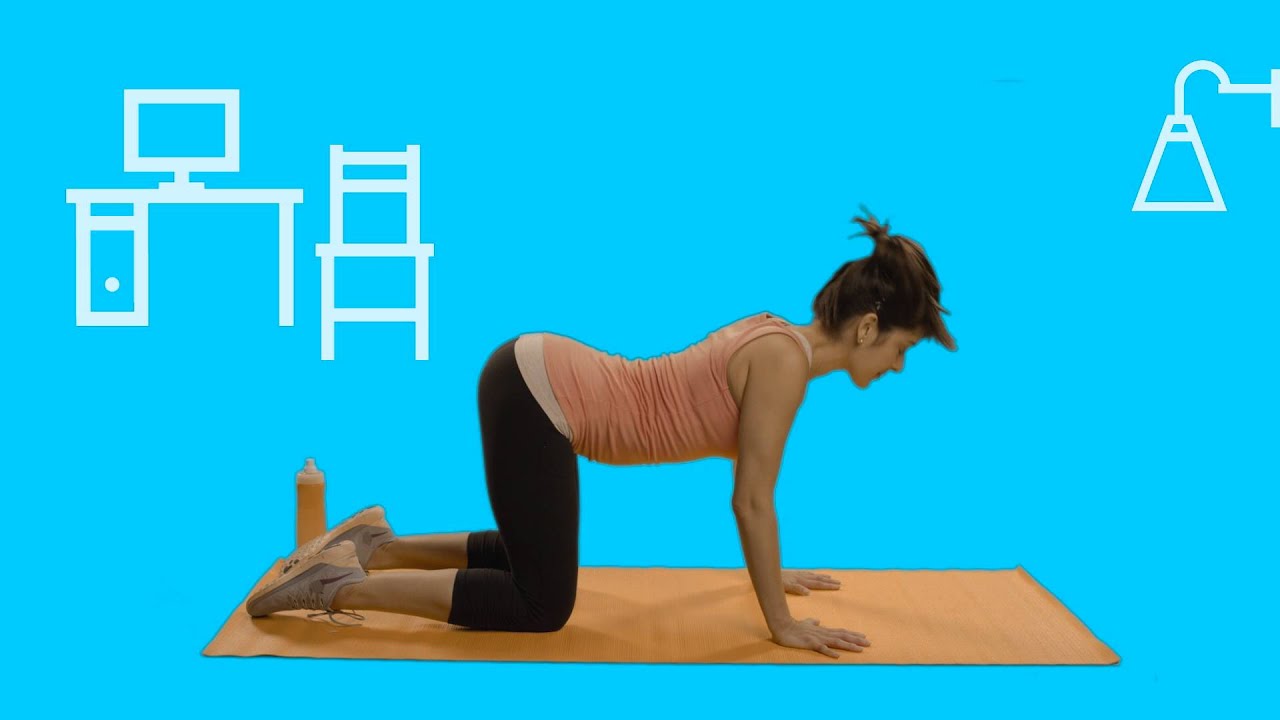
What: Find an all-fours position, hips stacked over knees and shoulders over wrists. Inhale as you drop your chest and send your gaze forward, and exhale as you round your spine and tuck your chin.
Why: "Cat cows are a form of spinal flexion, and neck tension can often originate from having a stiff spine," notes Exaggerate each ‘cat’ and ‘cow’ position as much as possible. In cat, think about tucking your shoulder blades together, and imagine tearing them apart in cow.
How long for: Aim for 10 rounds.
5. Neck rolls and half circles
What: Find a comfortable seated position. Slowly drop your right ear to your right shoulder before rolling your chin down to your chest, and then round to the other side.
Why: "Neck rolls and circles release surface tension and improve mobility," says Deakin. "If you want more, add gentle resistance with your hand (never force this, though!)"
How long for: Aim for five to eight slow circles each way.
Shop MC UK's go-to yoga essentials now:

If you're new to Alo Yoga as a brand, we can't recommend their airbrush leggings enough. The signature performance fabric is soft, supple and supportive and the chocolate brown shade? To die for.

Sartorial decision-making not your strong suit? Take the stress out of getting yoga-ready with this one piece from FPM: you'll never need to match your top with your leggings again.

A decent yoga mat is pretty much our only yoga non-negotiable. The simple act of rolling it out makes us breathe easier, and this lululemon one is one of the best we've come across.
How often should I be doing yoga moves for achey necks?
“Regular yoga practice and stretching can gradually reduce stiffness and pain, improve range of motion, support better posture, and even help ease tension headaches," says Leach. "Over time, you may also become more aware of your body, noticing the subtle signs of tension building in your muscles and joints sooner than before. This increased awareness allows you to respond earlier, through movement, rest, or breath, before discomfort turns to pain.
“While the long-term benefits of yoga are best experienced with consistent practice, even a single session can offer immediate relief by warming the muscles, increasing circulation, and gently releasing built-up tension in the neck and shoulders.”
