I Spent Years Believing Exercise Wasn’t for Me—Until I Ran My First Half Marathon at 35
Working out terrified me for years, but after associating movement with punishment and thinness for most of my life, I finally ‘get it’


“No one forced you to be here”: it’s a statement I’ve heard many times in many different ways over the years; at parties I didn’t enjoy, on weekends away when I had, in fact, felt forced to attend. Most recently, I said it to myself as I shuffled towards the start line at the Hoka Hackney Half Marathon. It was true; no one had forced me, and while that saying had previously always felt loaded — usually spewed in sulky moments when I wasn’t being fully amenable to the whims of whoever was lodging the insult at me — more recently, I have found it empowering.
I have a history of recoiling at anything with even a whiff of bootcamp vernacular, but at my weekly Pilates session, instructor Lucy Borrie likes to remind us that we chose to be there, and for the first time in my life, I’ve found that reminder reassuring rather than reprimanding. Before, I’d taken the saying as confirmation that I wasn’t meant to be there — that the space, and exercise at large, were not for me. No one forced you to be here, so if you’re not enjoying this, or you can’t complete the routine, then you are the problem: that is what I took that saying to mean.
It confirmed what I’d always suspected: that I wasn’t cut out for exercise. It’s a sad thing to admit at the ripe age of 35, but I’ve spent most of my life believing I can’t do things, and chief among them was exercising. Not just running, which held a vaguely mythic quality, but working out as a whole.
I was a childhood asthma sufferer, severe enough that it necessitated several trips to the hospital and being put on a ventilator a few times a year. Exercise became something I feared, and ultimately avoided, and no one questioned it because who would want to risk the wheezy kid with glasses and inhalers to hand at all times having an asthma attack?
I don’t remember how I felt about that at the time — relief, I assume — but what I do know is that by the time I got to secondary school, I’d never learnt to ride a bike, I’d never been on a school team, and the only time my name came up in reference to anything vaguely active was when my family joked about my first ever sports day. I’d been so late finishing the four-legged race that I’d gotten a round of applause, and my nan had watched me pass the finish line through covered hands, so embarrassed — and worried (correctly, as it turned out) that I’d be condemned to a lifetime of childhood taunting — was she.
There’s a photo my mum took of me that day, blissfully unaware of how I’d held up the entire school, determined to cross the finish line. I think it must’ve been the last time I approached anything physical with that level of determination because, as soon as I was made aware of what a “slow coach” I was, I gave up entirely.

Learning to run in my thirties has transformed almost every aspect of my life.
Then came the early 2000s.
At my wildly underfunded school, PE lessons consisted of a Ministry of Sound Pump It Up workout DVD shoved lazily into a wheeled-in monitor so gyrating women could be projected onto the blank wall of the gym hall. This farce went on for the better part of a year until the school finally hired actual PE teachers, but by then I’d already been indoctrinated into that era’s understanding of exercise: that it was punitive, goal-based, and primarily aesthetic.
The tagline of the DVD was “burn it, lose it”, and you didn’t need a GCSE — just as well, because I wouldn’t have got one — to know that the “lose” meant weight. This was the era of You Are What You Eat, The Biggest Loser, and, of course, size zero. Having only gotten Sky as a pre-teen, and therefore feeling compelled to binge every cultural artefact I’d missed, my TV diet consisted of The Simple Life, America’s Next Top Model, Girls of the Playboy Mansion, and a dizzying assortment of music channels, each one varying in genre but united by one continuous theme: a bevy of glistening bodies, whether writhing on MTV Bass or bouncing around in neon on Kiss.
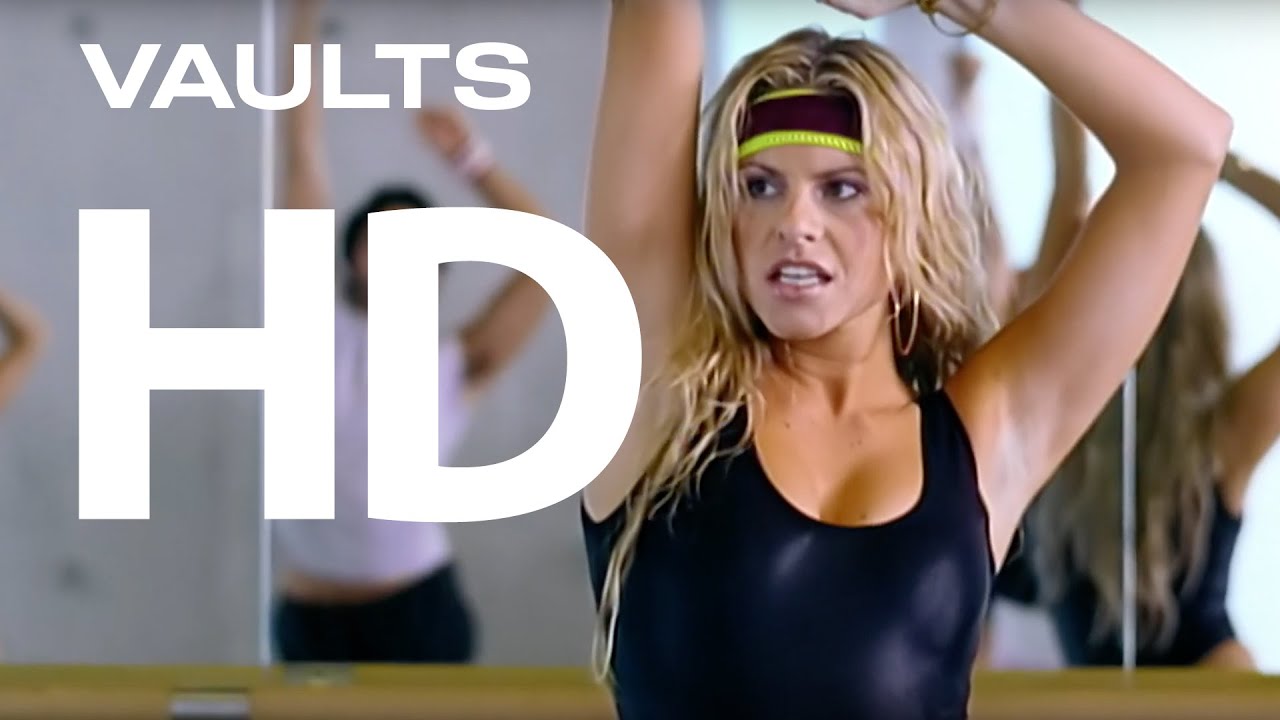
By then, I’d worn the phrase “I don’t exercise” like a badge of honour for years. It’s something I’d heard my mum say many times, normally in reference to her naturally slim figure, and I took it — though I’m sure this wasn’t her intention — to mean that there was value in being thin without having to try. But of course, she did try to be thin, and so did I. I didn’t exercise, but I did exercise control over my diet, and for a long time, that felt the same.
Exercise, to me, meant exclusion. More than that, it meant public evidence of inadequacy. In the classes I tried throughout the ensuing years, it felt as though everyone else instinctively understood how to move their body correctly while I stood at the back feeling not only unfit, but fundamentally defective. It turns out this is a pretty common experience. Research from Liverpool John Moores University found that many women experience “gym-phobia”, reporting feelings of intimidation, self-consciousness, and fear of judgment while exercising in public spaces. “Women often feel judged for their appearance and performance, leading to a persistent sense of inadequacy,” agrees Dr Kat Schneider, a Research Fellow at the Centre for Appearance Research (CAR).
I’d like to say I realised the error of my thinking much sooner than I did, or that it took some dramatic life event to shift my perspective — it likely would’ve made a more interesting story — but that’s not what happened. I simply tried going for a run one day and, to my great surprise, found I could do it.
My partner, after a health scare that prompted the sort of lifestyle overhaul people are always threatening to make, had started running regularly. One evening, as he laced up his trainers, I asked him not to go. I was anxious and didn’t want to be home alone. He suggested I join him instead.
I spent the first ten minutes waiting for catastrophe. For my chest to tighten, for panic to kick in, for my body to remind me of all the reasons it had historically rejected movement. But none of that happened. I was slow and panty and self-conscious in my hodgepodge of workout clothes, but I could do it. There was no grand revelation, just the happy realisation that I wouldn’t keel over at the slightest exertion. This small shift is something researchers have repeatedly identified in studies linking running to mental well-being, with evidence suggesting that regular running can improve mood, self-esteem, and overall mental health.
That was in 2024. My asthma had been under control for years by then, but, having never grown up exercising, it had genuinely never occurred to me that this was something I could do — you don’t miss what you don’t know. I spent the next year going on occasional 5k runs, amazed each time that I completed them. I didn’t want to tempt fate, and so I never went further than that, afraid that if I pushed too hard, I’d somehow injure this body I’d only recently discovered was capable of anything beyond a walk or a swim.
Then I watched my partner run the Hackney Half.
Hackney is the borough where I’ve spent most of my thirties and, for a different set of reasons, also found transformative. Watching thousands of people run through streets I knew so well felt emotional. I wanted whatever it was they seemed to have found. I didn’t even know exactly what I was looking at — elation? achievement? relief? — all I knew was that it looked like something I had absolutely no frame of reference for.
I’d spent most of my life focusing my energy on academic pursuits, convinced that was the only place I could ever really excel. As a child, staying at friends’ houses and seeing swimming medals hanging from bedroom walls or horse-riding trophies lined up on shelves, I assumed those things were unavailable to me, first because of my asthma, then because of my own inability. As a teenager, I came to believe exercise was simply a means to an end: thinness, and there were other ways to achieve that.
It never crossed my mind that exercise could be fun, or grounding, or communal, or in any way unrelated to aesthetics. It seems so obvious now that I’m almost embarrassed to admit it.

I felt like the living embodiment of the saying “all the gear, no idea” as I entered the HOKA Hackney Moves festival, but it turns out the old adage “fake it ‘till you make it” also holds true.
Training for the half-marathon introduced me to a version of adulthood I had longed for but not previously experienced: the kind built not around dramatic transformation but repetition. A simple Runna plan that reminded me each morning that small choices made consistently can mount up to something bigger. For the first time, I had to strengthen my body, which had been so neglected that I had what my physio described as “wobbly knees” that needed tightening. I invested in decent kit that helped me go for a run when I couldn’t really be bothered. Gradually, I became the kind of person who signs up for things and follows through.
By the time I crossed the finish — knees weak, and in slight disbelief — the distance itself wasn’t even the biggest shock. The bigger shock was confirming that my body was not, in fact, this thing that simply propped up my head. It was something that could adapt, strengthen, and surprise me.
No one forced me to be there: that’s what made it matter.
Shop Beginner Running Essentials

An earbud that looks like an earring? The further I venture into what I shall tentatively call my running journey, the more I realise that the running girlies have got style, and honestly, that’s all part of the fun. This Shokz pair comes in a range of colours and is fitted with premium Dolby Audio, has 40 hours of playtime (so there’s no fear they’ll cut out on your part-run), and — I can confirm — they don’t fall out no matter how vigorous or “bouncy” your gait.

One of the best — and most unexpected — pieces of advice I was given ahead of my first half-marathon (naturally from ultra-marathoner Ally Head) was to not check the time. Instead, I was encouraged to be present and have fun rather than focus on my speed. After all, I was only trying to complete it, not hit a sub-2. This would not have been possible were it not for these nifty sleeves that kept my Coros conveniently out of sight. They also have the added benefit of looking good, imo.

I’ll admit it, I had conflicting feelings about these Meta glasses. It didn’t take long for the discreet in-built camera to be exploited for all the wrong reasons, so when I was offered a trial of them “out and about”, I wasn’t sure where I landed. But from a purely training perspective, I found them incredibly helpful. I’m always conscious when I’m running about having my phone out (this is London, after all), so I found it really helpful to be able to use the voice command to WhatsApp people on the go. And as someone who takes a lot of photos to the detriment of enjoying the experience of whatever it is I’m furiously documenting, I loved being able to snap my runs with an easy click. So while I don’t see myself using them in any setting outside of exercise (I’m keen to try them hiking — the views!), they helped my runs a lot. Also, because they’re Oakley, the visibility and sun protection are unrivalled.

Was I advised not to run in new trainers for the half-marathon? Yes. Did I listen? No, and I have the black toenails to prove it. So while I’d certainly not recommend following my lead on that, I would recommend Saucony’s Endorphin trainers. The mesh-knit keeps them breathable, while the padded ankle, foam midsole, and gripped rubber sole help keep your feet secure while you’re collecting those miles. I’m a big fan of a ‘springy’ shoe, and this pair have just enough bounce to protect your joints without being unable to walk around in them after.
