Can't Get To The Gym RN? I'm Opting For Plank Shoulder Taps After A PT Confirmed They're The Most Effective Home Move
The full-body festive move you can squeeze in between mince pies.


How many times have you said, “I can’t believe it's December already,” this year? If your answer veers somewhere between “a fair few” and “honestly, I’ve lost count”, you’re in good company. It’s become the seasonal equivalent of asking about the weather - a reliable go-to as the year starts winding down. And while I’ll spare you the usual cosy festive clichés, December is the month when gym plans loosen, and most of us swap weighted plates for quality time and mince pies.
Still, if moving your body is something that helps you feel grounded, there’s no reason you can’t carve out little pockets for it over the festive period (just as there’s absolutely no shame in pressing pause altogether). Research consistently shows that even short bursts of exercise can support both mental and physical health, which is why keeping one or two genuinely effective, at-home moves in your back pocket can be a lifesaver when festive stress starts simmering.
“Fitness is built over weeks and months, so a short break over Christmas won’t erase your progress,” says Ania Gabb, personal trainer and Frontrunner Community Manager at ASICS. “But maintaining some kind of gentle movement will be good for your body and mind - and is even more fun when you get friends and family involved.”
So, consider this your cue to rally the group for some shoulder taps (the workout move, not a new routine your eccentric uncle unveils after lunch). Below, two top PTs break down why plank shoulder taps deserve a spot in your festive toolkit: a simple, equipment-free, full-body exercise you can squeeze in from the comfort of your living room.
For more festive movement inspiration, head to our guides to Christmas Yoga, the best Christmas workouts, and five holiday workouts you can do from anywhere. Read how writers got on trying the Copenhagen plank, hover plank, and a regular old plank, here.
Plank Shoulder Taps Are The Perfect Festive Full-Body Move To Try This Christmas. Your Guide
What are plank shoulder taps?
If you’ve ever tried a YouTube HIIT session, you’ve almost certainly met the plank shoulder tap. They’re wonderfully faff-free but sneakily challenging - essentially a progression of the classic high plank, which has long reigned as one of the most reliable core-strengtheners out there.
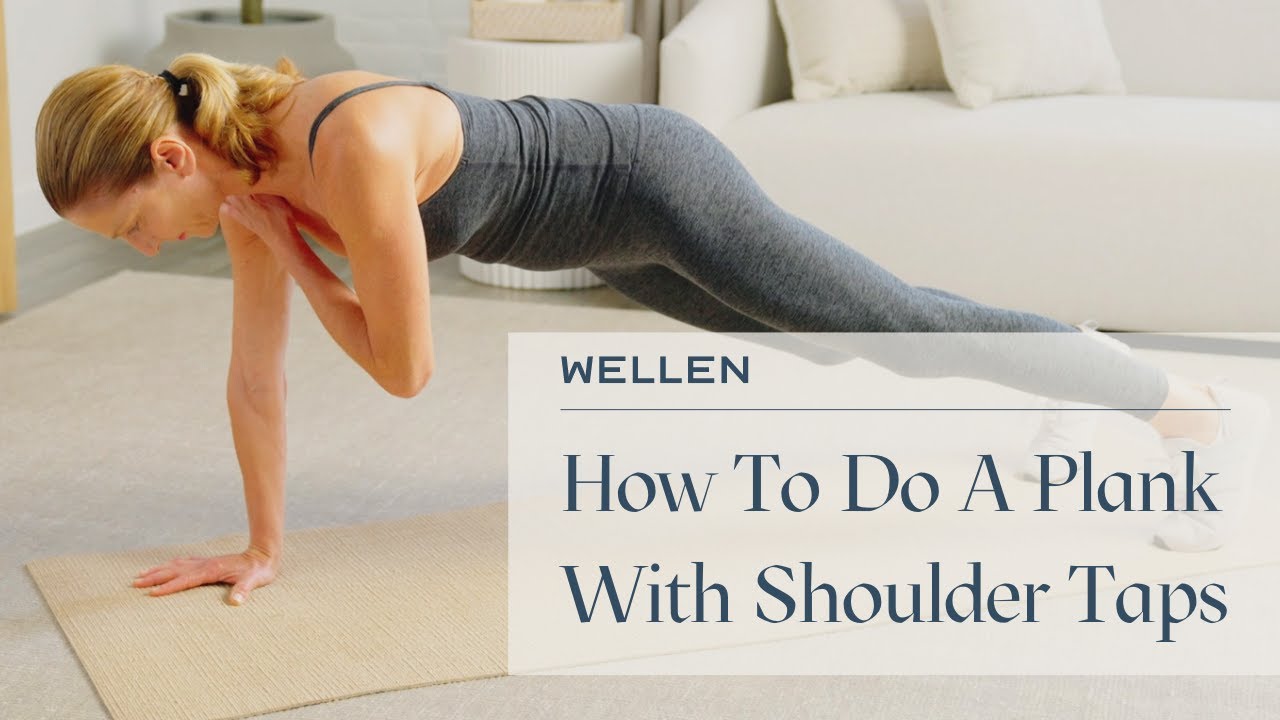
“The plank shoulder tap challenges you to lift one hand and reach it across to tap the opposite shoulder, all whilst resisting the urge to let the hips sway, or the torso rotate,” says Les Mills personal trainer and presenter, Dan Raynor.
In other words, it’s less about big, dramatic movements and more about control. A strong core isn’t built solely from endless crunches - in fact, studies continually show that these kinds of ‘anti-movement’ exercises (where you’re working to resist rotation) can do more for your posture and balance than dynamic moves alone.
“The aim is to keep your body as still as possible whilst moving the arm,” says Hannah Wilkie, Trainer at Barry’s UK. She explains that it’s easy to pike your hips up or let them dip to the side, but that’s not where the strength is built. The slow, controlled hold is the magic.
What are the benefits of plank shoulder taps?
First up, they tick the big festive fitness box: they’re equipment-free and can be done in the smallest of living rooms (pyjamas optional).
But when you’ve got a Christmas film to get back to, and someone’s shouting that you’re up next in charades, efficiency matters too. Luckily, plank shoulder taps deliver a lot in a little time.
“Shoulder taps are a deceptively powerful full-body movement,” says Raynor. “They engage the shoulders and upper back for stability, while the deep core muscles (particularly the transverse abdominis) work hard to prevent rotation. The glutes also play a key role in maintaining hip alignment.”
They’re also a brilliantly functional exercise - meaning the strength you build translates straight into real life. Think: carrying shopping bags, picking up little ones, or simply standing taller. Core strength underpins almost every daily movement, and shoulder taps train the particularly important kind: anti-rotational strength.
“Plank shoulder taps build anti-rotational strength, which is your body resisting the urge to twist,” explains Wilkie. “That move is essential for everyday movement, stability and balance.”
How to perform plank shoulder taps with good form, according to a PT
As with most strength exercises, but especially those targeting the core, the smallest tweaks can turn a move from ‘meh’ to ‘oh wow, that’s working’. That’s why both trainers agree: your setup matters.
“Set yourself up well,” says Wilkie. “Place your hands under your shoulders, with a long line from your head to your heels.”
From there, she adds, “tuck your pelvis to switch the core on.”
Once you’re tapping, focus on staying steady. “Try to avoid the hips rocking, arching the lower back or shrugging your shoulders towards the ears,” she says.
And remember: modifying isn’t cheating. In fact, it can help you build strength far more effectively in the long run. “A half plank on your knees is a great place to start building strength safely,” Wilkie explains. If your wrists aren’t thrilled with the position, “elevating your hands on dumbbells can reduce pressure.”
Still not clear? Watch the handy tutorial below.
Shop MC-UK Approved Kit Now:

I have genuinely lived in this hoodie over the past few weeks. It's the perfect thing for a low-intensity cosy core workout or yoga flow. And the best part? You can snuggle on the sofa in it, too.

These buttery soft, stretchy flares are made for home workouts - whether you're doing a gentle flow, getting out for a walk or turning up the heat with a HIIT workout, thanks to their moisture wicking material. We'll take one in both colours.

Bala's ankle weights are viral for good reason. Simple to use, comfy to wear and chic to look at, they're the perfect way to add a little resistance to your workout.
How can I make plank shoulder taps harder?
If you’ve already mastered a steady set of taps without wobbling, there are plenty of ways to level up, and none of them require any fancy kit.
The simplest progression? Add more reps or sets. But if you want something a little more creative, try narrowing your base.
“Bringing your feet closer together makes shoulder taps harder because you have less stability to rely on,” says Hannah Wilkie, Trainer at Barry’s UK.
Feeling confident? She also suggests swapping taps for drags: “Pull a dumbbell or kettlebell across your body instead of tapping your shoulder. It’s a simple way to make the core work even harder.”
Les Mills personal trainer and presenter Dan Raynor also recommends playing with tempo. “Slowing down the movement forces the core to work harder to resist rotation,” he explains, “whilst adding speed to your taps can elevate the heart rate and add in an element of conditioning.”
