Move Over, Squats—This One 60 Second Move Is Key to Building Strength and Mobility
The muscle-building move that’s not in your gym routine - but probably should be.


Strength training is having a real moment, and for good reason. Large population studies link it to a longer life expectancy, particularly for women, thanks to reduced cardiovascular risk, better immune function and a lower likelihood of injury. It also helps protect muscle and bone health, both of which naturally decline due to hormonal changes during menopause.
But healthy ageing isn’t just about strength. It’s also about stability and mobility, too. Being able to lift a heavy box is all well and good, but less useful if you’re wobbling whilst holding it, or don’t have the range of motion to pick it up in the first place.
It might sound like a future problem, but it’s already a reality for many. One study in the British Journal of Sports Medicine found that people in their 50s, 60s and 70s who couldn’t balance on one leg for ten seconds were significantly more likely to die from all causes in the following seven years.
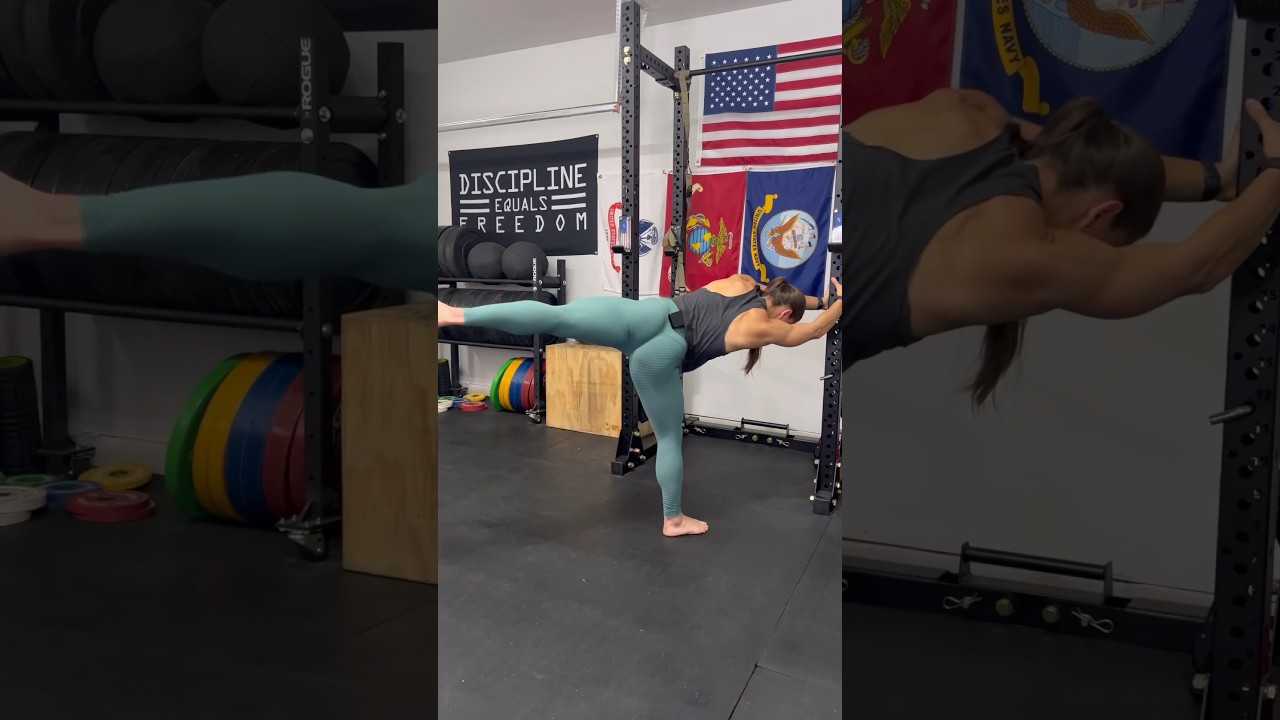
That’s where moves like the hip aeroplane come in. A simple, if slightly under-the-radar, move that combines strength, stability and mobility, it’s quite the triple threat when it comes to longevity.
You won’t see it as often on the gym floor as squats or lunges, which can make it feel a little awkward at first. But stepping outside your usual routine, especially when the payoff is this strong, is well worth it.
Below is your expert-led guide to the move, including what it is, why it matters, and how to do it properly. And if, after reading this, you’re after more longevity inspiration, make sure to check out our guide to the eight best longevity exercises for a longer lifespan. We’ve also got a guide to musclespan - the underrated metric that’s just as important as healthspan. And of course, it’s always worth reading up on blue zone living - those guys have got it down when it comes to living long, healthy lives.
Experts Say This Overlooked Exercise Builds Strength, Balance and Mobility - Your Guide
What is the hip aeroplane?
“The hip aeroplane is a single-leg balance and hip control exercise where you hinge on one leg, keep your torso stable and rotate your pelvis open and closed in a controlled way,” says personal trainer Aimee Victoria Long. “It looks simple, but it’s so much more than a pure strength exercise. It requires stability, mobility and motor control.”
Long explains that, like squats and lunges, it’s a compound movement, meaning it works multiple muscle groups at once - making it an efficient addition for those short on time.
“The hip aeroplane targets the glute medius, glute maximus, deep hip rotators, hamstrings, adductors, core muscles and your foot and ankle stabilisers,” she explains.
What are the benefits of the hip aeroplane?
Given that it requires lower body strength, hip mobility and motor control to coordinate the movement, the benefits of the hip aeroplane are, unsurprisingly, far-reaching.
“The hip aeroplane challenges hip stability and mobility, single-leg balance and glute function, all in one move,” says Long.
What’s more, hip aeroplanes are more applicable to real life than many popular double-leg movements. “Running, climbing stairs, changing direction, and even walking all rely on single-leg control, so hip aeroplanes have strong practical carryover,” Long explains. “The move also treats side-to-side differences in balance, hip mobility, and glute control, making it both a training tool and a movement check.”
Sam Stone, master trainer at Barry’s, agrees. “Working unilaterally (a.k.a on a single leg) helps to build isometric strength and stability on the supporting side, while improving range of motion on the moving side. These qualities can transfer well to both lifting and sport performance, while also helping to reduce injury risk by improving control and joint stability," she says.
How to perform the hip aeroplane with proper form:
If you’re new to the move, Long suggests starting with support (holding onto a wall, for example), and keeping the range of motion small.
“Start slow and think about control before range,” she says.
Below, she shares her step-by-step guide.
- Stand tall on one leg with a soft bend in the knee.
- Hinge at the hips, letting your torso come forward while the non-standing leg extends behind you.
- Keep your spine long and your core braced.
- From that single-leg hinge position, slowly rotate your pelvis open.
- Rotate it closed again with control.
- Return to standing and repeat.
Long has some form tips to look out for, too.
- Think of reaching long through your back leg. The movement should come from the hip, not the lower back.
- Make sure you’re rotating from the hip, rather than twisting through the lower back.
- Watch out for your standing knee caving inwards. Keep the pressure in the middle of the standing foot, rather than letting it roll onto the edge.
Shop MC-UK approved strength training essentials now:

Sustainable and size-inclusive, Girlfriend Collective's leggings are a failsafe choice when it comes to activewear. With fourteen colourways to choose from, there's something to suit every mood and skin tone. Plus, they're sweat-resistant and have a handy pocket for your keys or headphones.

I'm really quite in love with this Free People sports bra, and that's saying something. It's not easy to find one that marries comfort and support, but this one does just the trick. It's perfectly snug, washes well, and promises to give you the right support, whatever the activity.

It's no secret that I'm a HOKA girl through and through. The Bondi, in particular, is a versatile all-rounder and one I'm quick to recommend for those looking for a shoe to take them from the gym to the road and the track. I find them comfortable and supportive with a pretty neutral fit, which makes them great if you wear arch supports and don't want additional lift.
Is the hip aeroplane better than traditional strength exercises?
In short: not better, just different, says Sam Stone, master trainer at Barry’s. “Hip aeroplanes require lots of control and focus, and build a strong mind-muscle connection. This makes them great for activating the posterior chain and core, and they are a useful way to prepare for heavier lifts.”
Personal trainer Aimee Victoria Long agrees. “Bilateral lifts like squats and deadlifts are great for strength, but they don’t demand the same level of single-leg balance and pelvic control as the hip aeroplane,” she explains. “Hip aeroplanes also add a rotational element that many traditional exercises don’t, which is much more reflective of how the body works in sport and daily life.”
Ultimately, both trainers emphasise that well-rounded fitness goes beyond lifting heavier weights. “The move builds active stability,” says Long. “This helps to bridge the gap between strength in the gym and strength required for real life.”
