I'm a Pilates Instructor—This Is the One Exercise I Swear By for Building Core Strength, Improving Hip Mobility, and Boosting Muscle
Pilates leg circles for the strength and mobility win.


Call us biased, but when it comes to workouts that boost mobility, strength and muscle, there's one that consistently tops our list: Pilates. The workout of the past few years, it's loved by many an A-lister, and for good reason: studies consistently show that the practice is great for boosting flexibility, strength and mobility (check out this study, from the journal Springer Nature Link), while also benefiting our mental health, too (see: this research, from the journal Healthcare (Basel)).
And there's one move in particular that has top instructors raving: the Pilates leg circle. A deceptively simple move, the leg circle is rumoured to be the GOAT when it comes to improving core strength, boosting muscle, and improving that most elusive of skills - hip mobility.
But what exactly is it about the leg circle that makes it superior to the other (excellent) Pilates moves for all the above? We turned to our favourite pros to find out - keep reading to learn, but while you're here, don't miss our guides to the best Pilates YouTube workouts to stream for free, the best Pilates exercises of all time, and the benefits of Pilates for runners, here. Plus, find out how one MC UK Health Writer got on when she tried a Pilates criss cross move every day.
What are Pilates leg circles?
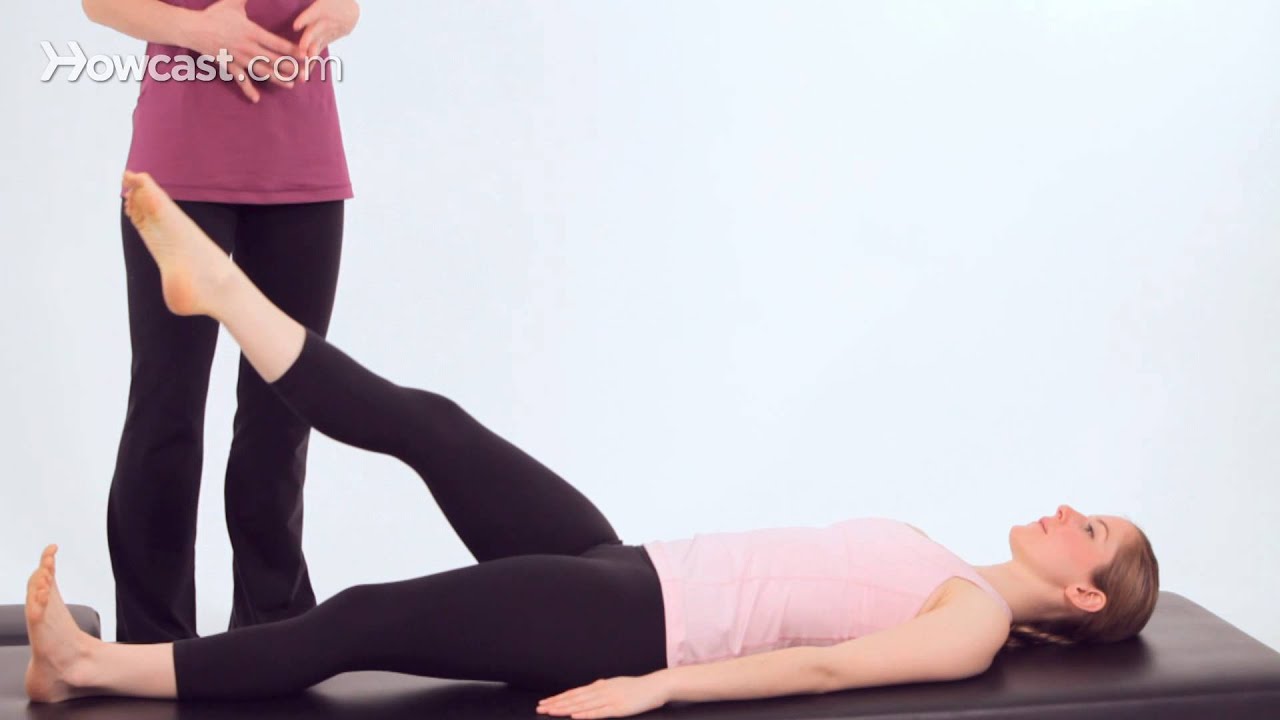
So, what are Pilates leg circles? Exercise number four in a classical Pilates flow, they're also known as single-leg circles, and - as you'd imagine - involve moving the leg in (controlled) circles, while lying on the mat.
"Leg circles are one of the original exercises from Joseph Pilates' classical mat repertoire and a brilliant example of how Pilates can make a seemingly simple movement incredibly challenging," shares instructor Aleksandra Warburton. "The exercise involves drawing controlled circles with one leg while lying on your back, with the goal of keeping the rest of the body completely still. Although the moving leg is the obvious focus, the real work is happening through the core and pelvis, which must stabilise throughout the movement.
"It's a fantastic reminder that Pilates isn't about how big the movement is, but how much control you can maintain while performing it."
What are the benefits of Pilates leg circles?
We've touched above on some of the benefits of the humble leg circle, but there are plenty more to explore, too.
1. They boost deep core strength
First and foremost, while it's logical to assume that the primary working muscles here are the legs, in actual fact, the core is actively engaged throughout the leg circle motion.
"Leg circles are excellent for developing deep core strength," notes Warburton. "Every circle challenges the transversus abdominis (your body's natural corset), along with the obliques and pelvic stabilisers, to prevent the hips from rocking or the pelvis from tilting. If your core switches off, you'll know about it straight away!"
2. They improve hip mobility
Runners and cyclists, listen up.
"Leg circles require the femur to move independently of the pelvis," explains Pilates instructor and founder of Sol Pilates, Meg Bew. "This dissociation is fantastic for improving movement at the hip joint while maintaining stability through the trunk and pelvis. The circular movement also helps circulate synovial fluid - the joint’s natural lubricant - which supports healthy joint function and nourishment of the cartilage."
3. They help stabilise the pelvis
Pelvic stability might not be top of your list of must-haves, but trust us when we say it's crucial for building a balanced, mobile and capable body.
"Leg circles require you to maintain control of the trunk and pelvis while one hip remains anchored and the other moves dynamically," explains Bew. "To the eye, it looks simple, but the demand on the whole body is surprisingly challenging. Performed with control, they're an excellent way to improve hip mobility while maintaining stability through the pelvis and trunk."
4. They enhance functional strength
Pilates generally is amazing for building functional strength - which is all about building a body that's fit for the everyday movement patterns we all utilise. And leg circles in particular are excellent for boosting this type of strength, say the pros.
"From a strength perspective, leg circles work the hip flexors, adductors, abductors, glutes and deep stabilising muscles around the pelvis," says Warburton. "While they won't build muscle in the same way as lifting heavy weights, they absolutely contribute towards developing lean muscular endurance and improving functional strength, particularly when performed slowly and with control."
5. They work control and coordination
Ask any instructor, and they'll tell you Pilates is as much about control as it is strength and muscular endurance - and the key to performing the perfect leg circle is to slow it down and move with control and co-ordination.
"Regardless of the range of motion, the focus with leg circles should remain on controlled movement, core engagement, and initiating the motion from the hips rather than the knee or lower leg," notes Pilates expert Sol Bouille, founder of The Island studios. "Focus on smooth, controlled motion rather than making large circles, and breathe steadily throughout the exercise."
How to do Pilates leg circles with good form
We bang on and on about form in Pilates, but the fact remains: you won't benefit from poor technique, and you'll likely do more harm than good. As always, quality trumps quantity, and be sure not to rush the move.
"Think quality over size," advises Bew. "The movement should be smooth, controlled and led by the breath - I love the image of balancing a glass of water (or champagne!) on your pelvis. The aim is to keep it perfectly still throughout the movement."
Bew recommends the following steps:
- Lie with your arms long in a low V, palms facing down to provide a wider base of support. As you progress, try turning the palms up to reduce the amount of anchoring through the upper body.
- Lengthen one leg along the mat, reaching through the heel, and find a neutral pelvis and spine.
- Float the gesture leg towards the ceiling, reaching long through the toes.
- Allow the movement to come from the hip joint rather than the pelvis or lower back. Begin with small, controlled circles, moving the leg across the body, down, around and back to the starting position. Only make the circle as large as you can whilst keeping the pelvis completely still.
Who are Pilates leg circles best for?
The best bit? The humble leg circle really is accessible to - and suitable for - all of us, whether we're new to the practice or have been shaking our out mats for years.
"Leg circles are one of those wonderfully accessible Pilates exercises," shares Bew. "They need very little space, no equipment unless you choose to add it and only a few minutes of your day. Done little and often, they can make a real difference to your hip mobility, body awareness and pelvic stability.
"They're especially good for people who are hypermobile, provided you maintain a soft bend through the knee rather than locking into the end range, and prioritise muscular control over flexibility.
"If your muscles are tight, try using a theraband, which can help support the weight of the gesture leg, reducing excessive gripping through the hip flexors. It also provides gentle feedback and can make the movement more manageable for those with tighter hamstrings.
"For those with excellent mobility (dancers, for example), slow the movement down and focus on maintaining pelvic stability throughout each circle."
Shop MC UK's go-to Pilates kit now:

We've tried many a pair of shorts between us, and we come back to this Adanola pair time and again. Soft, sweat-wicking and supportive, they're perfect for Pilates and more.

Any Pilates girlie (or guy) knows that you can't get into your flow without a decent mat. lululemon's The Mat is the ideal combo of decent squish (technical term) coupled with adequate grip to support all your moves.

Up the ante on your home practice with this Pilates essentials set. Comprising a ball, band and circle, this handy kit proves you don't need a fancy studio to reap the benefits of a regular Pilates practice.
Can I modify the Pilates leg circle to suit my body?
One of the very best things about Pilates is that it truly is for everybody. No matter your ability or body, there are advancements and modifications to turn to: as Bew puts it, we work in layers.
And the leg circle in particular lends itself to all bodies. "Leg circles are suitable for almost everyone because they're so easy to adapt," agrees Warburton.
"For beginners, I recommend bending the supporting leg with the foot flat on the floor to create a more stable base. Reducing the size of the circle also makes it easier to maintain good pelvic alignment. You can even use a band (or I even recommend the belt of your dressing gown, for example, could work for this), to support and feel the hip circle before you force or progress the range of motion.
"For clients with tight hamstrings, it's perfectly acceptable to slightly bend the working leg rather than forcing it straight.
"To progress the exercise, extend both legs long so the supporting leg hovers just above the mat, increase the size of the circle while maintaining stability, or perform the movement on the Reformer using straps, where the spring resistance adds another layer of challenge and proprioceptive feedback.
"I also love progressing clients towards exercises such as Corkscrew, where both legs move together, and spinal articulation is added, making it a much more advanced test of core strength and control."
