Everyone's Talking About These Basic Pilates Moves RN—So I Asked a Trainer to Rank the Most Effective
Your guide to the Pilates basics.


If your social feeds look anything like mine, Pilates basics are having a serious renaissance. Forget complicated Reformer sequences or moves that require the flexibility of a professional dancer – right now, it’s the classics that everyone seems to be talking about.
And honestly, I'm here for it. Pilates has been one of the biggest fitness success stories of recent years, and our collective obsession shows no sign of disappearing anytime soon. But with so many moves being hailed online as the one you need to be doing, I started wondering what someone who's actually qualified to teach Pilates makes of the exercises we see on repeat.
So I asked Georgia Weibel, founder of Pilates with Georgia, to rate six of the most popular basic Pilates moves – including which muscles they actually work, and whether they're genuinely worth adding to your routine. Consider this your expert-approved guide to the Pilates essentials.
Cut Through the Noise With the 5 Best Basic Pilates Moves to Try
What are the benefits of basic Pilates moves?
Before we get into the six basic Pilates moves and what Weibel actually thinks of them, it's good to know why we should bother practising them in the first place.
Slow, controlled Pilates exercises can challenge everything from your core and legs to your balance, mobility and coordination. Better still, mastering the fundamentals gives you a solid base from which to progress onto harder variations – rather than rushing straight towards whatever impressive-looking move happens to be trending.
There's research to back up Pilates in its most basic format, too. One study following middle-aged women through a 12-week mat Pilates programme found improvements in core and lower-body strength, flexibility, agility and balance. That's quite the return from a workout method which, lest we forget, often involves little more than your bodyweight and a mat.
Pilates is also seriously good for our balance, which we all know is important to keep in check as we age. A systematic review of Pilates programmes in older adults found positive effects on both static and dynamic balance, adding to the evidence that those small, controlled movements can have practical benefits beyond simply feeling stronger during class.
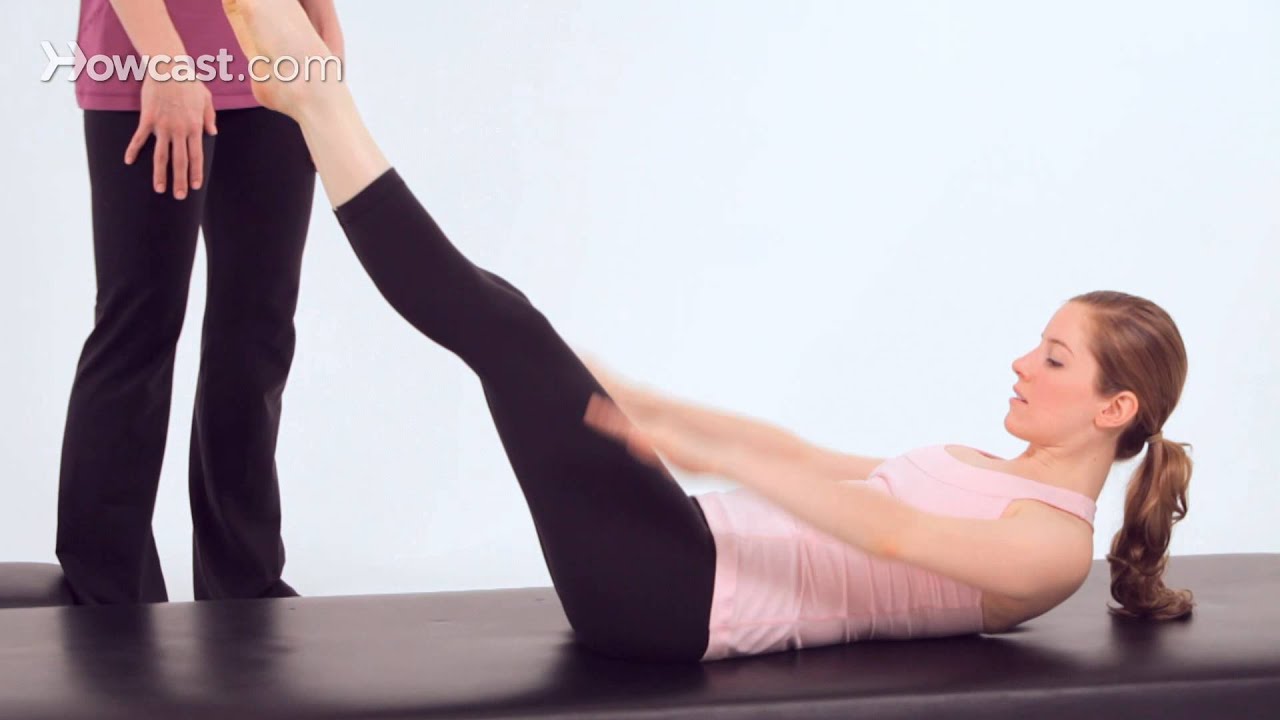
1. The Hundred (2/5)
What? One of the most recognisable Pilates exercises, the Hundred involves lying on your back with the head and shoulders lifted. The legs are extended or held in tabletop while the arms pulse alongside the body.
Why? "This might be controversial, but I personally think The Hundred is overrated!," Weibel says. "It challenges the abdominals and requires you to maintain trunk stability while coordinating the arms and breath, but if my goal was to really strengthen the core, there are other Pilates exercises I would choose first. I also find that people can become so focused on completing the 100 arm pulses that the quality and control of the movement can get lost."
How long? Traditionally, it's performed for 100 arm pulses, using 10 breathing cycles of five counts in and five counts out.
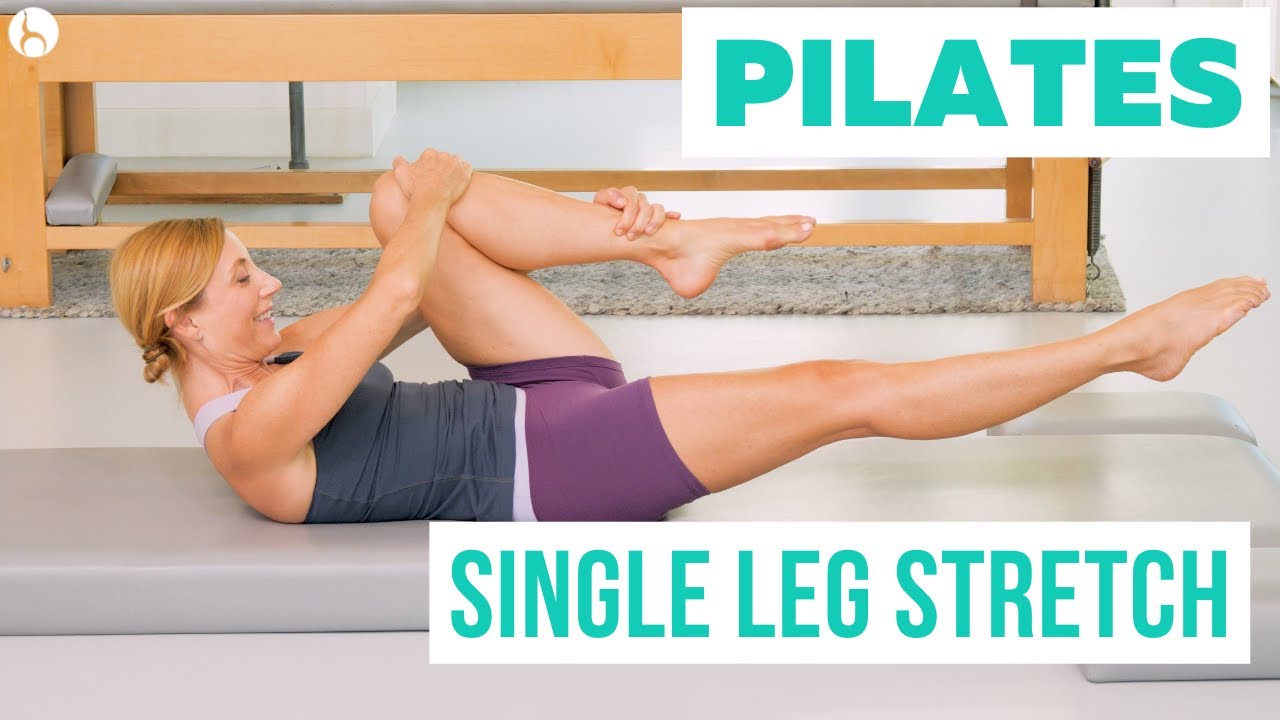
2. Single Leg Stretch (4/5)
What? From a curled-up position, one knee draws towards the chest while the opposite leg extends away. Alternate the legs with control.
Why? "I much prefer this for challenging the core because the abdominals have to stabilise the trunk and pelvis while the legs are continually moving," Weibel explains. "It also brings in coordination and really encourages that mind-to-muscle connection Pilates is known for."
How long? Six to ten reps per leg.
3. Side Bend (5/5)
What? A side-supporting exercise where you lift the hips away from the mat, creating a long line through the body before lowering with control.
Why? Weibel loves this one because so much of the body has to work together. "It challenges the obliques and lateral core, but you’re also asking a lot from the shoulders, glutes and hips to stabilise the body. It’s a great example of how Pilates can create full-body strength without needing lots of equipment."
How long? Three to five reps per leg.

4. Roll Up (4/5)
What? Starting lying down, use the abdominals to slowly roll the body up to sitting before reversing the movement and lowering back down with control.
Why? "Doing a Roll Up without using momentum requires a lot of abdominal control," Weibel explains. "I also love the spinal articulation involved. Rather than thinking about simply getting yourself from lying to sitting, you’re concentrating on moving through the spine with control, which makes the movement much more intentional."
How long? Three to five reps.
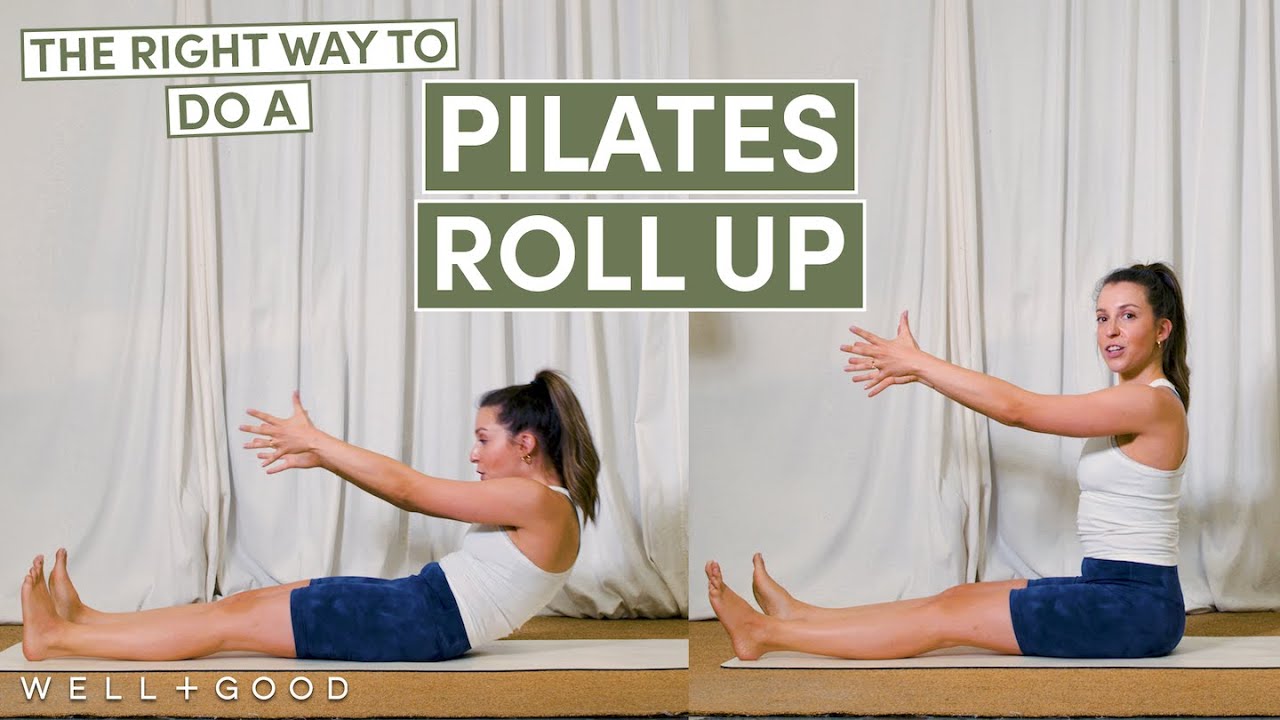
5. Teaser 5/5
What? One of the most iconic Pilates exercises where you balance on your sit bones with the torso and legs lifted into a V shape, maintaining control through the centre of the body.
Why? "For me, this is Pilates in one exercise. You need core strength, hip flexor strength, balance, coordination and a huge amount of control. There’s also nowhere to hide in a Teaser. If you rush it or rely on momentum, you immediately lose the quality of the movement."
How long? Three to five reps.

6. Scissors (4/5)
What? Lying on your back with the upper body curled up, the legs alternate in a scissoring action, with one reaching towards you as the other extends away.
Why? "Scissors combines core strength and stability with mobility through the hips and hamstrings," Weibel says. "The challenge is not just moving the legs, but keeping the trunk and pelvis controlled while they move independently. That focus on stability alongside movement is one of the reasons I think simple Pilates exercises can be so effective."
How long? Six to ten reps per leg.
Shop your new Pilates essentials here:

Monday Body is one of my favourite activewear brands, and the Zion Tank is perfect for Pilates workouts. I'm eyeing up the new midnight blue colour RN.

Under Armour has some seriously good gym kit, and these leggings look perfect for low-impact workouts like Pilates. They're designed for all-day comfort – ideal for when you're transitioning from WFH to the gym.

BAM have got some of the best Pilates socks on the market, in my opinion. My pair have lasted me ages, and this Oat/Milk colour combo will be at the top of my list when I need to replace them.
Which Pilates moves should I prioritise?
That depends on what you want from your session. If building core strength is at the top of your list, the single-leg stretch, teaser, and roll-up all demand plenty from your centre, while scissors add a challenge through the legs as well as the core. Looking to work your obliques and upper body? Side bend is the one I'd prioritise.
If you're short on time and want one move that asks a lot of your body, the teaser probably wins – although it's also one of the more advanced exercises on the list, so you may need to build up to it if you're new to Pilates.
