Why Runners Looking To Improve Their Pace Are Swapping Squats for These 6 Pilates Moves
Transform race day with these simple moves.


Hill sprints? Check. VO2 max? Better than ever. Lactate threshold? Smashed it. Injuries? Absolutely. Whether you're a new runner or a seasoned marathoner, it's easy to think that injury is part and parcel of the running experience - but we're here to tell you that this doesn't have to be the case.
We know that what we do when we're not running can be just as vital as those training miles, but if you feel like you've nailed your running training, nutrition and recovery, and still struggle with niggling injuries, it's time to try something new. Something that will improve core stability, mobility, strength, posture and pace. Sounds too good to be true? Enter: Pilates for runners.
That's right, we're calling it: Pilates might just be the best thing you've ever done to improve your running. And we know we're going to face some resistance from hardcore go-hard-or-go-home runners, but hear us out: research (such as this randomised controlled trial, published in the journal Public Library of Science ONE) shows that Pilates improves 5k performance, while further studies (like this one, from the International Journal of Sports Medicine) reveal that Pilates improves functional movement in recreational runners, which may result in fewer injuries (music to any runner's ears).
"Pilates is the perfect counterpart to high-impact training like running," agrees Pilates instructor Aleksandra Warburton. "Where running is repetitive and forward-moving, Pilates works the body in a more balanced and controlled way, strengthening stabilising muscles, improving alignment and supporting recovery."
It's compelling enough to have us shaking out our mats and reaching for our grippy socks, but Pilates is a vast practice, so it's worth taking a little time to work out the very best moves for running performance. Warburton recommends focusing on building stability, strength and control, particularly through the lower body and core. So, with this in mind, we've compiled the ultimate guide to Pilates moves for runners, below.
While you're here, do take a look at the rest of our Pilates and running content, from the best Pilates workout, best Pilates exercises, and the many different types of Pilates, to the best running advice for beginners, here.
Pilates for runners reduces injury and improves performance - these are the ones to build into your training plan
What are Pilates moves for runners?
There are loads of different styles of Pilates, and they're all brilliant for posture, flexibility, mobility and balance - which are all vital factors in running performance. But aside from this, specific moves work the deep core, back and smaller stabilising muscles, too.
"Pilates is brilliant for helping runners," says Pilates instructor and physiotherapist at Complete Pilates, Helen O'Leary. "The Pilates exercise repertoire contains many exercises that strengthen your abdominals and back muscles. A lot of the exercises focus on being able to stabilise one body part while moving another, which is a skill that promotes efficient movement."
A regular Pilates practice can help you move better not only while running, but also in everyday life, leading to (hopefully) fewer injuries overall.
What are the benefits of Pilates moves for runners?
As well as the points touched on above, there are some more specific benefits for runners looking to incorporate Pilates into their fitness regime.
1. It improves running efficiency
This is the big one: to perform well as a runner (no matter whether you're running a marathon, a 5k, or simply chasing after your kids in the park), you need to be efficient. Also known as running economy, the term refers to how well the body uses energy or oxygen as you run. Ideally, you'll resemble an efficient machine, rather than a panting mess!
"I see a lot of runners in my regular classes, and I always encourage a blend of movement styles, running for cardiovascular fitness, and Pilates for strength, control and injury prevention," says Warburton. "Together, they create a much more resilient, well-rounded body. Building strength in the areas that often get overlooked (particularly the core, glutes, hips and ankles) improves running efficiency and overall performance."
2. It boosts flexibility and mobility
It's well established that Pilates is an excellent way to build flexibility and mobility, as it moves our joints to their full range of motion in a low-impact way. This creates well-oiled joints (back to the machine analogy!), which translates as better performance, even helping improve stride length, too.
"Running is repetitive and forward-moving, so over time we often see reduced hip stability, limited spinal mobility, and over-reliance on the quads," notes Meg Bew, presenter and educator for APPI and founder of Sol Studio Sussex. "Pilates helps restore balance by strengthening the posterior chain and deep stabilising muscles. It's one of the most effective ways for runners to build strength and stability without adding more impact."
3. It teaches body awareness
"Perhaps most importantly, Pilates teaches body awareness, helping runners notice and correct imbalances before they become issues," notes Warburton. Whether you prefer mat, reformer, tower or something else entirely, there's nowhere to hide in Pilates - you'll absolutely notice if you have something out of whack.
4. It reduces the risk of injury
Last but not least, we've touched on the benefits of Pilates for injury-proofing the body above. And, as wonderful as running is for both body and mind, we can't escape the fact that it is repetitive and high-impact, leading to overuse and stress over time.
"All Pilates movements support better control, alignment and strength, which directly translates into more efficient and safer running," agrees Warburton.
6 best Pilates moves for runners, according to top coaches
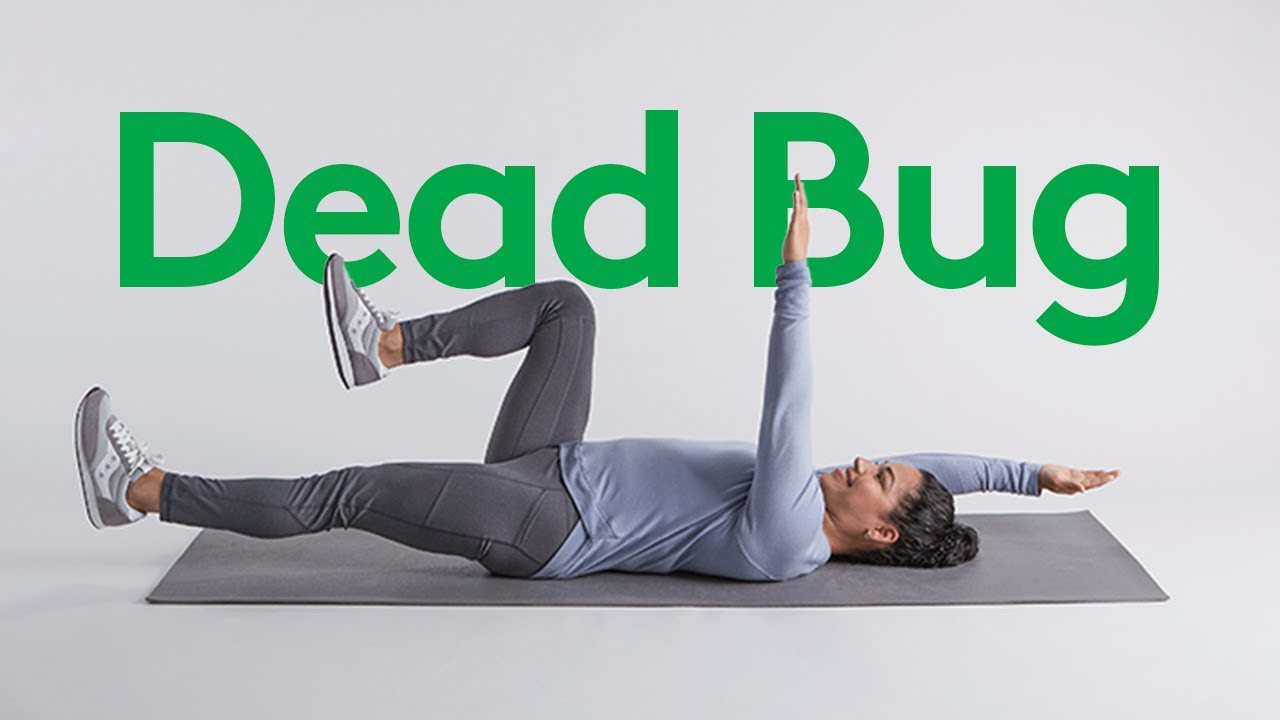
1. Dead bug
What? The dead bug is a classic Pilates move that works your abdominal and back muscles. Lying supine with legs on the table top, slowly extend the opposite arm and leg and return. Repeat on the other side.
Why? "Working with opposite arms and legs means that we are challenging the obliques and rotational strength, which is really important for running," says O'Leary. "The great thing about this exercise is that you can easily regress it - by keeping your leg bent, or working legs and arms separately - or you can challenge yourself further by adding hand or ankle weights."
How long for? Three sets of 12 reps (six on each side).
2. Clamshell
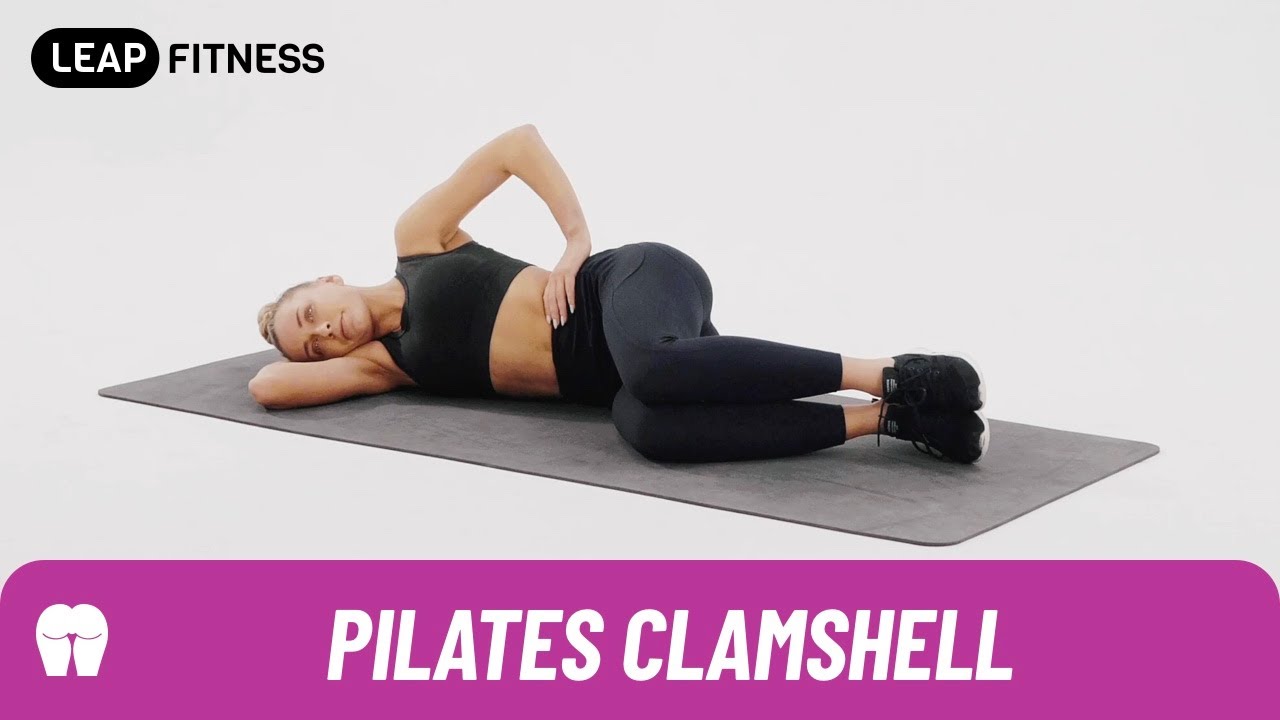
What? Often hailed as the most powerful Pilates glute exercise, clamshells get their cute moniker from the shape you'll create as you perform them. Start lying on your side with your knees bent and feet stacked. Lift the upper knee toward the ceiling before lowering back down to the floor. Be warned - it's a very small move!
Why? "Side-lying clams target the deep lateral rotators of the hip, including glute medius, which are essential for stabilising the pelvis during single-leg loading and helping prevent issues like hip drop," notes Bew.
How long for? Aim for three sets of ten reps on each side.
3. Scooter
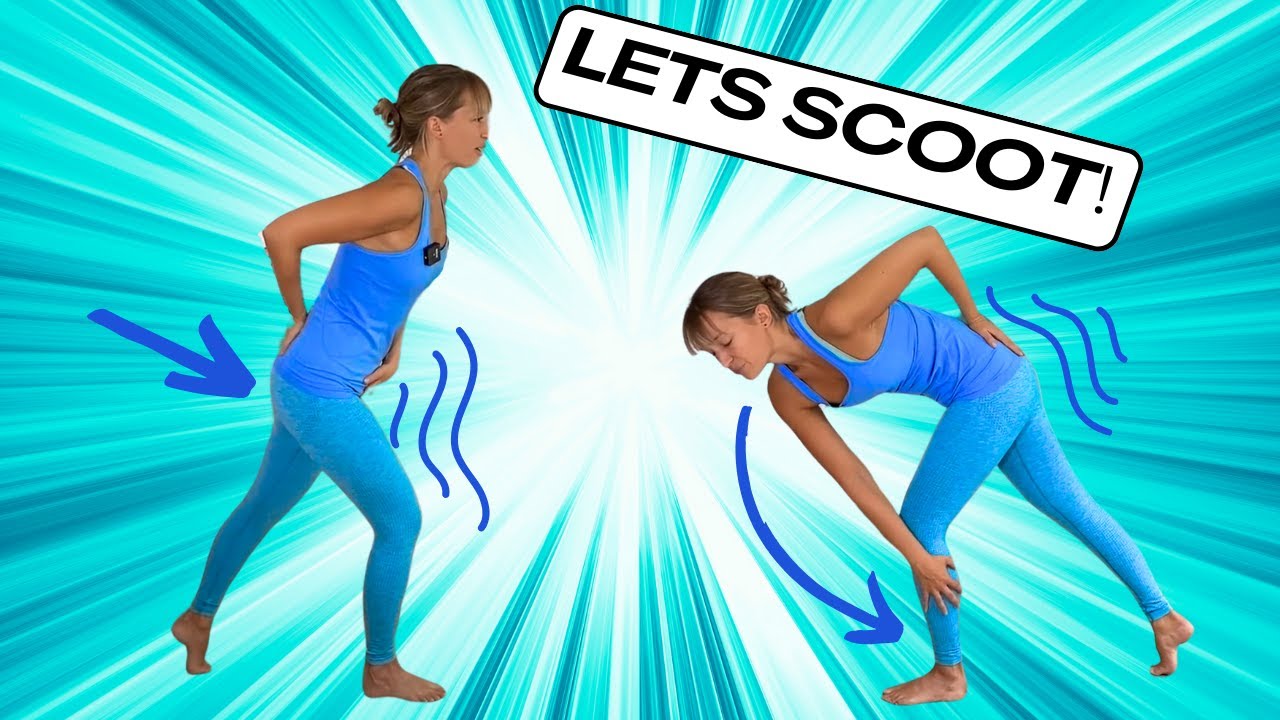
What? Commonly performed on the Reformer, you'll be in a deep lunge position, and 'scoot' the back leg in and out. If you don't have access to a Reformer, you can still recreate the scooter at home, with or without using sliders.
Why? "The scooter is a great exercise for runners because it focuses on endurance through the posterior chain (muscles on the back of the body)," notes O'Leary, "These are often less active. The move also teaches pelvic stability and control, which is important for efficient movement and injury prevention and relevant for activities that require some time standing on one leg (running, walking, stair climbing)."
How long for? Try three sets of ten on each side.
4. Footwork
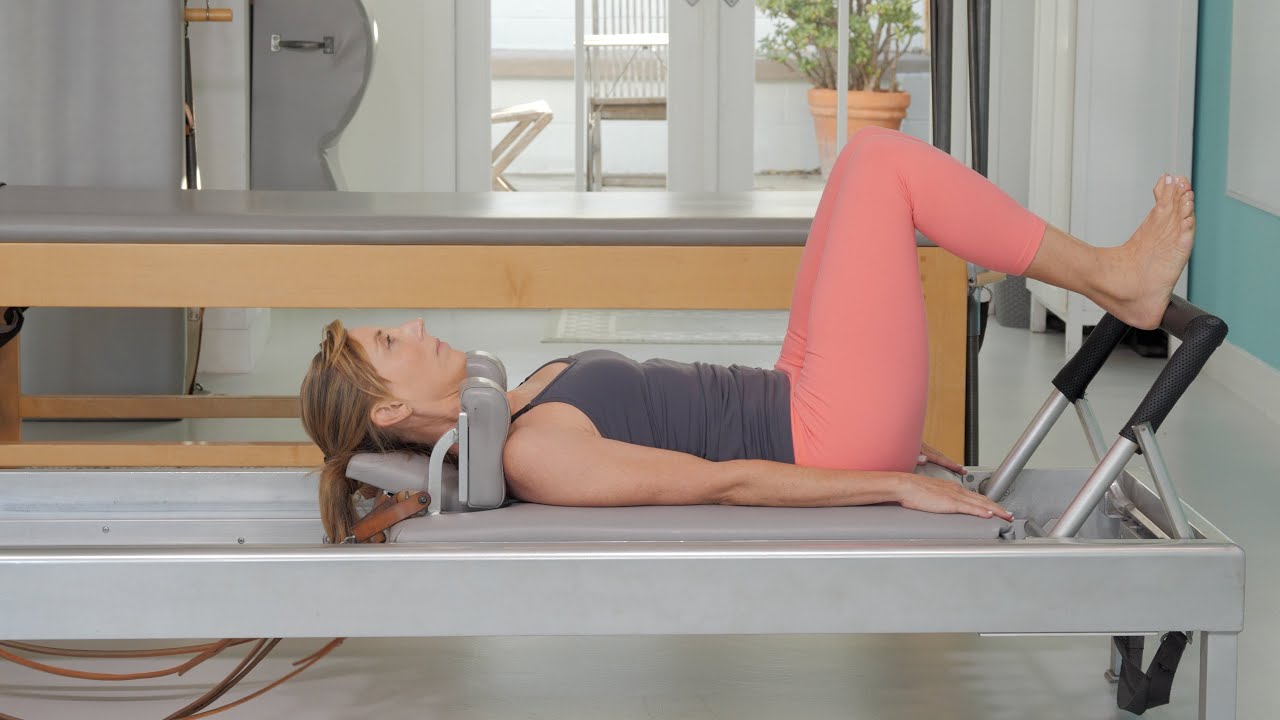
What? Mostly performed on the reformer, footwork is a Pilates basic that's a great starting point for beginners. With your feet on the footbar, you'll work through a series of moves on toes, arches and heels to mobilise and stabilise the feet and ankles.
Why? "Footwork is brilliant for strengthening the feet and ankles while reinforcing proper alignment through the knees and hips," advises Warburton. "It mimics the repetitive nature of running, but in a controlled, low-impact way."
How long for? Usually performed at the start of a reformer class, it's advisable to spend around ten minutes on the feet before moving on.
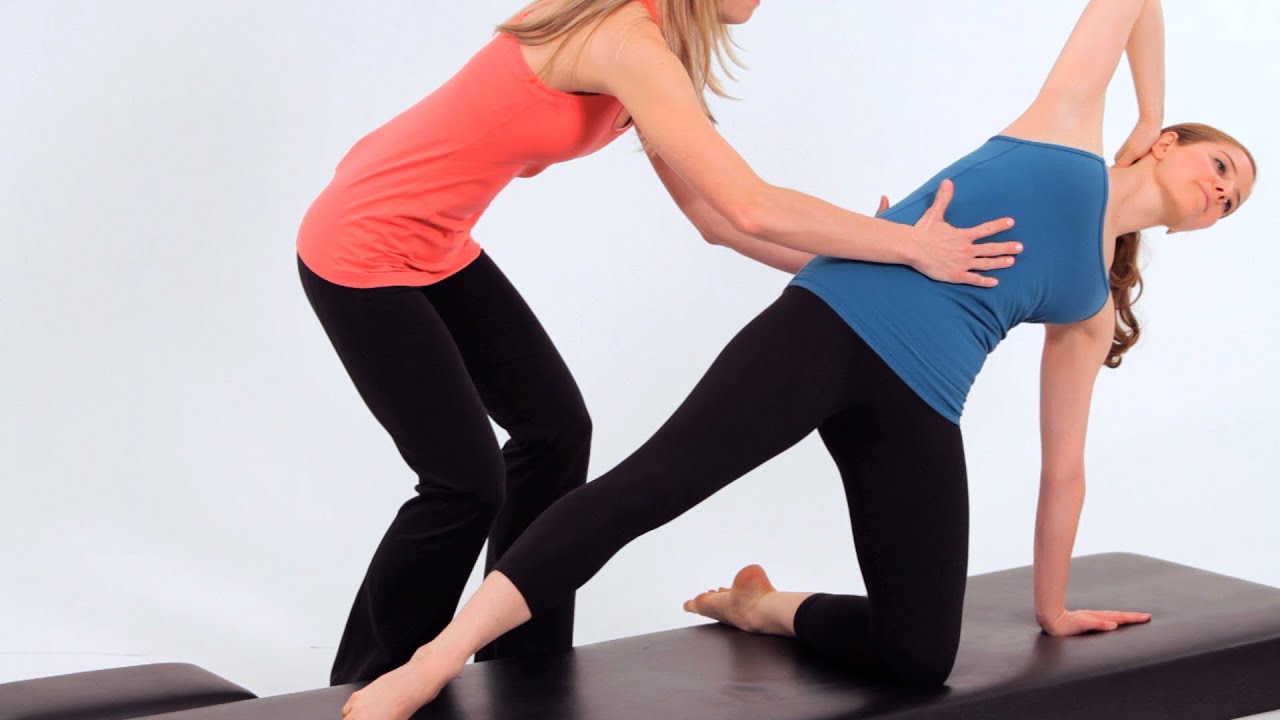
5. Side kick (kneeling)
What? Kneel on one knee with the corresponding hand below your shoulder. Keeping your unsupported leg straight, kick it forward, isolating the movement in the hip joint.
Why? "This is a great exercise for strengthening the hips and glutes, which are essential for pelvic stability when running," notes Warburton. "It also works through different planes of movement, something runners don’t always get enough of."
How long for? Three sets of ten on each leg.
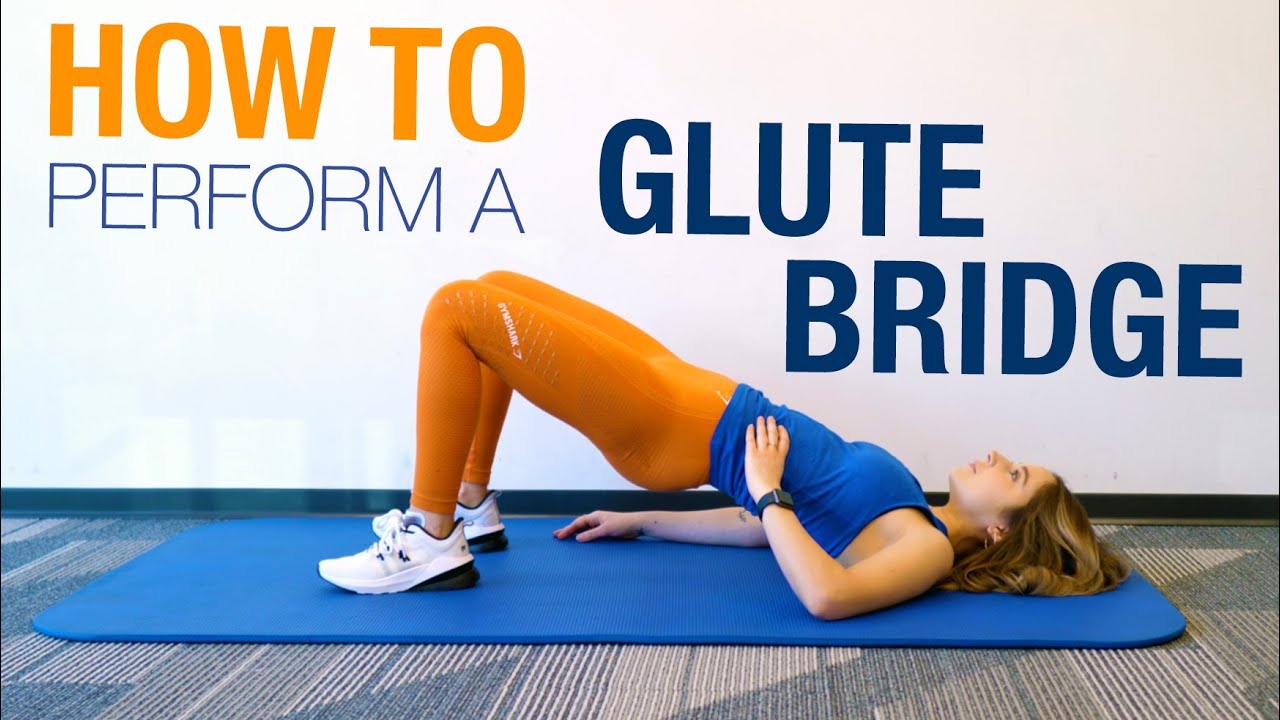
6. Glute bridge
What? A simple and effective strength training move, the Pilates glute bridge focuses strongly on alignment and mobilising the spine, as well as strengthening the glutes and legs.
Why? "These are a staple in my classes," says Warburton. "They strengthen the glutes and hamstrings while supporting spinal mobility and helping with knee alignment, especially when progressed to the single-leg variations."
How long for? Again, three sets of ten to 12 reps should do the trick.
Shop MC UK's go-to running and Pilates kit now:

No reformer? No problem: Pilates sliders are an expert-approved way to recreate those moves from home. Pop them under feet or hands, and feel the burn.

We're obsessed with wearing shorts right now that the sun has made an appearance, and Adanola always delivers. Whether you're lacing up for a 5k or rolling out your Pilates mat, these will have you covered.

We've tried many workout mats in our time, but we keep coming back to this one, proving you don't always have to spend loads of money for quality kit. It's soft, grippy and comes with a handy carry strap too.
How often should runners be practicing Pilates?
"One of the biggest things I notice with runners is how supportive and transformative Pilates can be once they commit to it consistently," notes Warburton. "Running places a lot of demand on the same movement patterns, whereas Pilates brings variety, balance and control back into the body. It’s not about replacing running, but enhancing it, helping you run stronger, move better and stay injury-free for longer.
"Ideally, two to three sessions a week is a great place to start. This allows enough consistency to build strength and see benefits, while still leaving space for running and recovery. Even one focused session a week can make a noticeable difference over time, particularly when it comes to injury prevention and overall movement quality."
