As the biggest climate event of the decade kicks off, we ask: where are all the women of COP26?
Did you know? Last year, when the COP26 core team line up was released, it only included two women which, in a team of 12, equaled just 16% of the top roles.

Did you know? Last year, when the COP26 core team line up was released, it only included two women which, in a team of 12, equaled just 16% of the top roles.
Led by SHE Changes Climate , over 400 female climate leaders, including Paris Agreement co-author Laurence Tubiana, environmental lawyer Farhana Yamin and actress Emma Thompson, have been calling for COP26 gender equality ever since. Similarly, UN Women and the International Women’s Initiative have called out the 'COP26 paradox', stressing that women must be heard on climate change.
They've been successful, to an extent: the line up looks somewhat different now, with 17 out of the 35 senior positions now occupied by women. However, examine the leaders of the eight COP26 Strategic Units more closely and you'll notice a slightly different pattern. "Only two of them- COO, run by Rosalyn Eales, and Communications, run by Caroline Holtum, are managed by women," shares Pratha Garkoti of the International Women's Initiative. "So in a sense, it's still true that very few women are included in the core COP26 team."
Why is it so important, you ask, for more women to be included in senior management roles? Two words: gender equality, but also, because statistics indicate that women are better at making quick, democratic decisions. A 2020 study found that female-led countries experienced 6x fewer deaths during the pandemic.
"There are also studies that already show that women’s leadership leads to better climate disaster preparedness, more progressive climate policies, and overall is critical for democracy," shares Osprey Orielle Lake, founder and executive director of the Women’s Earth and Climate Action Network (WECAN).
"Women as a constituency are a strategic, powerful, and beautiful force that is often not recognised or supported – key to making the societal, economical, political and ecological changes we need," she continues.
Here at Marie Claire UK, we've long championed gender equality and sustainability, too. So, we've been doing a deep dive into what effect having an uneven balance of women and men at one of the most crucial climate events in our lifetime might have.
We've spoken to Garkoti, Orielle Lake, Claire Barnett of UN Women and Lynn Davidson, the COP26 president Alok Sharma's communications adviser.

So, why are less women representing at COP26 than men?
According to Barnett, women are excluded from every area of climate action. "The fact that they are still almost absent from so many delegations isn't surprising, but it is concerning," she explains. "UN Women - myself and our previous global executive director, Phumzlie Mlambo-Ngucka - signed onto the call for more women in delegations since the start, and we're still seeing the UK and many other nations including very low numbers of women in their delegations."
Orielle Lake agrees, adding that this was the main reason the She Changes Climate campaign sent the open letter last year. "It urged the UK government to call for accountability for gender equality on the COP26 organising team. Representation has grown, but it is nowhere near equitable nor is it truly reflective of the diverse leadership of women around the world," she shares.
While a recent Guardian article found that roughly 45% of the COP26 team is now women, almost all of the senior public-facing roles are taken by men.
Similarly, EuroNews also suggests that less than 25% of the influential COP26 leadership team positions are held by women. "While the exact numbers are still in flux, we do know that for COP26 and all past COP’s women’s leadership and voices have always been underrepresented," adds Orielle Lake.

Garkoti adds that while it's great that women have been added to the COP26 line up as regional ambassadors, gender envoy and deputy directors, as long as women are not included in the key negotiation team, they won't be able to contribute to key negotiations.
"Adding them simply appears as a mere tokenism," she shares. "It's important to understand the difference between including women as key negotiators and team leaders, rather than including them as just delegates - I personally believe that there are fewer women than men because society hasn't been able to let go of the archaic image of politics being considered as a "male realm"."
Davidson stresses that women and girls have a critical role to play in the fight against the climate crisis and maintains that, while progress is being made, there is more to be done.
However, she doesn't agree that female representation is lacking at COP. "The UK is committed to championing diversity and inclusivity throughout our COP26 presidency, and our vast network of leaders, diplomatic representatives and expert voices reflect this. More than 40% of the senior management in the COP26 Unit are women," she shares.
Who are the key female figures at COP26?
Keen to know who exactly will be flying the female flag at COP26? Garkoti explains.
- Patricia Espinosa, executive secretary of the UNFCCC
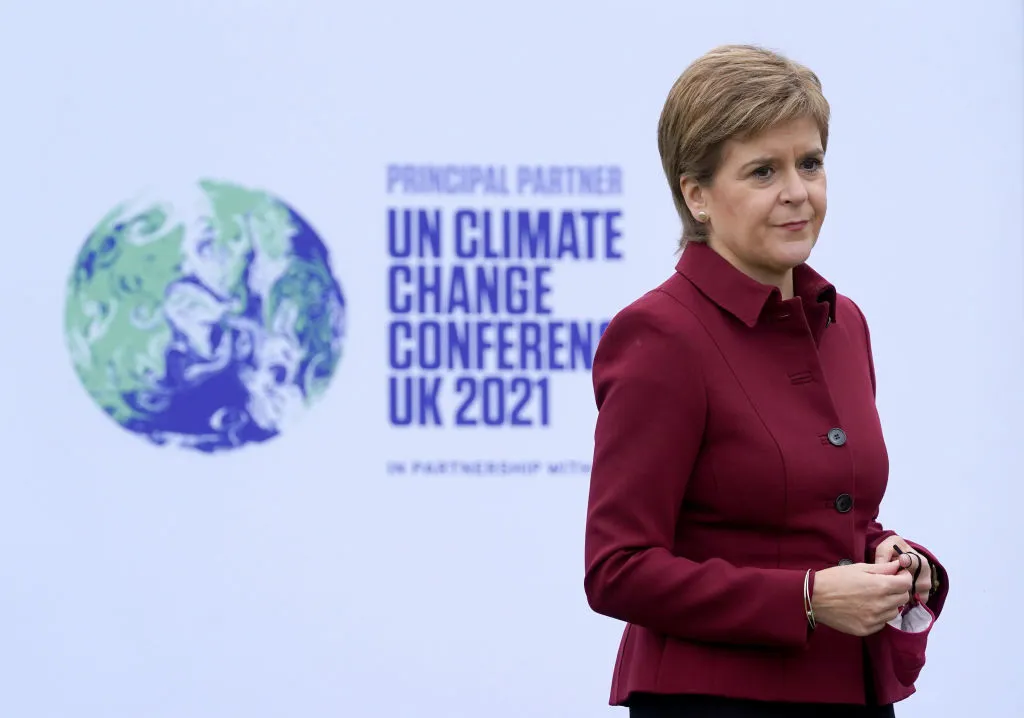
- Nicola Sturgeon, first minister of Scotland
- Gina McCarthy, US Climate Advisor
- Amina J. Mohammad, UN Deputy Secretary General.

What does this gender inequality - at one of the most important events of our lifetime - imply?
Good question - and one that's important to all genders, not just women.
"The lack of women taking key roles at COP shows that gender inequality and climate change are still treated as separate problems to be solved," explains Barnett. "This simply isn't accurate - we know that including women as leaders in climate has a huge beneficial impact for wider communities."
How so? Because, as she goes on, women are often early adopters of many new agricultural techniques, first responders in crises, entrepreneurs of green energy and decision-makers at home, offering valuable insights and solutions into better managing the climate and its risks. "Women aren't a problem - they are the solution," Barnett emphasises.
Orielle Lake agrees, adding that it implies that the UK government is not addressing the root causes of the climate crisis. We're facing our biggest crisis yet, with the recent IPCC report confirming that we're closer to a perilous 2.7 degrees temperature rise by the end of the century than the agreed cap of 1.5 degrees.
"Business as usual is not what is needed," she stresses. "By reproducing everyday gender inequity rather than challenging it, the COP26 leadership team is leaving out a critical solution for addressing and mitigating the worst impacts of the climate crisis."
"Women’s leadership is a climate solution, especially the leadership of Indigenous women, women from the Global South, and those most impacted by the climate crisis already."
Garkoti, on the other hand, is clear that the lack of women at COP26 means one thing: talking about inclusivity and equality is a façade.
"It's a different issue when parties don't know what gender equality is, but they know how important it is, or at least they pretend to know," she shares. "It's rather ironic that the COP26 social media accounts post about why gender equality and women’s leadership makes climate action better, but don't pay any heed to it in reality."

What impact may it have on the conference if the gender division was more equal?
There are a number of reasons why women need to be at the forefront of climate action, according to Barnett, Orielle Lake and Garkoti.
"From food poverty to loss of homes and crops, marginalised groups including women and girls suffer worse when climate-related disaster strikes," explains Barnett. "Their inclusion as leaders in climate efforts also makes the solutions inclusive for all."
Not to mention the fact including women in climate action also makes peace post-conflict and disaster more inclusive, and more likely to last. "Research shows that women are better at adopting innovative and preventative solutions to climate change, with greater transparency and better conflict resolution," she shares. "Gender-balanced leadership teams are also more effective."
"We need a deep paradigm shift—a values change, if you will," adds Orielle Lake. "It’s not just about quotas or having more women at the table, but about having feminist leaders who are already building circular economies, community-led renewable energy solutions, and advocating for progressive climate policies," she explains.
Garkoti agrees, adding that if the gender division is more equal, the decision-making processes are more likely to recognise and acknowledge the needs of all. "While the gender-sensitive ‘do no harm’ approach is a start, we could even hope for gender-responsive solutions to issues if the gender division is more equal."
Bottom line: we're no longer prepared to hear that national delegations can't find the women when we've seen them rushing to do so in the lead up to a conference. "We are 50% of the population, and women are achieving outstanding things across STEM sectors. We need to start planning now to be able to have more women leading in COP27," shares Barnett.

So, what needs to be done in order to ensure more key figures are female?
1. Make bold commitments
For climate action to work, we need a critical mass of governments and other stakeholders to sign up to bold commitments, reckons Barnett. "This includes the voices of women, marginalised people, and importantly of young people," she shares.
2. See inclusivity as a tool
Gender equality is a tool we can leverage for climate action and prosperity, not a moral problem to be solved in isolation, continues Barnett. "We need our leaders, both public and private sector, to understand this. If they want to achieve change more quickly, including women will be key," she stresses.
3. Listen to frontline women
WECAN recognises that specifically Indigenous, Black, and Brown women are the backbones of so many movements to stop extractive industries, such as the fossil fuel industry, which is one of the leading drivers of climate change, explains Orielle Lake. "It's imperative that we listen to frontline women who continue to provide roadmaps and policy recommendations that centre gender, racial, and economic justice."
In every sector, from renewable energy initiatives to fossil fuel divestment campaigns, agroecokogy to urban sustainability projects, women are at the helm, working to change humanity’s current destructive trajectory. "Their voices, solutions and expertise must be heard," stresses Orielle Lake.

4. Increase visibility
What's often misunderstood is that to ensure that more key figures are female, we need to increase their visibility, shares Garkoti. How? By recognising the important contributions we make as decision-makers, stakeholders, educators, and experts.
"We need to be empowered," she explains. "Women need to be given the right platform to discuss our needs and/or grievances, and our experiences should be acknowledged and not marginalised."
5. Supporting gender day
According to Davidson, during its COP presidency, the UK is calling for gender-responsive local, national and global climate action, championing women and girls’ agency and adaptation, and advancing gender in climate finance.
"Our COP26 Presidency Programme includes a Gender Day (9 November), which focuses on progressing equality and the full and meaningful participation of women and girls in climate action at the summit in Glasgow," she shares.
This will address not only the ways in which women, girls and marginalised people are disproportionately impacted by climate change, but also the importance of their leadership and participation in driving solutions.
We are calling on global leaders to come forward with new and strengthened commitments on Gender Day, to demonstrate how they are implementing the UNFCCC Gender Action Plan. The UK recently joined the UN Women-convened Action Coalition on Feminist Action for Climate Justice, and we are encouraging commitments from others framed around their priority actions.

6. Using your voice
And finally, we need the public to keep speaking out about this, stresses Barnett.
"Leadership that is not representative cannot produce solutions that work for all. All the evidence indicates that we would achieve both better and more representative progress on climate resilience with proper gender balance in leadership roles," shares Barnett.
So, shout about it. Use your voice. Share stats on your social platform or speak to friends - every little helps. "We want to see women, girls and marginalised people demanding that women are included as climate leaders," shares Barnett. "COP26 may only happen in the UK for 2 weeks this year, but this is a problem that will affect generations, and inclusive action is critical for the rest of time."
