Zara Larsson’s Body-Image Philosophy Feels Refreshingly Different in the Age of Self-Optimisation
The Swedish megastar is the body role model we should all be listening to.


Thinking back a few years to the height of the body positivity movement is almost like stepping into a parallel universe. Thanks in part to the ever-growing noise around GLP-1s, there's a definite sense that we've regressed in terms of how we're thinking about our bodies, exercise and nutrition.
No matter how balanced and logical we are in our approach to health and wellbeing, it's almost impossible to be completely immune to the shift. With influencers, celebrities and even our mates shrinking before our very eyes, staying focused on health, strength and longevity as goals can be increasingly challenging, and it's easy to get sucked into a negative spiral of body comparison and nitpicking.
Which made it all the more refreshing to hear Swedish superstar Zara Larsson's beautifully balanced take on exercise and her body recently. The singer, who has a casual 13.2 million Instagram followers, took to her socials following a slew of requests for her to share her workout regimen, ostensibly to remind us all of the futility of comparing our bodies, workouts, nutrition and more - stressing that dancing is her favourite way to keep herself healthy and active.
And it's a pertinent reminder. We're constantly bombarded with wellness advice, are low-key obsessed with tracking metrics, and attempting to optimise every last second of our day - which doesn't leave much (if any) room for stopping and smelling the roses when it comes to wellbeing.
This maxxed out approach to exercise isn't actually doing us any favours, though. Research shows that, in fact, constant tracking can be a source of stress and anxiety (see this study, from the Journal of Public Policy and Marketing), while further studies (like this one, from the journal Healthcare (Basel)) reveal the impact of factors such as social media on mental health and body image.
So, we could all do with heeding Larsson's sage advice on ditching comparison culture and working out for the sheer joy of it - keep scrolling for all the reasons exercise is for everybody, regardless of body shape, plus how to disentangle the two. In the meantime, though, have a browse at our takes on why the sexualisation of women's sport matters, the best low-effort wellness habits to boost body and mind and all about the dubious health claims of AI wellness influencers, here.
Zara Larsson Wants Us All To Stop Comparing Our Bodies – and To Find the Joy in Exercise. Here’s Why She’s All Kinds of Correct
Zara's refreshing take on exercise and body shape?
If you're not already a fan of Larsson's, you will be after reading this. She took to TikTok (from her bed, no less) to talk about her love of dancing and how focusing on how movement makes our bodies feel is the key.
"What really matters is how you feel in your body," she shares. "Do you feel strong? Do you feel capable? Do you feel like you are living your best life? My tip is the dancing of it all.”
The advice holds steady: find something you love to do, and do it for the sheer fun of it. And the best bit? You'll reap the rewards of regular exercise without even realising.
What are the benefits of working out that have nothing to do with body shape?
So, what should we be looking for in a workout? You'll be pleased to hear there are so many brilliant reasons to move your body in a way that you enjoy - and none of them has anything to do with how you look.
1. It's great for mental health
"Movement is incredibly powerful for mental health," notes Nikki Behrens, founder of Nikkii Health and Rare Street Pilates. "It supports mood and helps us manage stress, as well as contributing to improved sleep. There’s also something incredibly empowering about focusing on what your body can do rather than what it looks like – feeling stronger, learning a new skill, having more stamina, or simply leaving a workout feeling better than when you started."
2. It's brilliant for cardiovascular health
This likely won't be news to any of us, but our cardiovascular systems love regular movement.
"Exercise is an easy way to improve your cardiovascular health by strengthening your heart and helping blood pump around your body more efficiently," shares Dr Daniel Atkinson, clinical lead at Treated. "And it doesn’t need to be vigorous exercise to have this effect either - walking can improve heart health, as well as raising good HDL cholesterol. Over time, regular exercise can improve your long-term health by lowering blood pressure and reducing your chances of stroke and heart disease."
3. It makes everyday life feel easier
Surely something we can all get on board with - especially as we age - is what's known as functional fitness. Essentially, this is about building a body that's capable and resilient enough to handle everyday life, whatever that looks like for you - and it's not to be underestimated.
"Exercise can even improve the small things you overlook," advises Rebecca Bossick, co-founder and clinical director at One Body LDN. "By this, we mean things such as having the ability to carry your shopping up the stairs or play with your kids on the floor without anything hurting, which are more than enough reasons to exercise without ever thinking about your waistline."
4. It improves bone health
It's a harsh reality that for women, bone density starts to decline in our mid-30s, leaving us susceptible to breaks, fractures and at greater risk of osteopenia and osteoporosis. But movement really is magic here - specifically, strength training.
"Most of us reach peak bone mass around our late twenties to early thirties, after which bone loss tends to begin, speeding up around perimenopause when oestrogen levels fall," explains Bossick. "Resistance and impact work is one of the few things that helps slow that down, which is why it's recommended that we undertake strength activities on at least two days a week, on top of the 150 minutes of moderate activity, as per NHS guidelines."
5. It boosts longevity
Now, longevity is something of a buzzword right now, but trust us when we say it matters, regardless of your current age. With lifespan ever increasing, it's more important than ever to take steps to ensure our healthspan matches up - and exercise is a key factor here.
"Exercise is the closest thing we have to a drug that benefits almost every part of the body," says Dr Lucy Hooper, private GP and co-founder of Coyne Medical. "We have an enormous amount of data showing that people who exercise regularly can have around a 20 to 30% lower risk of premature death compared with people who are inactive.
"And exercise is not just about longevity in terms of how long we live. It has a huge impact on our healthspan, or even our joy span, the number of years that we are healthy and able to enjoy our lives.
"Then there are the broader healthy-ageing benefits. Exercise helps preserve muscle mass, balance and strength, all of which reduce the risk of falls and help us stay independent as we get older."
Why do we struggle to separate exercise and body image?
All these benefits aside, many of us still think about working out as a way of changing our body. If you're relating to this, you're not alone, and there are legitimate reasons for struggling to separate the two.
"For a long time, fitness and exercise have been sold to us through appearance," shares Anwen Davies, certified personal trainer and gym and fitness product developer at Net World Sports. "Adverts, 'summer body' plans and before-and-after photos all tell us that the point of exercise is to change how we look. Social media pressure adds to this, because the content that gets shared most is usually visual and will often depict favourable outcomes and not show the less glamorous aspects. For example, a six-pack is easy to take a picture of. Better sleep patterns or reduced stress levels aren't.
"Progress can also be easier to measure in terms of appearance. People can step on the scales or take a photo, while improvements in those less tangible aspects are harder to notice day to day. That makes it easy to focus on aesthetics as the main sign that exercise is working, when there are actually so many other ways we benefit."
How important are genetics in determining body shape?
Larsson talks in her post about how influential genetics can be when it comes to body shape and factors such as fat distribution.
"And half of it, if not more, is genetics. I’m sorry, it is what it is," she says. "I feel like you can do something about your genetic makeup, but at the end of the day, some people are tall, some people are short, some people build muscles really easily, some people don’t, some people hold fat in certain areas of their body, some people lose fat really easily. That’s why it’s kinda useless to compare yourself to other people."
But how much of a part do they really play? "We don't all start from the same biological starting point," shares Dr Hooper. "Genetics influence things such as our height, muscle mass, tendency to gain weight, and even where excess body fat is stored. Studies looking at families and twins suggest there is a strong genetic contribution to things like BMI and body-fat distribution.
"But that does not mean you are predestined to be the same size or shape as your parents or family. Some influences are also not inherited directly through our DNA. Experiences very early in life, even before we are born, can affect metabolism later in life.
"Then, as we grow, environmental factors have a huge influence too, such as the food we had available as a child, sleep, stress levels, hormones and activity. So you can have two adults living very similar lives, with similar activity levels and nutrition, who still have very different body shapes, body composition and levels of body fat.
"That is one of the reasons comparing ourselves with friends, celebrities or people on social media can be so unhelpful. We are not all working with the same biological blueprint."
How to find the joy in exercising for mental health
This being said, it's absolutely possible to rediscover the joy of working out for all the wonderful reasons set out above.
"As the saying goes, when you enjoy what you do, you'll never work a day in your life - and the same applies to fitness, really," shares body image expert and positive psychology coach Elle Mace. "When you love an activity or sport, you do it for the happiness it brings and how it makes you feel rather than the external reward of how it makes you look."
And once you've made the switch, your mind (and body) will thank you.
"Finding movement you genuinely enjoy can be transformative for mental health," shares Behrens. "Exercise shouldn’t have to feel like punishment or something we do to compensate for eating. Movement can be a release, a source of confidence, social connection, time away from screens or simply something that brings us joy. Whether that’s Pilates, strength training, dancing, swimming, yoga or walking, the “best” exercise is often the one you actually look forward to doing.
"When we stop seeing exercise purely as a tool for changing our appearance, it becomes something much more sustainable: a way of looking after ourselves and celebrating what our bodies are capable of.
If you're finding yourself going back to aesthetic goals when working out, shifting the question from 'How is this changing my body?' to 'How does this make me feel?' can completely change our relationship with movement."
Shop MC-UK approved fit kit now:

Whatever your workout of choice might be, you'll be more likely to do it with kit that looks and feels as good as this. We're currently obsessing over Adanola's new drop, and this racerback tank is at the top of our list.

We're bona fide leggings aficionados, and Crz Yoga's leggings are highly rated. They wash and wear exceptionally well, and the price point is spot on, too.
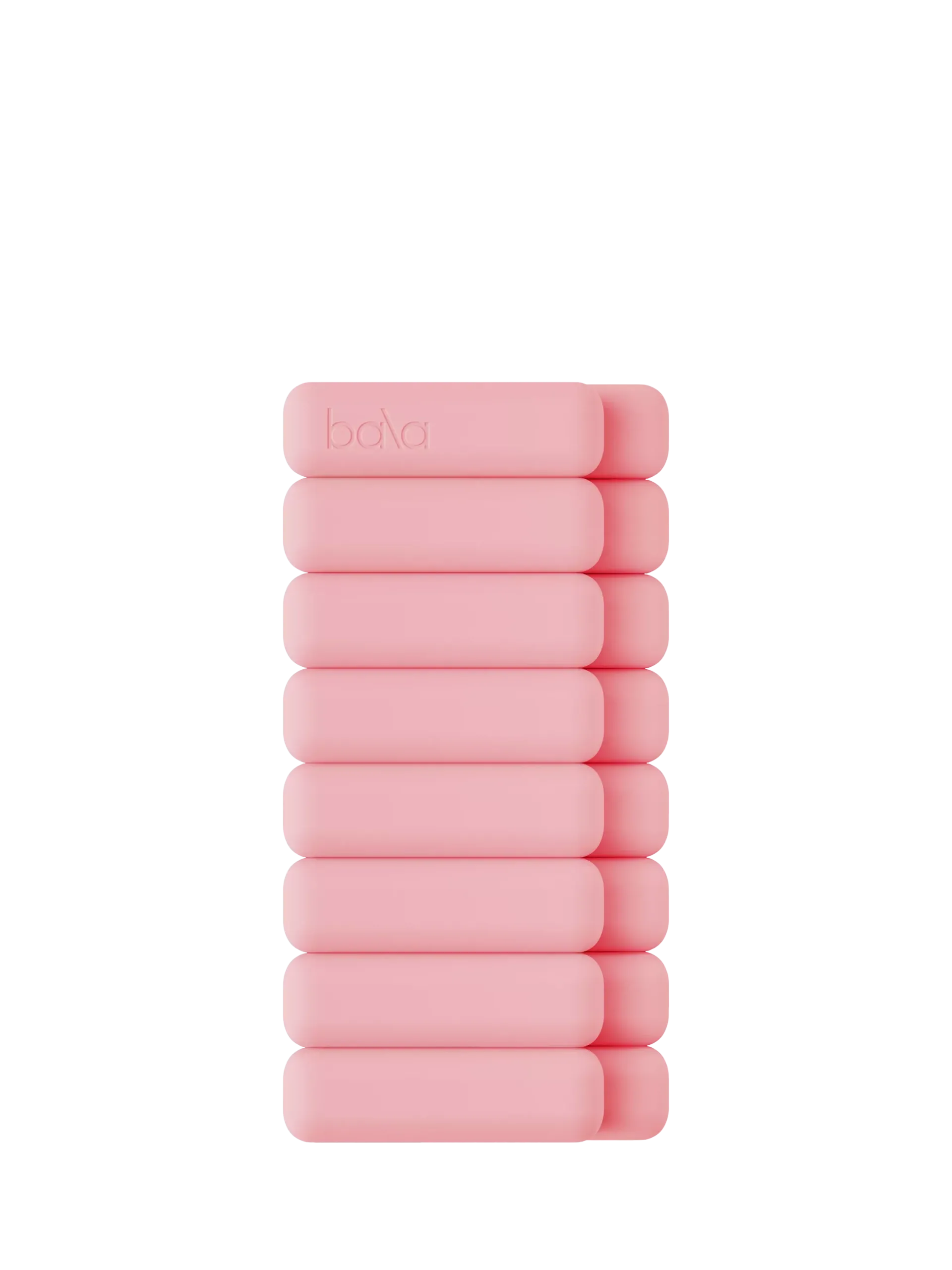
Up the ante on any workout with these handy wrist or ankle weights. They might seem light, but trust us - you'll feel the burn.
What should we be focusing on in a workout?
"I would love people to focus not just on the size of their jeans, how many calories they burned or what they weigh, but also to notice that they are stronger, that their mood is better, that they feel calmer, that they can run up the stairs more easily, or that their blood pressure has improved," says Dr Hooper.
"Exercise should not just be about trying to build a body that looks different; it should be about building a body that is healthy, strong and resilient, and a brain that allows you to enjoy your life and do more with it.
"Exercise should be about bringing more of you into the world, giving you more life, not making you smaller."
Hear, hear.
