Hope for female garment workers in India: 'Finally, I feel human'
Fatal blazes and factory collapses put the safety of India's female garment workers back on the agenda last year. Now, 10 months on, major retailers are teaming up with NGOs to take it one step further, tackling entrenched gender inequality on the factory floor and beyond, reports Nicola Moyne.

Fatal blazes and factory collapses put the safety of India's female garment workers back on the agenda last year. Now, 10 months on, major retailers are teaming up with NGOs to take it one step further, tackling entrenched gender inequality on the factory floor and beyond, reports Nicola Moyne.
When the Rana Plaza building in Dhaka, Bangladesh, collapsed in April 2013, killing 1,100 garment workers, consumers and retailers were forced to re-examine the true impact of fast fashion. The safety of India’s textile workforce, many of whom are migrants and therefore unaccounted for, was put back on the agenda, and questions surrounding workplace conditions and business social responsibility reverberated through the international media.
That same year, something bolder and more encompassing superseded the Vishaka guidelines on sexual harassment: POSH (prevention of sexual harassment). It may have garnered less headlines at the time, but now, four years on, this key piece of legislation has proved a catalyst for cultural change in India’s garment supply chain thanks to progressive partnerships between NGOs and leading retailers.
Put simply, the focus has slowly shifted from safety to gender equality. And with more 6,500 textile factories currently operating in India and an estimated female workforce of more than 35 per cent in north India – an area traditionally dominated by male workers – the effect of tackling deeply entrenched ideologies on gender is likely to reach far beyond the factory floor.
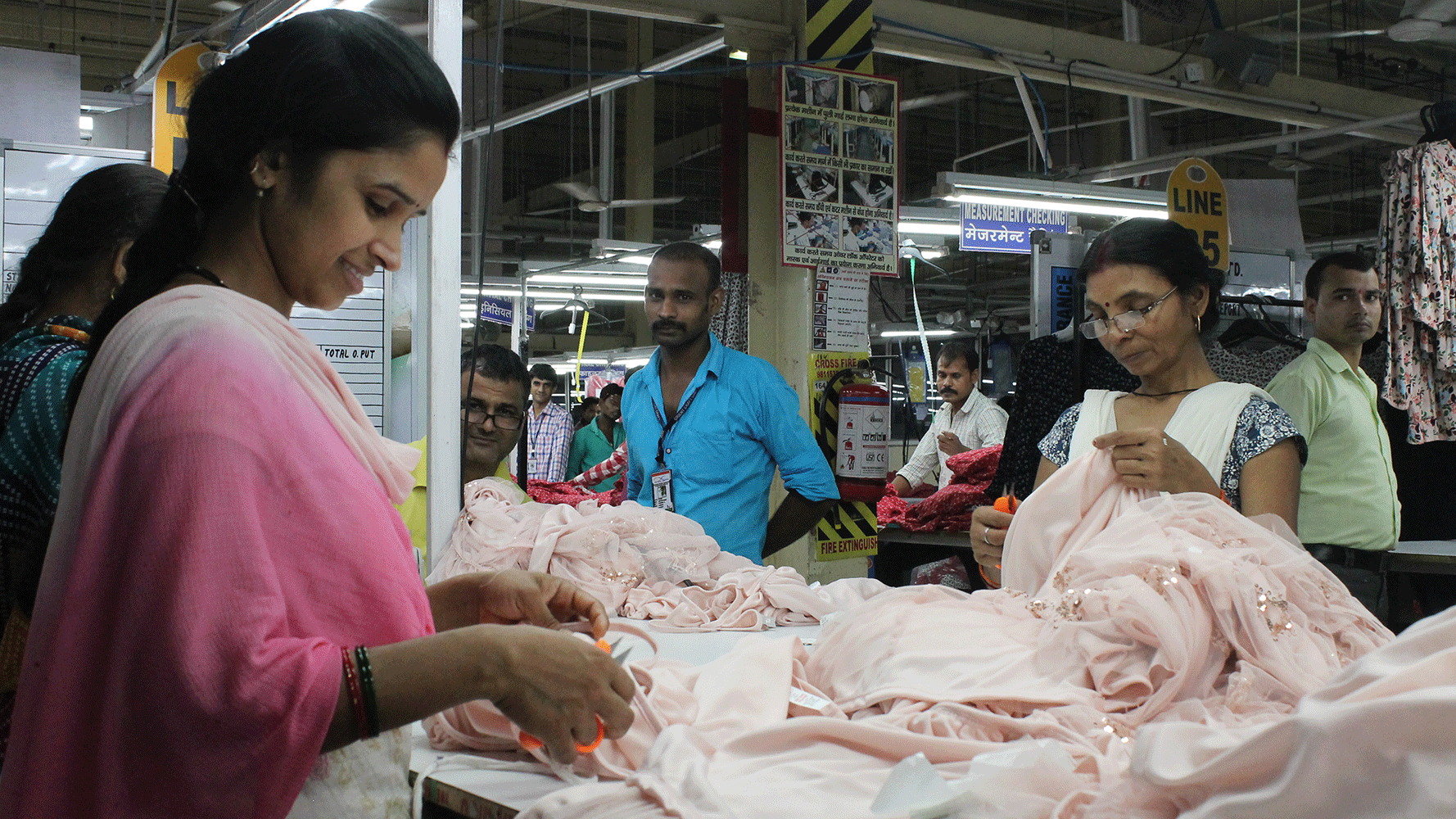
‘You have to be strong to survive here,’ Rama, a quality supervisor at the Richa Global factory in Gurgaon tells me, just audible above the thrum of sewing machinery and ceiling fans running monotonously in the background.
She’s attending the very first Gender Equality programme for garment workers to be supported by development organisation Change Alliance at the site, and is the only female supervisor in a room of 25.
‘I had to bring up my two daughters Diksha and Priya alone, so I am the man and the woman in my household. Some of the male supervisors here are scared of me because I’m not afraid to shout back; to stand up for myself. Other women are not so lucky though, and many female garment workers feel bullied. They are oppressed because men assume that we are weak and less than them. I’m proud to be the only female supervisor here; I want my daughters to grow up strong, but things need to change. Women need to feel equal. It would be nice not to have to fight for what is right alone anymore.’
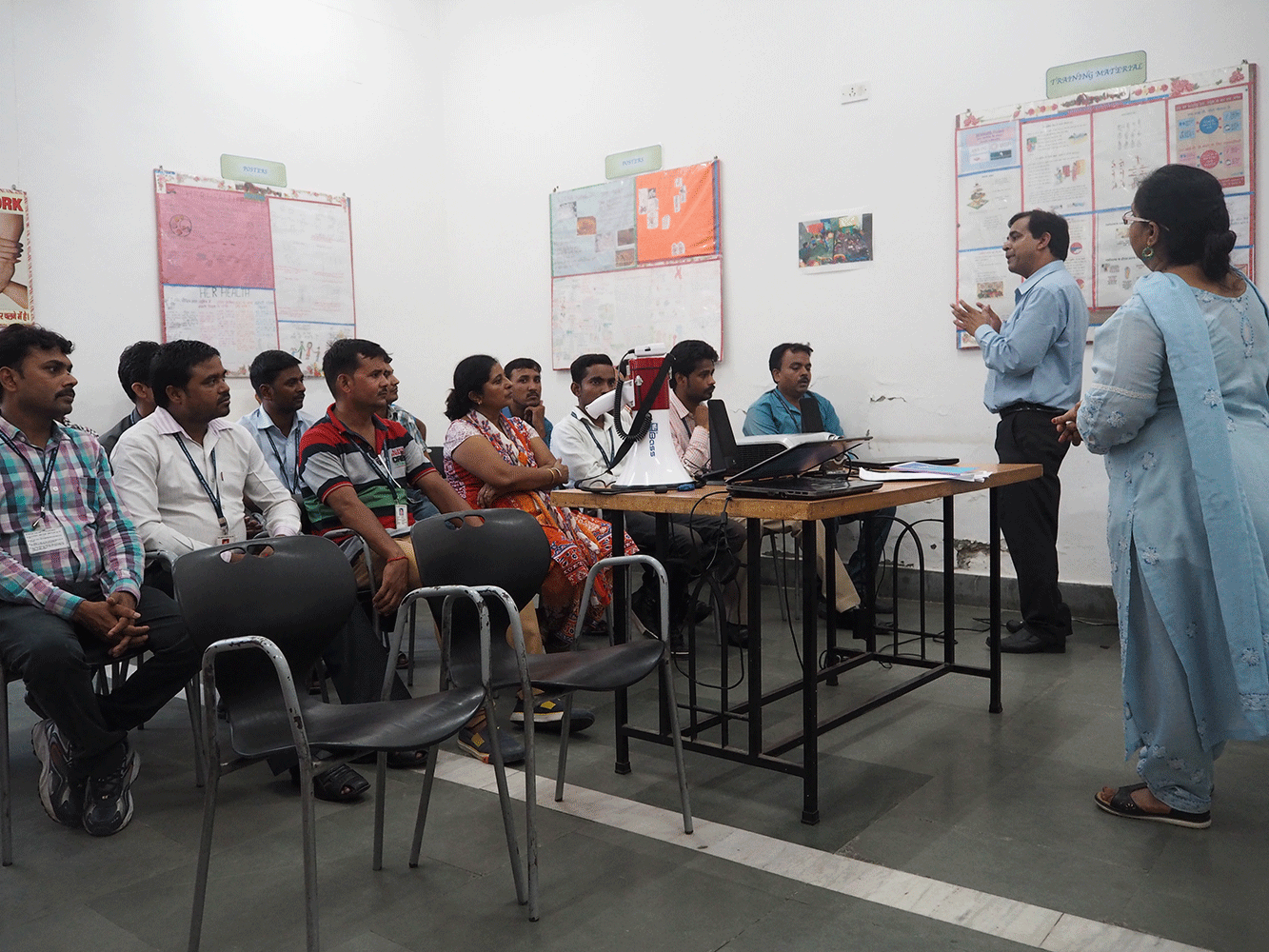
It’s a sentiment Christine Svarer, project director for BSR’s HERproject echoes. Working on the frontline for women’s economic empowerment since 2002, Svarer is now delivering educational programmes to female garment workers in New Delhi and beyond. She hopes that using the workplace as a platform will encourage women to use this new-found knowledge of their legal rights in the home and, eventually, within wider society; a tickle-down effect that will benefit younger generations of women in India.
‘Empowering women who work in the supply chain is an on-going battle, but it finally feels like we’re making progress. Ten years ago I never thought we’d be having this conversation – that’s why it’s such an exciting time,’ she tells me. ‘It shows a real maturity in the garment industry. Gender inequality in the workplace is like unlayering an onion – there are so many complexities involved, but more and more companies are talking about it since the POSH law was passed.’
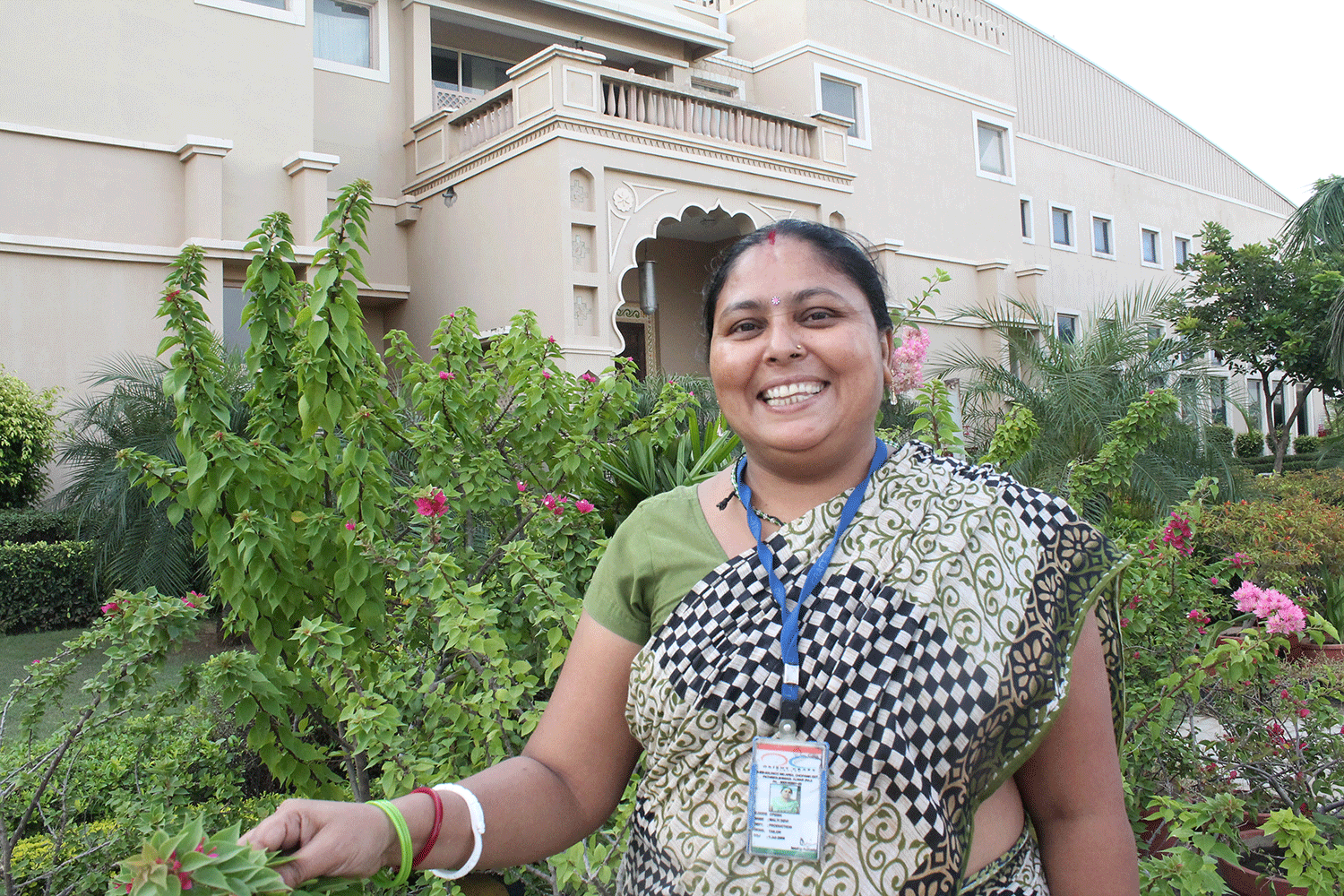
One such company spearheading change is Marks & Spencer, which has partnered HER, and several other NGOs to help build a better future for its female garment workers in India. The HERrespect project, which promotes positive gender relations through awareness and skill building, is currently being rolled out at its Orient Craft Factory in Chopanki – a site that produces intricate lace and embellished pieces. The programme is already making an emotional impact. ‘I feel empowered and less afraid to communicate with my husband as a result of the training,’ Malti, a tailor in the factory, tells me. ‘I have learned today that women have rights and that we must start to use them.’ A machine operator also taking the course adds: ‘I feel happier, like I’ve found a sort of freedom. I have never discussed serious matters like finances with my husband before, but I will tonight.’
Marks & Spencer’s strong stance on gender equality is perhaps best embodied in its Head of India, Nidhi Dua. Articulate, ambitious and already a role model for the women working beneath her on the supply chain, she tells me: ‘I’m from a family of four sisters, so my parents basically brought us up as boys. My father was always very supportive and gave us the biggest gift he could: education. Now I want to give something back. Yes, social responsibility is vital for good business, but it’s about more than money; it’s about helping others in the community to develop and achieve something for themselves. Empowering women – and showing them that they can be leaders – that’s what’s important here. By 2022, we envision that 25 per cent of the management positions in our food, clothing and home first-tier manufacturing sites will be filled by women. That’s the vision.’
It’s no surprise, then, that another NGO being championed by the brand in India is Emerging Leaders. Offering ‘Leadership for Life’ at all levels in the garment supply chain, the training programme isn’t about office jargon and workplace politics – it’s about tackling oppression and unlocking each and every worker’s potential. Programme director Jane Beaumont explains, ‘Everyone needs to learn how to lead their own lives, and not let other people lead it for them – that’s at the very core of what we do,’ she says.
‘Poverty thinking comes from years of self-doubt and oppression. We have between 60,000 and 80,000 thoughts per day but 90 per cent of those thoughts take us nowhere – it’s just repetitive chatter that keeps us small and from reaching our potential. Leadership for Life encourages everyone to reconnect with their passions – their own vision of what they would like their life to be. Then we address the steps you need to make in order to achieve that. It’s a mindset shift. In impoverished communities, women lead a fight or flight existence, but we’ve seen phenomenal results with our leadership programme. One woman came up to me afterwards and confessed that she had wanted to stop her daughter going to school, but she could see now that she was trying to control and oppress her. It’s those stories that really touch me. Many female garment workers in India are abused – it breaks my heart to see what some women have to endure – but we’re offering them a different way of viewing the world; of viewing their own lives. Some even go on to start their own businesses. It’s about releasing the potential everyone has inside of them.’
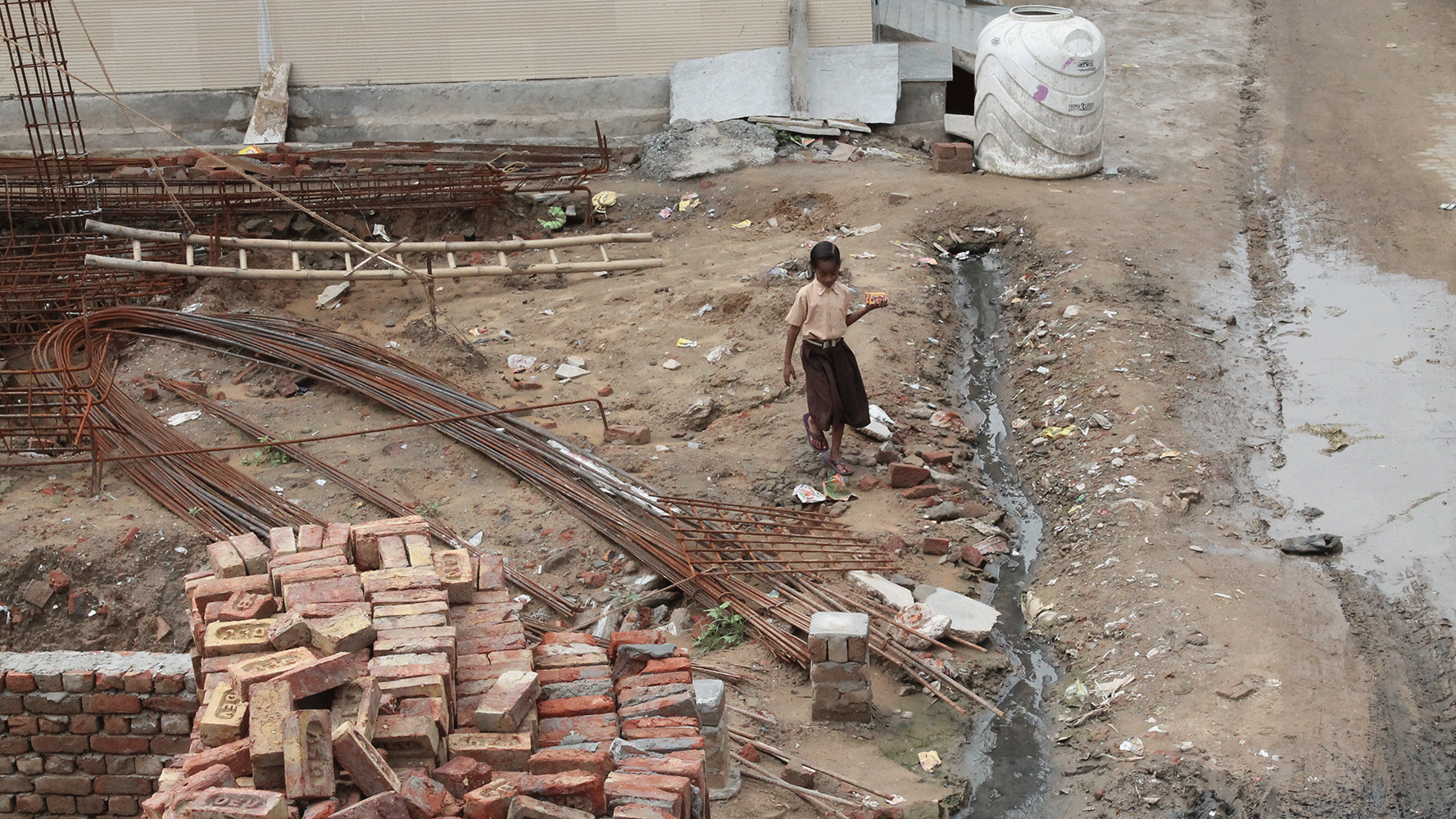
During a Leadership for Life training session in Gurgaon, Pallavi, a volunteer healthcare facilitator tells me that her dream is to improve sanitation and the basic healthcare problems in Mohammadpur village. Located on the outskirts of Delhi, the village is home to hundreds of female garment workers, as well as NGO Swasti’s new Integrated Community Health and Wellbeing (ICHW) centre. Pallavi has made the first step by volunteering to teach English in the village as part of the centre’s wider-reach programme, but after visiting the spaghetti of narrow, polluted backstreets for myself, it’s clear that more needs to be done. Tin-roofed shacks commonly house a family of five in each room; stray malnourished dogs populate the crumbling courtyards; disease is rife, which is why ‘quacks’ or unqualified doctors who set up makeshift huts here often do a roaring trade – particularly among female members of the community.
‘Women here are too afraid or ashamed to go to hospital, so quacks are their only resort,’ Shaonli Chakraborty, Swasti’s programme director and founder of the ICHW centre, tells me. ‘We are fighting to tackle the sanitation issues here, but by offering home appointments, sexual healthcare and accessible sanitary pads, we’re reaching more women than we ever thought possible. These women are often prisoners in their own home; our service is medical and emotional – we’re a lifeline.’
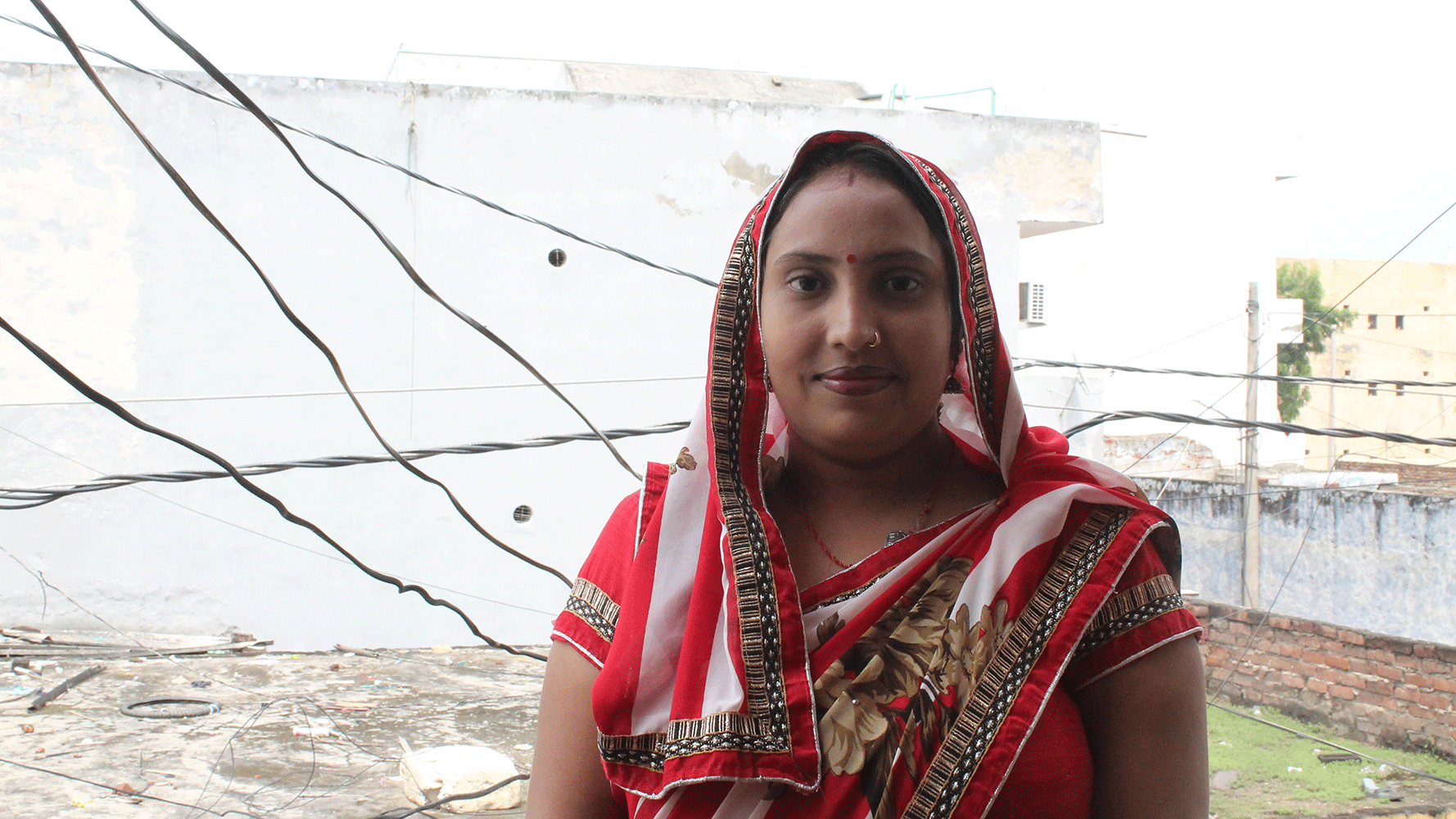
The centre’s social impact on the village is palpable. It’s yet to even officially open its doors, but people cluster outside the humble wooden frame filled with hope. The need for professional medical help is so great that the centre is already treating up to 15 people a day and offering a support network for women who have no where else to turn. Mamta, a beautiful, head-strong woman veiled in red, meets weekly with other women in the centre’s self-help groups, which have formed voluntarily to reach out to vulnerable women in the community. Inside the building’s dark, protective walls, far from the earshot of curious men lingering outside, she tells me, ‘In this village, there was no difference between a mosquito and a woman. The group gives me a purpose to leave the house. I feel empowered now, where once I was oppressed. Finally, I feel human.’
Another, Priyanka, shares with me a poem she has written in English since taking language lessons at the centre. It is entitled ‘ I believe’.
The women here are still too afraid to exit ICHW’s doors without wearing a full-face veil, but despite the oppressive heat and suspicious stares in this sewage-strewn home to thousands, it feels as though some of the fears for their future may finally be lifting.
