I Went From Growing Up In Care To Being A Best Selling Granta Author - By Jenni Fagan
Now a fêted novelist, Jenni Fagan recalls an upbringing in care...
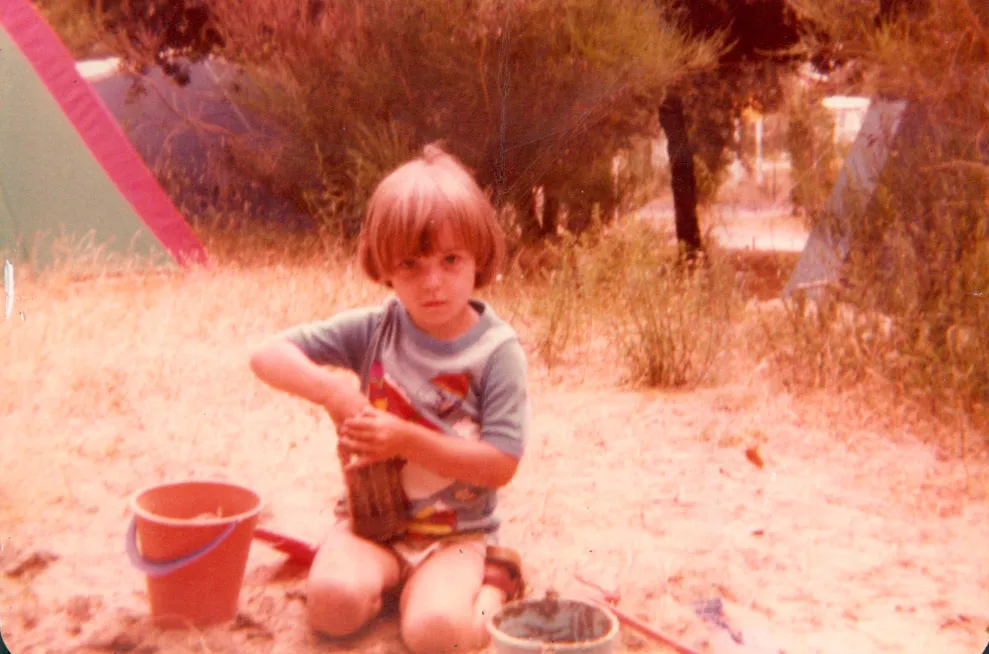
Now a fêted novelist, Jenni Fagan recalls an upbringing in care...
When my son was born two years ago, I remember looking into his eyes and searching for some resemblance to my own. I grew up in care without parents, or anyone to whom I was related. I’d never even seen a photograph of another member of my family, so I had no roots and no sense of belonging. Since childhood, I’d scanned people’s faces in crowds, desperately trying to pick out a single feature that I thought was like my own. Sometimes it felt like I did not exist.
When the trail of visitors had left the maternity ward that night and stillness filled the air, I looked down at my tiny son, this first person I’d ever met who shared my eyes, my genes and my blood, and who accepted me completely. I was elated – and also terrified. I had to provide something better for him than I’d had and I knew part of that meant getting on with my work. And so, in the dead of night, I set up my laptop to write my novel, telling myself that somehow it would all work out OK.
I was born in Scotland in 1977 and immediately taken into care. I don’t want to talk about the reasons why, because it’s someone else’s story, not just mine, but my earliest memory is of being in the back of a social worker’s car as a toddler. I did not know the social worker or where I was going. I just knew I felt small and scared.
By the time I was five years old, I had moved 16 times, held three different legal names and had one failed adoption behind me – I wouldn’t have known how to articulate it, but I had no idea who I was as a person or even what it was like to stay in one place. I had a small blue ballet case and a teddy that I carried with me to every new placement. These two things were the only constants in my life at that time. The council’s policy back then was not to let children get too attached to families because they would soon be forced to move, so this meant countless short-term placements and endless heartbreak.
Aged four, I remember walking into a house to meet yet another new foster family. As the foster sisters took me up to my little bedroom, the two girls explained flatly to me that these were not my parents – they were their parents. It was not my home, but theirs. As they spoke, I looked down at the floor and I played with a plastic lipstick, I did not want to be there but I did not have anywhere else to go.
Christmases could be awkward in foster families and one year in a children’s home I was the only person in there apart from one member of staff. There are places I could have asked to go, old friends I could have rang up but I decided I was fifteen and didn’t need to, it was still weird to watch the other kids go to spend the day with various relatives, while I was left alone. Another year that happened and a girl in the home who could have went back to her Mum, decided to stay with me instead. We had a really good day, ate chinese food, didn’t get out of our pyjamas, these are acts of kindness I remember and we became best friends. I was often the only child with nowhere and nobody to go to but there was always people who liked me, or who would try, even if I didn’t always know how to trust or ask someone to help me.
I recently tried to gain access to my social workers’ files to build up a better picture of my past and was told that social-work practices were ‘very experimental’ then. What a flippant way of dismissing a lifetime of insecurity and dislocation. Like countless others, I was voiceless within a system that did not work. I was not a solid person. It was like coming from an abyss. There would be more children’s homes, foster families, a second adoption that did not work out, refuges and homeless accommodation culminating in 30 different addresses by my 30th birthday. I did not want to let my upbringing define my entire existence, but everyone kept telling me it would.
I began writing aged seven as a way to feel like my voice mattered and as a way to take control of my own story, to find out who I was, not who other people presumed I was or thought I should be. It started with poetry. I loved to look at a page and see the words I’d written. They were solid. They were mine. I could take them with me anywhere – nobody else could take them from me or claim ownership. But school was tough. You were presumed bad if you lived in a children’s home. I dressed differently from other kids in their designer trainers and flashy labels. Friends’ parents thought I was weird because I wore grunge and thrift-store clothes, old army boots and short pleated skirts.
I saw and heard things in children’s homes, hostels and homeless accommodation that I will never forget: terrible stories of abuse, neglect, poverty, illness, isolation. My best friend who had stayed home with me that Christmas, she wanted to be a nurse. She was smart and loyal, with a beautiful heart. Within two years of us meeting and while still a teenager, she had been coerced into prostitution by an older woman, who lured her with drugs and then pimped her when she couldn’t pay for them.
She left the care system at 16 like thousands of others with no support. When I visited her she was living in the house of another woman who had manipulated her homeless situation by pretending to offer her a job as a nanny. The woman then disappeared with her son and the flat, which they called a ‘safe house’ as it was not known to the police, became full of men who would sit around with guns at their feet while they chatted and drank cups of tea in the living-room. I’m not sure how, but I somehow accepted it as normal, I knew it wasn’t and I didn’t want my best-friend to be there but we didn’t live in the same way other teenagers did.
When I see benefits being cut and resources losing funding, I wonder how many more great kids might end up working in the sex industry to get by? We never thought it was shameful or wrong but she deserved better, all kids do. I asked my foster parents if she could stay with us for a few nights to make sure she was safe, but they refused. A few months later she disappeared from the safe-house and I never saw her again. I’d like to say she was a rare case, but there were countless others like her – vulnerable and exploited or just unable to find a way to function in the world. Kids in care are vulnerable and people know it, they target them because they believe they are more likely to get away with it. I knew a lot of boys in care who went through the same thing. These are the hidden stories of the care system and they continue today. When politicians talk about ‘cared-for young people’, they see some peripheral group. It is Dickensian. Each child is an individual who deserves better.
I wanted more but, despite being a grade-A student, I was asked to leave school at 15. I suffered from anxiety and a lack of confidence. I was constantly moving home. I often lived far away from the school and the world around me was so brutal that even sitting in a classroom and trying to pretend everything was OK made no sense any more to me. The same year, my social worker took me out for lunch to an upmarket bistro for my sixteenth birthday. The officer in charge of the children’s home bought me an old looking stopwatch as I’d seen one in a music video and liked it. There were good staff, bad staff and those who just were not that interested, the latter often made up the majority. I joined a band when I was fifteen and decided to leave the childcare system when I was 16 and move into accommodation for homeless teenagers. I didn’t want to be around the other kids in the home anymore, I wanted to go out into the world and try and have a life that didn’t involve reports, social workers, or mandatory health checks (had a full one every-time I moved) I remember standing on the step to leave my children’s home with four bin bags on a grey September morning, feeling just about as terrified as I could be.
My new home was a bedsit in accommodation for the homeless. It had a bed, a sofa, a sink, a two-hob cooker about the size of a microwave, a small fridge and a kettle. I got a full-time job working in a burger bar to pay my rent and electricity and blew what I had on homely ornaments – a stone cherub, books, hanging candles. I learned how to touch type, met new friends and some of the girls I shared with in homeless accommodation I am still friends with now. They have kids, jobs, families, husbands. I am not the only person from my upbringing who is doing something with their life.
It was an overwhelming thing leaving care, but I was determined not to let my entire life be defined by my childhood, but it wasn’t easy with no money, little social support and a lack of confidence in myself. I spent eighteen-months studying film and television on a course for kids who’d dropped out of education early. I met musicians and artists and I signed up for night classes at the local university and began writing for theatre groups. I wrote plays that won competitions, people responded to my work and that helped me to keep going. I was selected to represent Scotland as a young playwright in Europe. I played in bands, worked in bars, or record shops, or cleaning, or in art galleries. I travelled a bit when I could and through everything, I wrote every single day. My past had not left me but I was trying to find a way to make my future better.
When I was 21 I sold a piece of writing for £200 and used the money to pay for a ticket to New York. I worked as a cook and a cleaner to save the money and then spent a month travelling in the States and Canada. When I saw the Manhattan skyline lit up for the first time, I really felt I had achieved one of my dreams. When things got harder in my twenties I remembered that and kept striving for what I had really always wanted, which was be a full-time writer.
I returned to the UK, carried on writing and now have two first-class degrees under my belt and a debut novel that has been translated into five languages and is about to be made into a film. This year I was selected by Granta as one of the Best Of Young British Novelists of the decade and recently I appeared on the front of The New York Times Books section. I teach and spend time working with vulnerable groups of young writers and find there are always the most extraordinary voices out there. Along the way, I was fortunate enough to meet my partner, and today have a beautiful son who has taught me more about love and life than anyone else.
Today, when I consider our care system, I feel a deep sadness for the children like me who suffered at its hands. Now when I meet kids from any background, I always tell them, ‘Don’t listen to the people who say you can’t do something, listen to those who say you can.’
Celebrity news, beauty, fashion advice, and fascinating features, delivered straight to your inbox!
The leading destination for fashion, beauty, shopping and finger-on-the-pulse views on the latest issues. Marie Claire's travel content helps you delight in discovering new destinations around the globe, offering a unique – and sometimes unchartered – travel experience. From new hotel openings to the destinations tipped to take over our travel calendars, this iconic name has it covered.